
Exploring how streak systems leverage loss aversion and behavioral psychology to drive engagement, with practical guidance for ethical implementation.
When Duolingo introduced iOS widgets displaying user streaks, they observed a 60% surge in user commitment. This statistic underscores the powerful psychological grip of streak systems – digital counters tracking consecutive days of activity completion. But what transforms this simple counter into such a compelling engagement tool? And how can designers implement them ethically?
The Psychological Engine of Streaks
At their core, streak systems leverage three fundamental psychological principles:
1. Loss Aversion Humans feel the pain of loss twice as intensely as the pleasure of equivalent gains. A 219-day streak creates psychological investment – breaking it feels like discarding months of effort. As streaks lengthen, the motivation shifts from achieving goals to avoiding the emotional cost of resetting to zero.
2. Fogg Behavior Model (B=MAP) For consistent behavior, three elements must converge:
- Motivation: Inherently unstable
- Ability: The action must be effortless (e.g., Duolingo's 5-minute lessons)
- Prompt: Timely reminders (push notifications, app badges)
Duolingo's simple red app badge increased daily engagement by 6%, demonstrating the power of well-timed prompts. However, excessive notifications risk mental fatigue.
3. Zeigarnik Effect
 Upwork’s profile completion progress bar. (Large preview)
Unfinished tasks occupy mental space more persistently than completed ones. Streaks create perpetual "unfinished business" – your brain becomes the notification system. This explains why progress bars like Upwork's 60% completion indicator effectively nudge users toward action.
Designing Ethical Streak Experiences
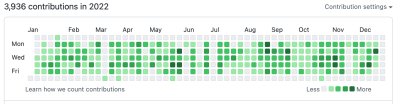 The contributions graph displayed on a GitHub user profile. (Large preview)
The line between helpful habit formation and harmful compulsion is dangerously thin. Ethical implementation requires:
Visual Feedback Systems
- GitHub's contribution graph transforms abstract consistency into visible achievement
- Apple Fitness rings provide real-time completion feedback
- Celebration animations for milestones (Day 7, 30, 100) reinforce progress
Grace Mechanisms Hard resets after one missed day devastate users. Better approaches:
- Streak Freeze: Intentional skip without penalty
- Time Buffers: 2-3 hour grace periods
- Decay Models: Subtract 10 days per missed day instead of full reset
Effortless Actions
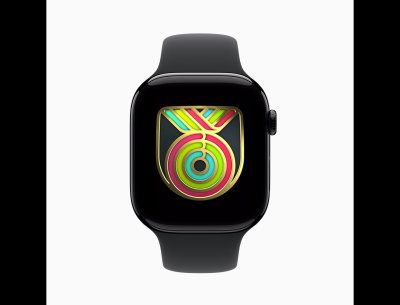 Apple Watch Fitness shows a limited animated badge on completion of all three Activity rings. (Image source: Apple) (Large preview)
Design actions so small they require near-zero willpower (e.g., Apple Watch's "stand for 1 minute" goal). As Atomic Habits notes: "If a daily action requires willpower, it won't survive five days."
Tone Matters Compare these streak-break messages:
- ❌ "You lost your 42-day streak. Start over."
- ✅ "You showed up for 42 days straight! Want to continue your progress?"
The latter acknowledges achievement while encouraging continuation.
Technical Implementation Challenges
Timezone Complexity Midnight UTC resets unfairly punish users in earlier timezones. Solution:
- Collect user timezones during onboarding
- Process all dates using libraries like Moment.js
- Track streaks relative to local time
Edge Case Resilience Server outages shouldn't break streaks:
- Implement 2-4 hour grace windows
- Create admin tools for manual streak restoration
- Log all actions with UTC timestamps
Cheating Prevention Always validate server-side:
- Store actions with user ID, action type, and UTC timestamp
- Reject suspicious time jumps
- Use idempotent APIs to prevent duplicate logging
Architectural Blueprint
Server-Side Logic Flow
- Client sends action with local timestamp
- Server converts to user's timezone
- Checks against previous activity:
- Same day: No change
- Next day: Increment streak
- Gap >1 day: Apply grace rules or reset
- Returns updated streak data
Client Responsibilities
- Display current streak count
- Send action metadata
- Handle server responses gracefully
Conclusion
Effective streak systems become invisible scaffolds for habit formation. They leverage deep psychological wiring while avoiding compulsion through ethical design: effortless actions, visual reinforcement, and forgiveness for human imperfection. Technical implementation must prioritize resilience against timezone quirks and system failures. As Duolingo's 60% engagement boost proves – when psychology, UX, and engineering align, streaks transform fleeting motivation into lasting behavior change.
Not every product needs streaks. Implement them only when daily consistency genuinely serves user goals, not just business metrics.
Comments
Please log in or register to join the discussion