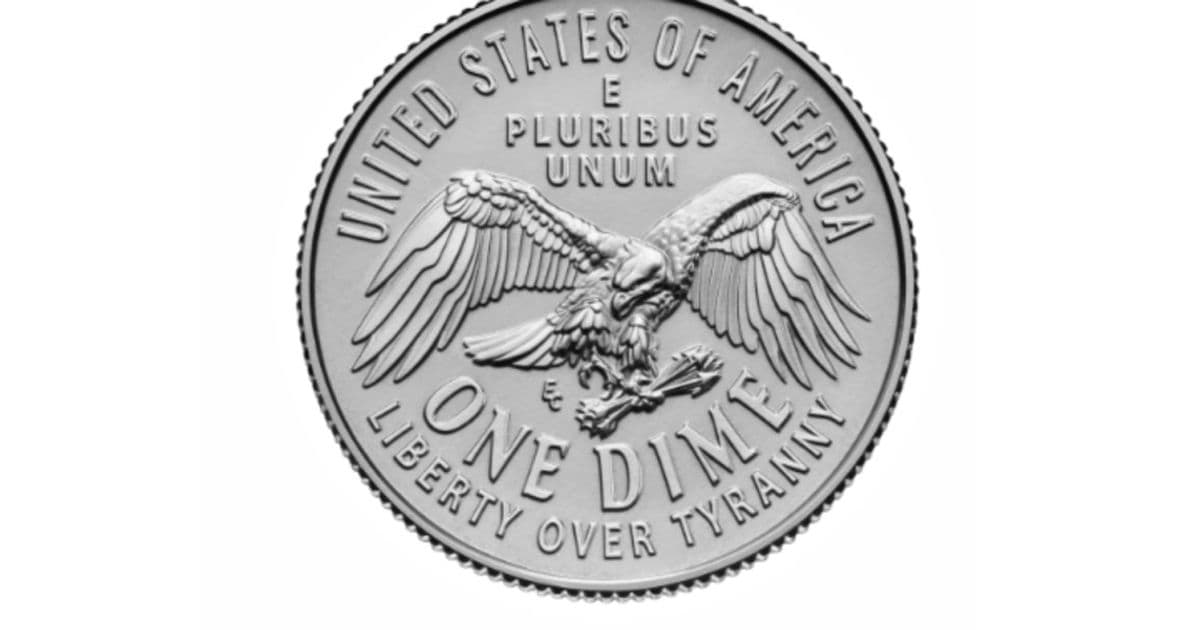
The U.S. Mint has removed the olive branch from the Roosevelt dime, sparking debate about what this subtle change signals about America's evolving national identity and values.
The U.S. Mint recently made a subtle but significant change to the Roosevelt dime: the olive branch has been removed from the reverse design. This alteration, while seemingly minor, has sparked considerable discussion about what it represents for American culture and values.
The Historical Context of the Dime Design
The Roosevelt dime has featured an olive branch since its introduction in 1946, symbolizing peace and reconciliation. The design, created by John R. Sinnock, has remained largely unchanged for nearly eight decades. The olive branch appeared alongside a torch and an oak branch, representing liberty, victory, and peace respectively.
The removal of the olive branch marks the first major redesign of the dime's reverse side since its inception. While the Mint has not issued an official statement explaining the change, numismatic experts and cultural observers have offered various interpretations.
What the Change Could Signify
Some analysts suggest the removal reflects a shift in America's self-perception. The olive branch, a classical symbol of peace dating back to ancient Greece, may no longer resonate with contemporary American values. Instead, the torch and oak branch remain, emphasizing liberty and strength.
Others point to practical considerations. The Mint periodically updates coin designs for security purposes and to prevent counterfeiting. The simplification of the reverse design could make the dime more difficult to replicate illegally.
Public Reaction and Cultural Impact
The change has generated mixed reactions across the country. Some view it as a loss of a meaningful symbol, while others see it as a natural evolution of American iconography. Social media platforms have seen debates about whether this represents a subtle shift away from peace-oriented messaging in American currency.
Coin collectors have also taken notice. The altered dimes are already becoming sought-after items among numismatists, with early reports suggesting they may become valuable collector's items in the future.
Looking Forward
Whether this change signals a broader trend in American symbolism remains to be seen. The Mint has not announced plans to modify other coin designs, though the dime alteration may prompt discussions about the messages conveyed through our currency.
As America continues to evolve, so too may the symbols it chooses to represent itself. The removal of the olive branch from the dime serves as a reminder that even the smallest design choices can carry significant cultural weight.
For now, the torch and oak branch remain, continuing to represent the enduring American values of liberty and strength. Whether peace will find a new symbol in American iconography or whether this marks a permanent shift in national messaging is a question only time will answer.
Comments
Please log in or register to join the discussion