Justin Dauer's personal journey through web design's formative years reveals how ego stifles creativity while humility enables meaningful connection and enduring innovation.
Justin Dauer's retrospective on web design's "Wild West" era uncovers a fundamental paradox: the most groundbreaking creative work emerges not from unchecked confidence, but from the quiet discipline of humility. His narrative traces how early web experimentation—driven by technical constraints and genuine curiosity—gradually gave way to ego-driven stagnation, only to be redeemed through rediscovering design's core purpose: human connection through thoughtful problem-solving.
During the late 1990s and early 2000s, digital design existed in a state of fertile chaos. Limited by 256-color palettes and 32x32 pixel grids, designers like Dauer engaged in what he terms "mini mosaics"—pixel-by-pixel craftsmanship demanding extreme precision. This period birthed projects like his personal portfolio site "the pseudoroom," conceived as a digital sketchbook with deliberately heavy-handed skeuomorphism. 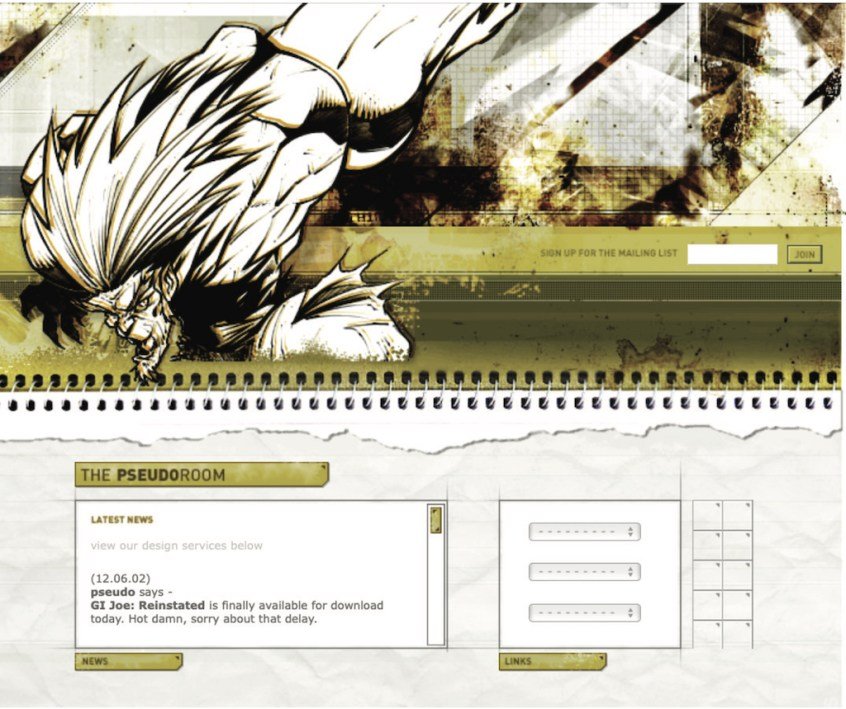 Collaborating with designer Marc Clancy, they passed Photoshop files like batons in a relay race of experimentation, translating visual ideas into functional layouts through raw HTML and CSS.
Parallel efforts like GUI Galaxy pushed further—a standards-compliant design news portal predating modern content curation. 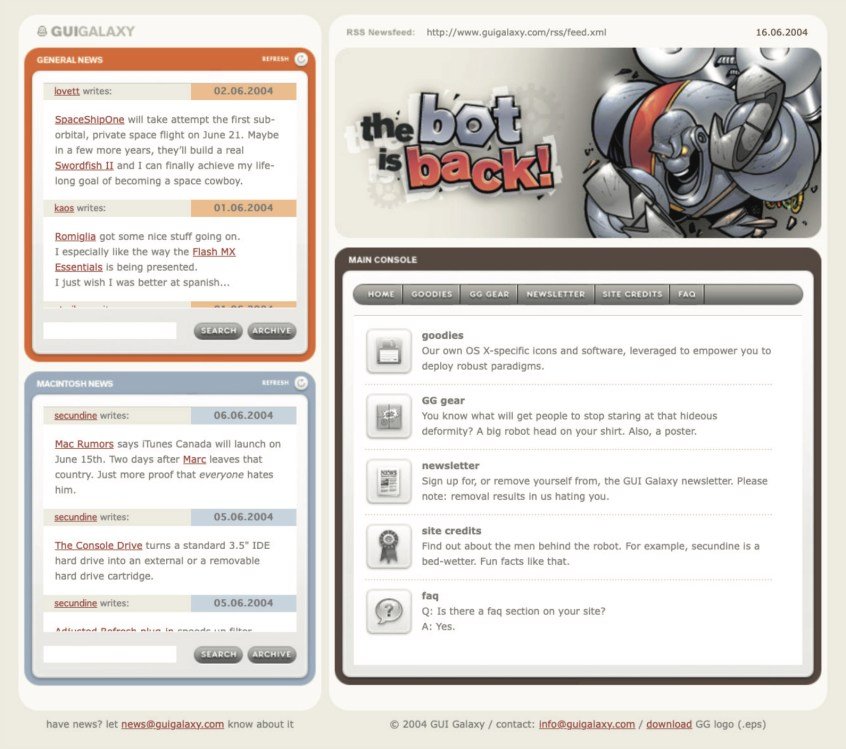 Its homegrown CMS and collaborative authorship model created what Dauer describes as "something bigger than any single one of us," connecting designers globally through shared resources and Mac-centric innovations. These projects thrived on what he identifies as core values: research, challenge, and problem-solving. Yet this creative zenith contained the seeds of downfall. As external validation grew—publications in international magazines, features on influential portals like Kaliber 1000 (K10k)—Dauer experienced what he bluntly calls "devolving into a colossal asshole."
The consequences were immediate and severe. Design iteration shrank from expansive sketching to rote Photoshop execution. Peer feedback met defensive dismissal. Collaboration became transactional rather than explorative. Crucially, this ego-inflation severed connection to his foundational values, nearly destroying professional relationships until colleagues intervened with what he terms "candor as a gift." This confrontation sparked a realization: creative stagnation wasn't technical, but philosophical. The pursuit of praise had displaced the intrinsic rewards of discovery.
Dauer's redemption arrived through physics—specifically, designing collision diagram interfaces for Fermilab's Large Hadron Collider. Working alongside physicists, he adopted what he calls a "student mindset," employing ethnographic observation to solve actual problems: adjusting interface contrast for lab lighting conditions, implementing accessibility standards for government compliance. Here, humility became operational strategy. By surrendering assumptions about user behavior, Dauer uncovered needs invisible in conference rooms—like replacing black-on-white text with white-on-gray to reduce eye strain during prolonged data analysis.
This trajectory reveals a structural truth about design practice today. Contemporary digital interfaces frequently default to templated patterns—hero banners, triple-column layouts, generic iconography—not because these solutions are optimal, but because ego resists the vulnerability of experimentation. Dauer argues that modern constraints like accessibility and responsive design shouldn't limit creativity, but rather focus it, much like pixel grids once distilled iconography to essential forms. The true stagnation occurs when designers confuse experience with expertise, trading curiosity for the comfortable authority of "thought leadership."
Ultimately, humility functions as design's perpetual motion machine. It enables the ethnographic listening that transforms particle physics interfaces. It sustains collaborations like GUI Galaxy that outlive individual contributions. And crucially, it transforms failure—whether flawed portfolios or fractured relationships—into iterative fuel. As Dauer concludes, the moment we believe our evolution is complete, we sacrifice future selves at the altar of present accomplishment. The designer's journey thrives not in destinations, but in the disciplined return to beginner's mind.
Comments
Please log in or register to join the discussion