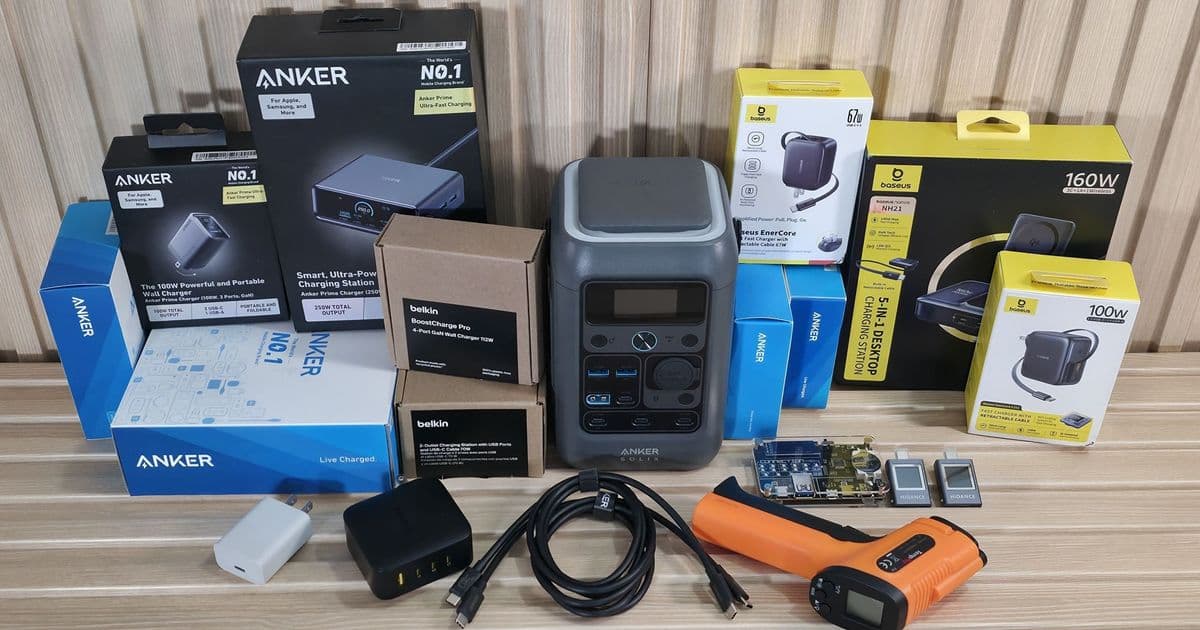
A 20-charger benchmark spanning $9.99 off-brand bricks to a $89.99 Anker 140W laptop adapter shows that conversion efficiency now clusters between 89% and 93% across price tiers, yet thermal limits still cap sustained output. All three 140W units throttled within 30 minutes, with the Baseus Enerfill dropping from 140W to 88W at 76.4C.
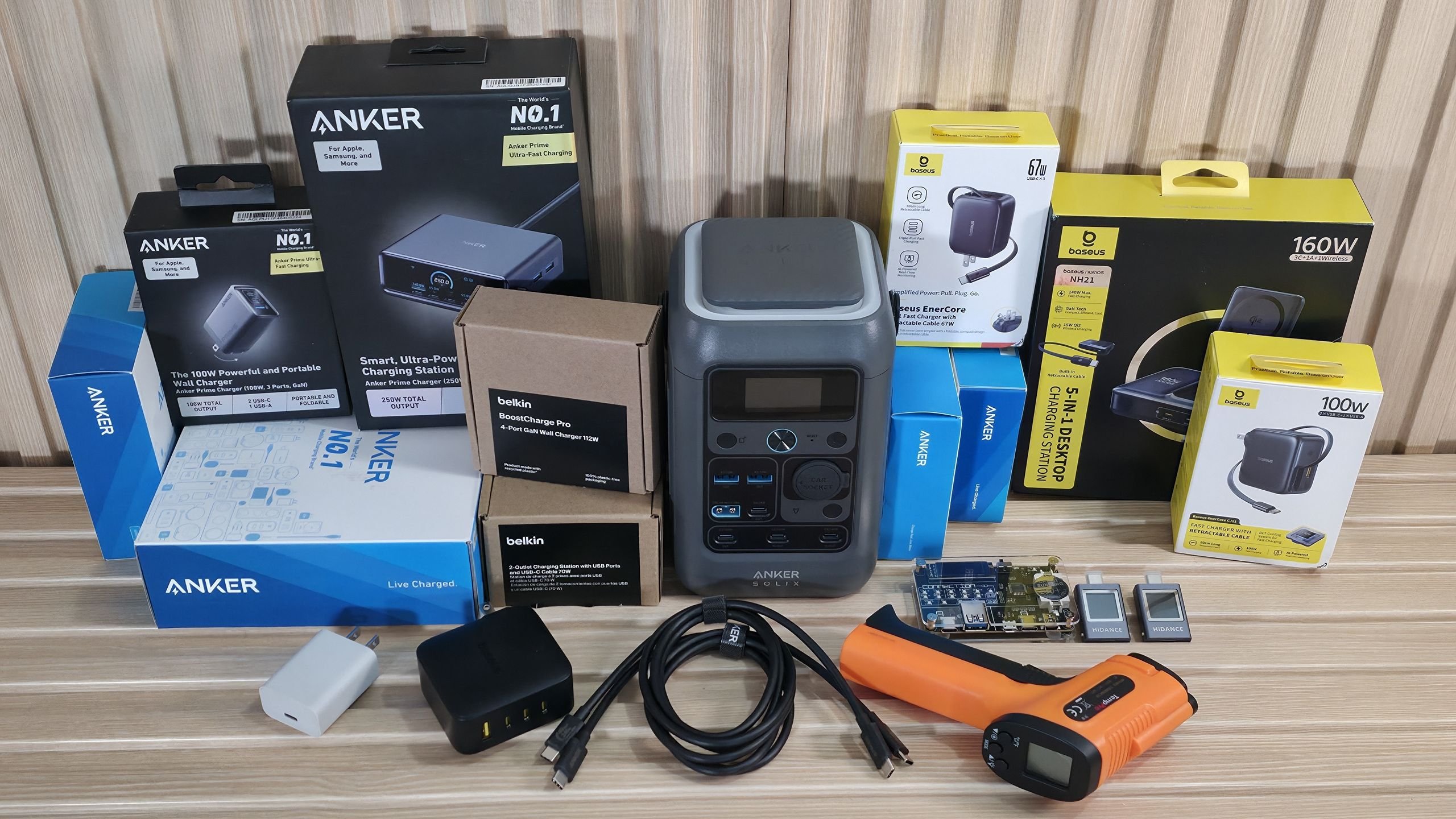
Tom's Hardware ran a 20-unit charger benchmark across the full power range that matters for modern devices, from 15W phone bricks to 140W laptop adapters, and the data tells a clearer story than the marketing on the boxes. The headline finding is that conversion efficiency has largely converged: most units land between 89% and 93% regardless of whether they cost $9.99 or $89.99. The differentiator is no longer how well a charger turns AC into DC. It is how well it sheds heat while doing so.
That distinction surfaces hardest at the top of the power band. Every 140W charger in the test throttled its output before the 30-minute mark. This is not a defect. It is the physics of pulling tens of watts of waste heat out of a plastic enclosure roughly the size of a deck of cards.
The materials story behind the numbers
The reason a 140W charger fits in a pocket at all comes down to a switch in semiconductor substrate. Traditional chargers used silicon power transistors. Gallium nitride (GaN), which entered the consumer charger market around 2018, has a wider bandgap, meaning it can switch at higher frequencies with lower conduction and switching losses. Higher switching frequency shrinks the transformer and capacitors, which is why GaN parts let designers cram more wattage into a smaller shell.
The test pool spans GaN generations 3 and 4, with UGreen pushing a marketing-labeled 7th-gen design and the broader 5th-gen tier now rated to 240W. Each generation has nudged efficiency and power density upward, but the gains are incremental rather than transformative. A GaN 5 part does not violate thermodynamics. It just operates closer to the theoretical ceiling than the silicon parts it replaced.
Layered on top of the substrate are the charging protocols. USB Power Delivery (USB-PD) is the universal baseline, now specified up to 240W over USB-C. Qualcomm's Quick Charge (QC 4.0/5) rides on top of PD in newer revisions and optimizes for Qualcomm-powered Android handsets. Programmable Power Supply (PPS), part of USB-PD 3.0, replaces fixed voltage steps like 5V and 9V with continuous voltage and current adjustment, which trims conversion loss and heat by matching the battery's instantaneous state. Huawei's proprietary FCP and SCP round out the protocol list, with SCP specifically tuned to cut heat generation during fast charging.
Test methodology
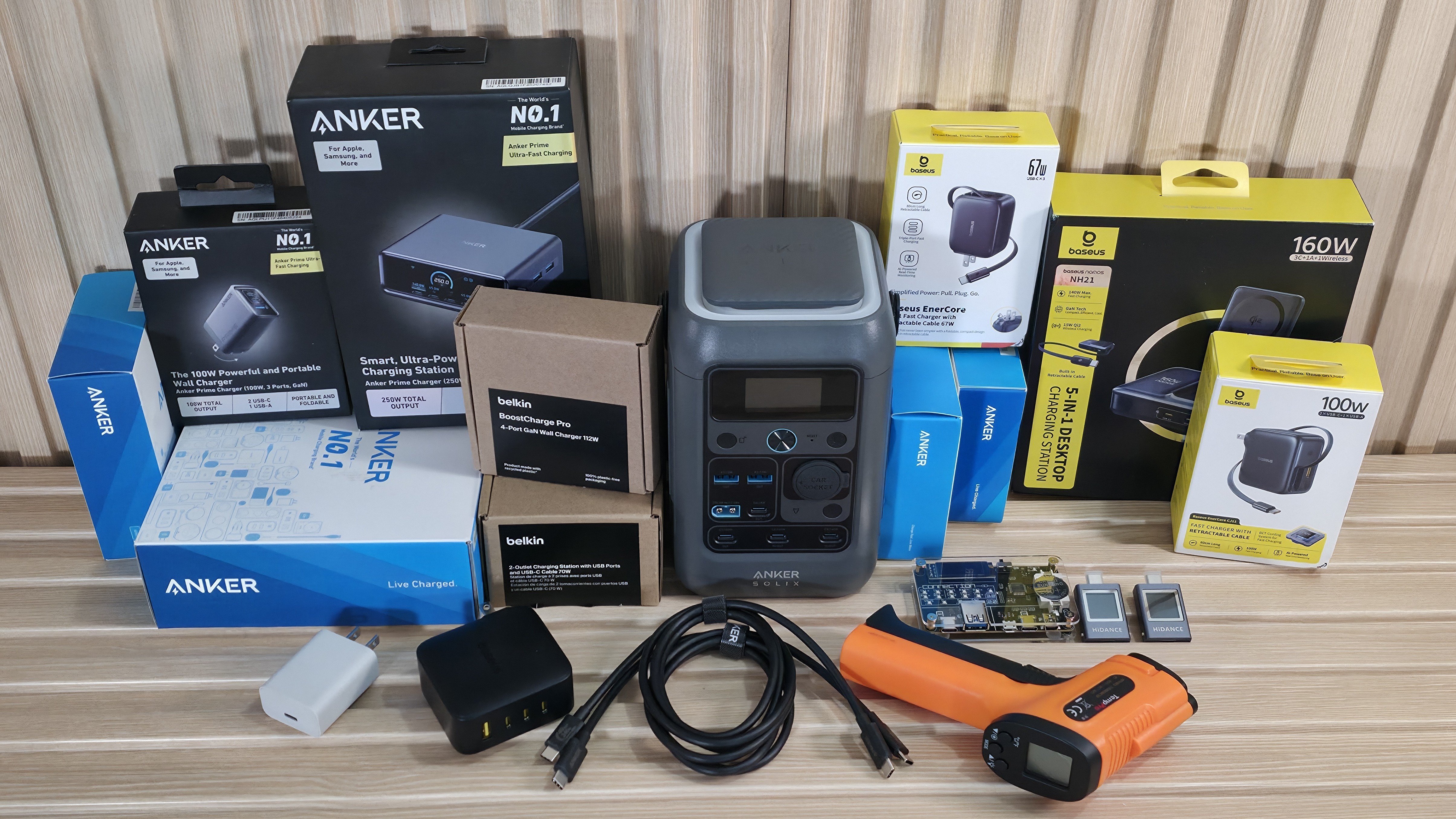
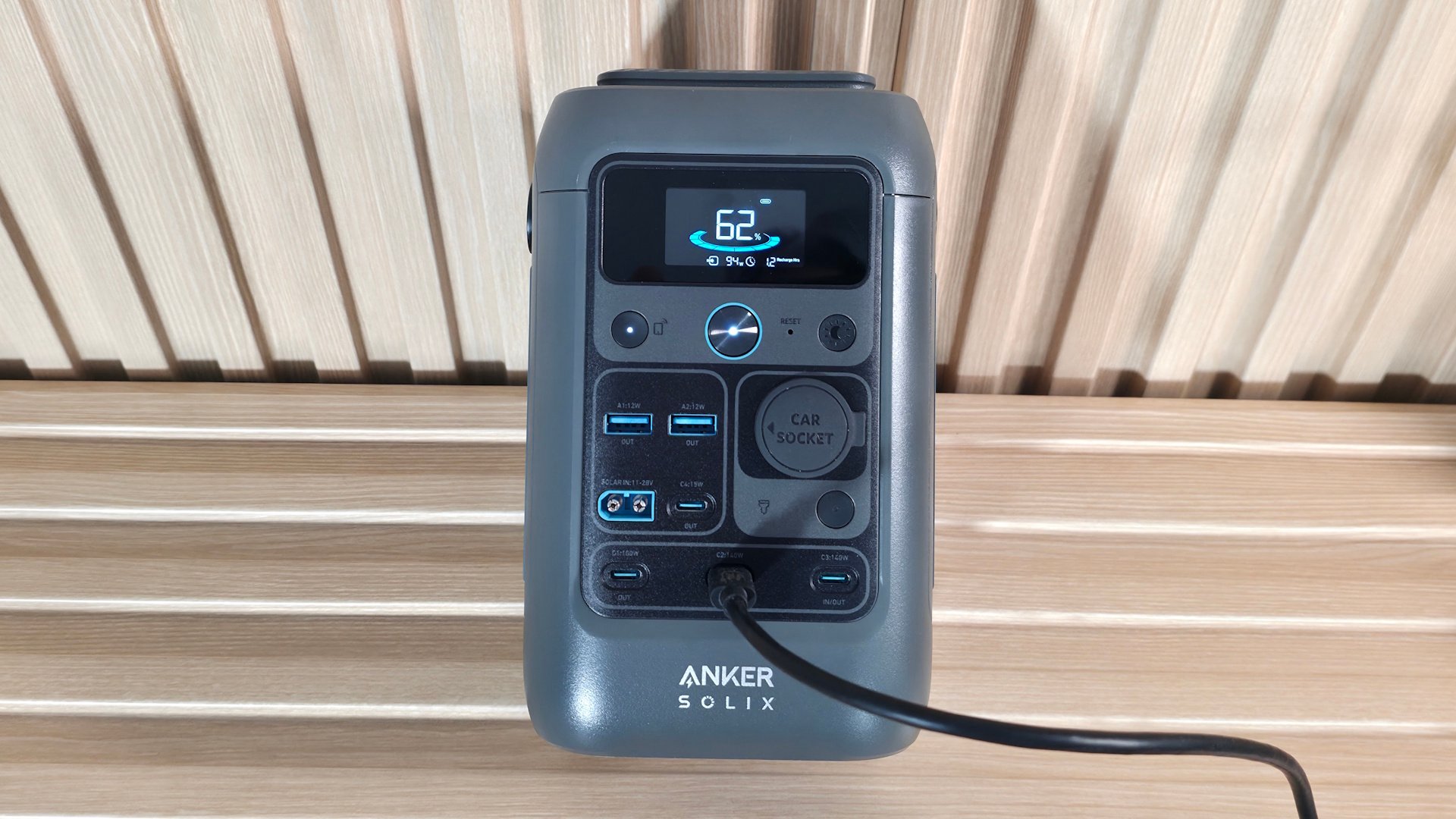
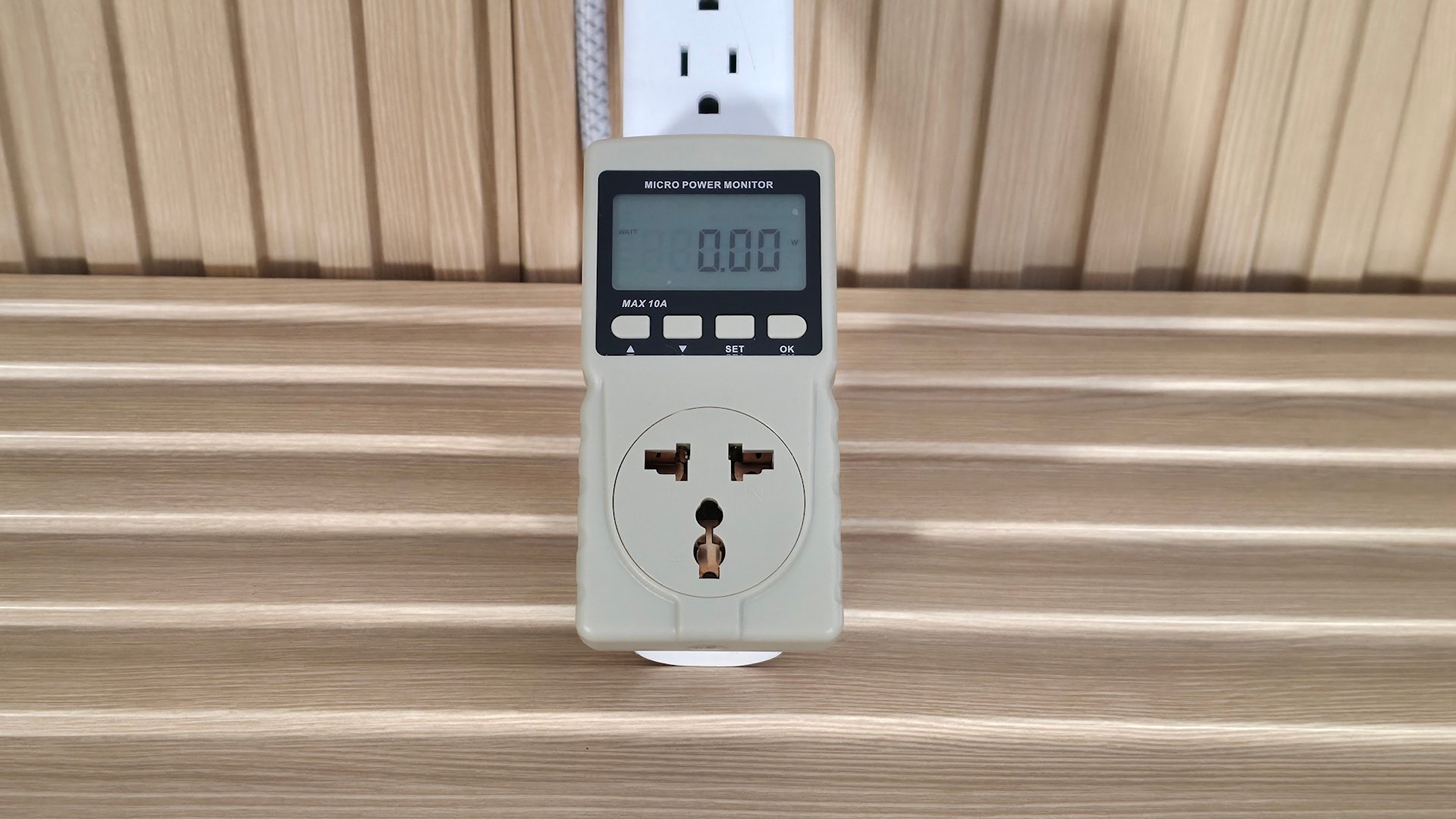
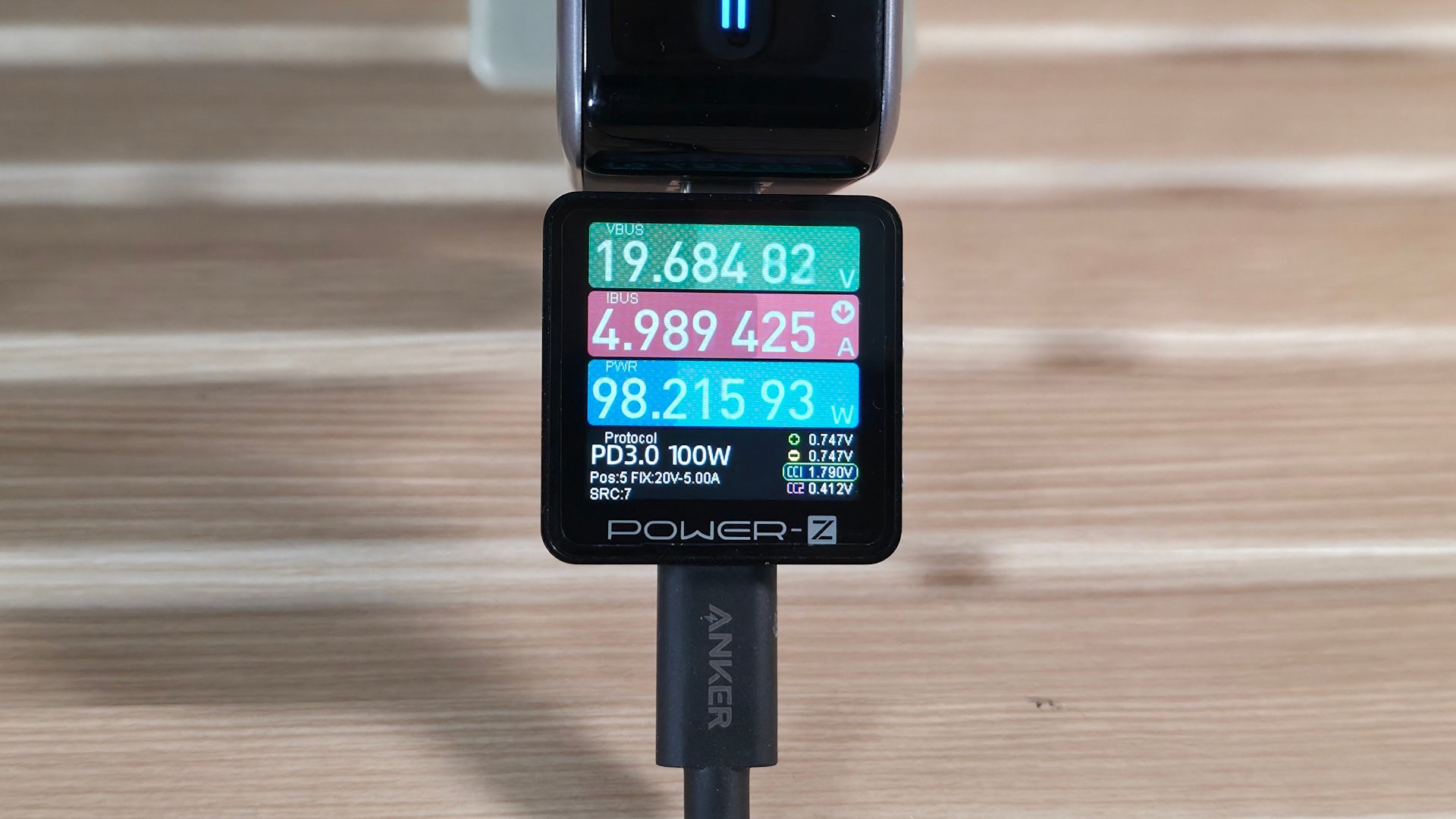
The rig is straightforward but instrumented properly. A Tekcoplus wall power monitor measures total draw from the outlet. A Chargelab Power-Z KM003C sits between the charger and the load to read output voltage, current, wattage, and the negotiated protocol. The load itself is an Anker Solix C300 portable power station, which displays input wattage as it accepts the charge. A 240W-rated Anker 515 cable, verified on a Bit Trade One Cable Checker2, removes the cable as a bottleneck. A TempPro TP30 IR thermometer captures case temperature at the hottest point.
The gap between wall draw and Power-Z output is the efficiency figure. Output is sampled at 5, 10, and 30 minutes to expose throttling that only appears under sustained thermal load. Idle draw was also logged: most units sip power even with nothing attached, with screen-equipped chargers pulling around 1W and screenless units staying near 0.3W. At the US average of roughly 17 cents per kWh, a constant 1W load runs about 12 cents over 30 days, so idle consumption is irrelevant to the power bill.
The 140W tier: heat is the hard ceiling
All three 140W chargers throttled, but they failed differently. The Anker Prime held the most output at 118W after 30 minutes while reading 67.2C at its hottest point. The Baseus Enerfill ran hottest at 76.4C and also fell furthest, dropping from 140W to 88W. The Sharge Pixel split the difference, sustaining 99W at a cooler 68.8C.
The spread matters because it shows thermal design, not just rated wattage, determines real delivered power. The Enerfill and the Sharge Pixel carry the same 140W label, yet under sustained load the Sharge delivered 11W more while running 7.6 degrees cooler. Buyers comparing spec sheets would never see that difference.
The 100-112W tier: mixed results
The roughly 100W class produced both the test's worst thermal offender and its strongest performers. The 100W Anker Prime throttled from 99W to 89W and ran the hottest unit in the entire roundup, despite not being the highest-wattage entry. The Belkin BoostCharge Pro (112W) collapsed from 101W to 71W after 15 minutes, the steepest proportional drop in this group.
Against those, the Baseus Enercore (100W) and the Cuktech 10 Ultra (110W) held full output for the entire 30-minute window while keeping case temperatures between 63C and 65C, the lowest in the 100W-and-up bracket. The Cuktech also carries a front display reporting per-port charging data including temperature status, and at $59.99 it became the editors' pick for the high-power category on the strength of price, sustained output, and thermals.
The 45-68W and sub-30W tiers: no throttling, but watch the cheap units
Nothing in the 45-68W range throttled. The off-brand Iniu 65W ran hottest at over 70C, while the Baseus Enercore 67W and Anker Nano 45W stayed coolest at roughly 55C and 58C. The Anker Nano 45W also posted the best efficiency of any unit tested and carries a status display, earning the mid-tier recommendation at $29.99.
The low-power tier held full output indefinitely, as expected, but exposed a counterintuitive result: the cheapest unit ran the hottest. The $9.99 Wegear PA5 (30W) hit 70C, far above its wattage class, and Anker's 511 sat at 65C. Belkin's BoostCharge 20W stayed coolest at roughly 52C. The UGreen 30W, at under $14, sustained full output and ran among the coolest 30W parts, taking the budget recommendation.
Efficiency outliers
The efficiency floor was set by older or lower-end designs. Samsung's EP-TA800 (15W) measured 85%, several points below the pack, and Belkin's BoostCharge 20W came in at 86%. Everything else landed between 89% and 93%. For a charger that is not the absolute cheapest available, that band is now the expected baseline, which means efficiency has effectively commoditized.
Market implications
For buyers, the practical conclusion is to match charger output to actual device demand rather than chasing wattage or protocol badges. Under 67W, even the cheapest units delivered full rated output without throttling. Above that, sustained delivery becomes a thermal engineering problem that no protocol or GaN generation fully solves. PD, QC, and GaN have improved size, efficiency, and peak performance, but they do not change the fact that extracting 140W of usable power from a pocket-sized enclosure means dumping a meaningful fraction of that as heat through a poor thermal conductor.
For the supply side, the convergence of efficiency figures signals a maturing component market where power-IC vendors and GaN foundries have closed most of the gap that once separated premium from budget designs. The remaining competitive ground is thermal design, port count, display integration, and protocol breadth rather than raw conversion performance. That shifts differentiation toward mechanical and firmware engineering, which is harder to commoditize than a transistor swap.
The full roundup with charts is at Tom's Hardware, with the author noting a follow-up desktop charger comparison covering even higher wattages, plus a running best-chargers page, both due soon.
Comments
Please log in or register to join the discussion