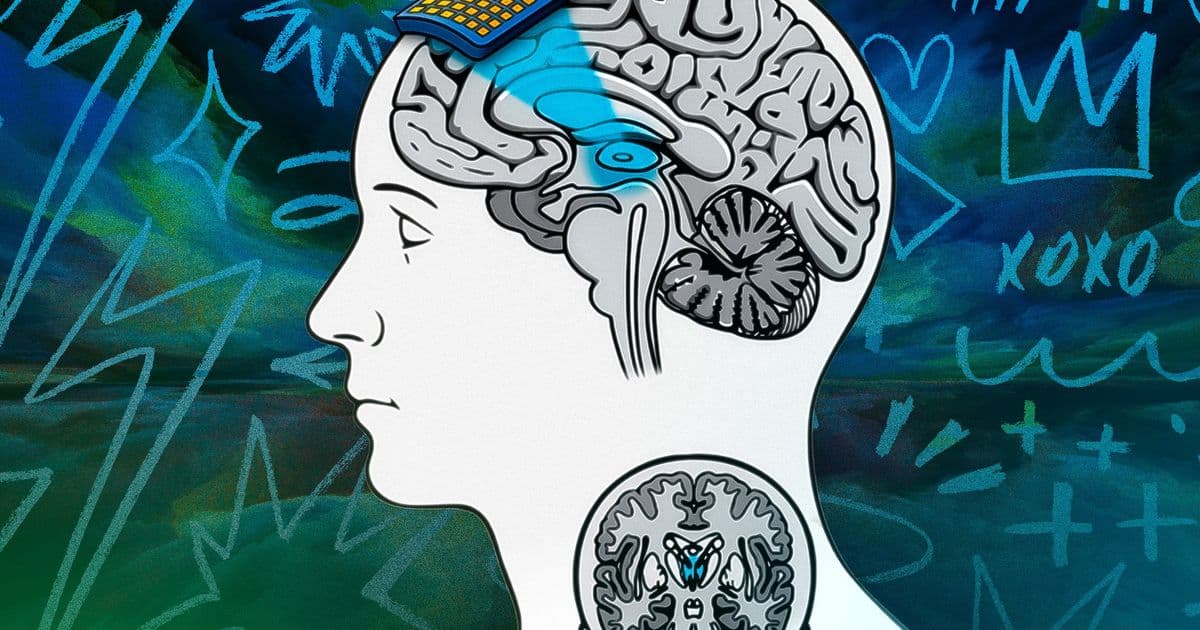
MIT researchers propose a roadmap for using noninvasive transcranial focused ultrasound to stimulate deep brain structures and investigate the neural basis of conscious perception.
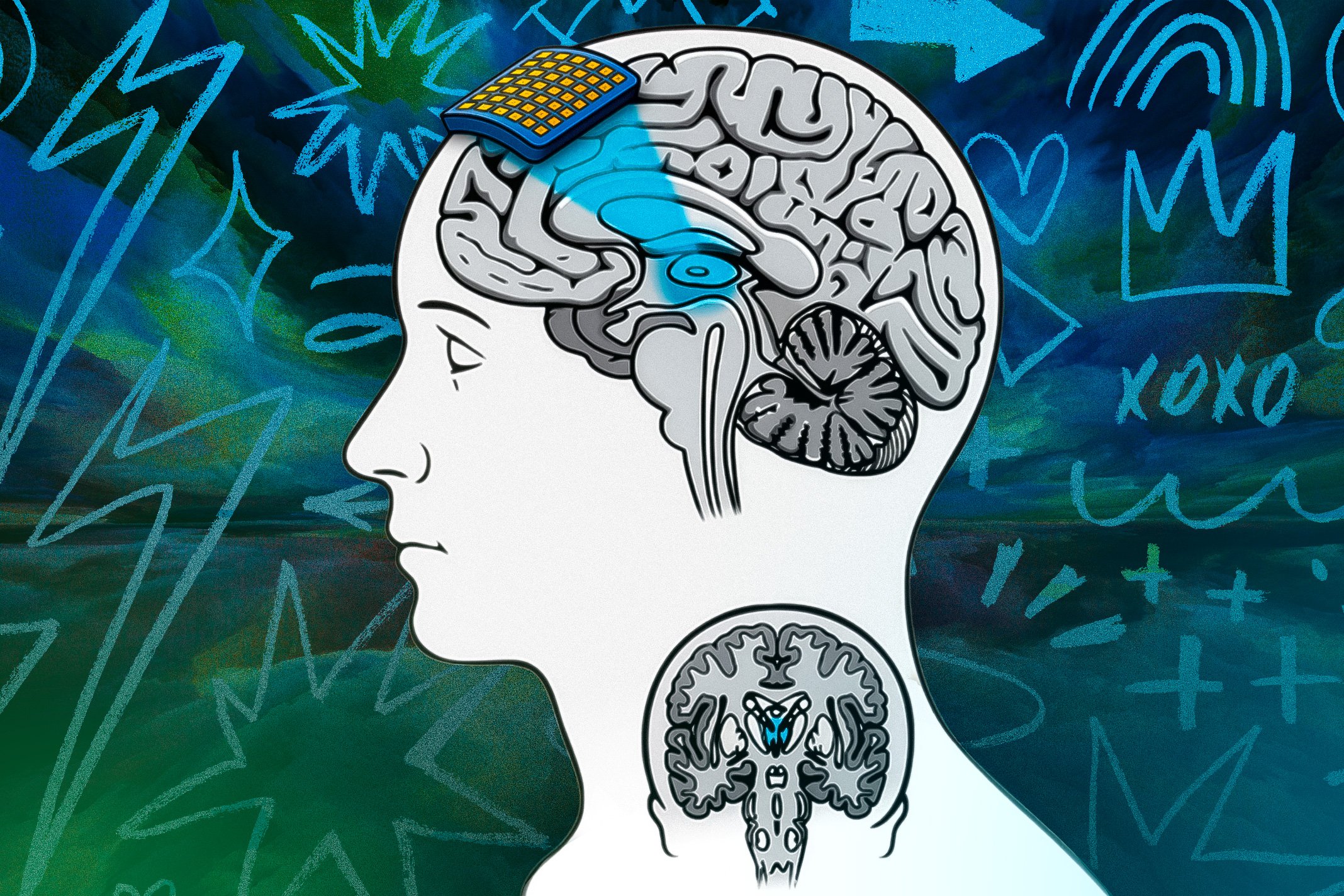
The persistent mystery of consciousness – how physical brain matter generates subjective experiences – may yield to a new investigative approach using transcranial focused ultrasound (TFUS). Researchers from MIT and collaborating institutions have published a comprehensive roadmap demonstrating how this emerging technology could address fundamental questions about perception, pain, and thought formation.
TFUS represents a significant advancement over existing noninvasive brain stimulation techniques. Unlike transcranial magnetic stimulation (TMS) or transcranial electrical stimulation (TES), TFUS penetrates deeper into brain tissue while maintaining millimeter-scale precision. The technique transmits acoustic waves through the skull that converge on targeted subcortical regions, modulating neural activity without surgery.
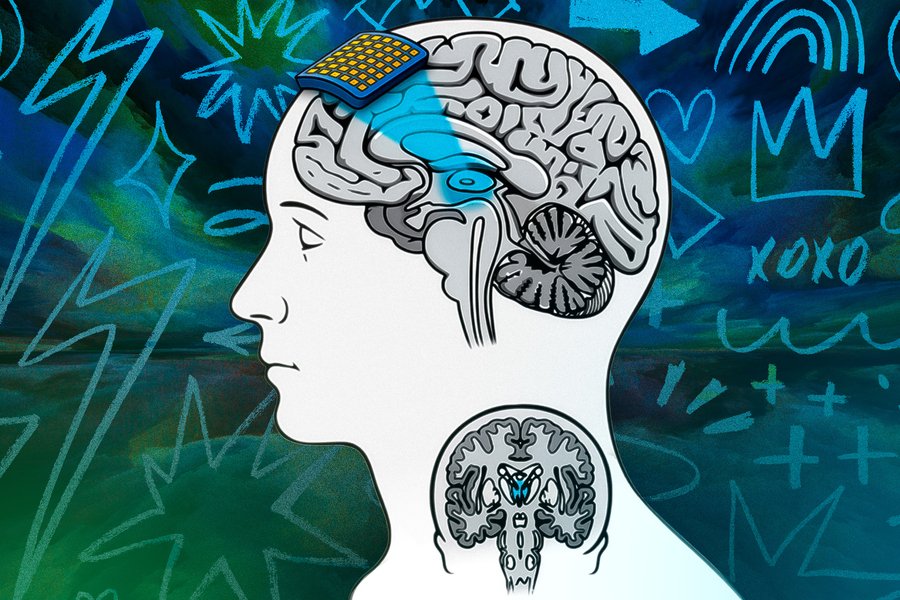
Caption: TFUS uses a grid-like transducer array to focus ultrasound waves on specific brain regions through the skull.
"This technology allows stimulation of deep emotional circuits and subcortical structures that were previously inaccessible outside surgical settings," explains Daniel Freeman, technical staff member at MIT Lincoln Laboratory and co-author of the study published in Neuroscience and Biobehavioral Reviews. The team's framework specifically targets two competing theories of consciousness:
- Cognitivist Theory: Consciousness requires higher-order processing in frontal cortex regions that integrate information across brain networks
- Non-cognitivist Theory: Conscious perception emerges locally from specific neural patterns in posterior cortical or subcortical regions
TFUS enables researchers to move beyond correlation by actively manipulating neural circuits. "Traditional methods like EEG or fMRI show brain activity accompanying conscious experience," notes philosopher Matthias Michel, co-founder of MIT's Consciousness Club. "TFUS introduces causal intervention – stimulating specific areas to determine if they're necessary for generating consciousness itself."
The roadmap outlines targeted experiments across four domains:
- Prefrontal Cortex Role: Does conscious perception require frontal lobe involvement?
- Local vs. Distributed Processing: Can isolated brain regions generate consciousness, or is network-wide coordination essential?
- Perceptual Binding: How does the brain unify sensory inputs into coherent experiences?
- Subcortical Contributions: What role do deeper structures play in conscious states?
Early experiments will focus on visual perception pathways before progressing to frontal regions and pain processing networks. "We can test whether subcortical structures generate the physical manifestation of pain," Freeman suggests. "This could reshape our understanding of sensory processing hierarchies."
Caption: Consciousness researchers Matthias Michel (left) and Earl Miller (right) co-founded MIT's Consciousness Club to advance interdisciplinary studies.
The MIT Consciousness Club, supported by the Human Insight Collaborative, provides an institutional framework for this research. Michel emphasizes TFUS's unique potential: "It offers low-risk access to deep brain structures with high reward potential for fundamental discovery. Why wouldn't we pursue this path?"
While clinical applications remain secondary to basic research, the technology could eventually inform treatments for disorders of consciousness. The team acknowledges current limitations – including uncertainty about optimal stimulation parameters and individual anatomical variations – but argues TFUS represents the most promising noninvasive approach for causal manipulation of deep brain structures.
As TFUS hardware becomes more accessible through projects like MIT Lincoln Laboratory's neurotechnology initiatives, this roadmap provides a methodological foundation for investigating neuroscience's most elusive phenomenon.
Resources:
Comments
Please log in or register to join the discussion