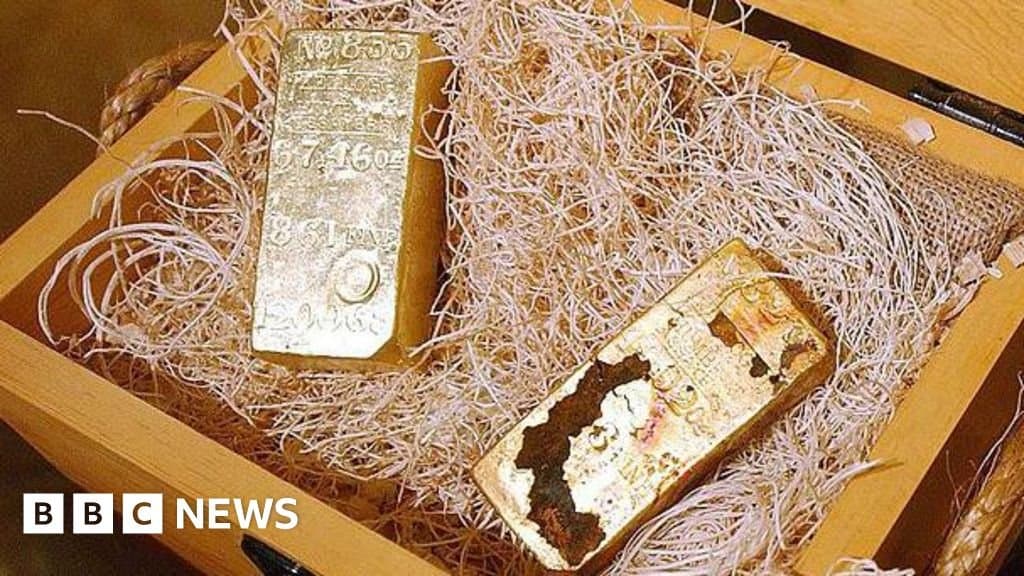
Tommy Thompson, who discovered millions in gold from the 1857 SS Central America shipwreck, has been released from prison after refusing to disclose the location of 500 missing gold coins for 10 years.
After spending a decade behind bars for refusing to reveal the location of missing gold coins, deep-sea treasure hunter Tommy Thompson has been released from federal prison. The 73-year-old engineer discovered millions of dollars worth of gold from the 1857 wreck of the SS Central America, also known as the Ship of Gold, but his refusal to disclose the whereabouts of 500 unaccounted-for coins kept him imprisoned for 10 years.
Thompson's discovery in 1988 off the coast of South Carolina uncovered one of the most significant maritime treasures in American history. The SS Central America had been carrying 30,000 pounds of gold newly minted in San Francisco when it sank in a hurricane in 1857, killing 425 passengers and crew and contributing to the financial panic of that year.
A total of 161 investors had provided Thompson with $12.7 million to locate the ship, expecting substantial returns on their investment. When Thompson and his crew brought up thousands of gold bars and coins in 1988, much of the treasure was later sold to a gold marketing group in 2000 for approximately $50 million.
However, investors accused Thompson of cheating them out of their promised proceeds. A lawsuit filed in 2005 alleged that investors had not received any returns from the treasure's sale. The situation escalated when a criminal complaint suggested the gold bars and coins recovered from the seafloor were worth up to $400 million.
Thompson disappeared in 2012 while facing demands to appear in court. After years on the run, he and an associate were arrested in 2015 in Boca Raton, Florida, where they had been living in a hotel for two years, paying cash under a false name and using taxis and public transport to avoid detection.
When questioned about the location of approximately 500 missing gold coins, Thompson refused to answer. He was held in civil contempt and sentenced to 24 months in prison in December 2015. Civil contempt sentences typically last indefinitely until the person complies with the court order, meaning Thompson could have remained imprisoned for life if he continued to withhold information.
Last year, a judge agreed to end Thompson's civil contempt sentence, determining that he was unlikely to ever reveal the coins' location. The decision effectively freed Thompson after a decade of imprisonment for his silence.
The SS Central America's treasure represents a fascinating chapter in American maritime history. When the ship sank in 1857, it was carrying gold that had been en route to the east coast to create a reserve for banks. The loss of this massive amount of gold contributed to the financial panic of 1857, making the recovery of the treasure both historically and economically significant.
Thompson, who was working as an oceanic engineer at Battelle Memorial Institute in Columbus, Ohio, when he discovered the wreck, has maintained that the coins were turned over to a trust in Belize. He claims that profits from the sale of the first batch of gold went mostly toward legal fees and bank loans.
While Thompson's release marks the end of his imprisonment, questions about the missing 500 gold coins remain unanswered. The treasure hunter's decade-long silence in the face of legal pressure has become a notable case in the world of maritime salvage and treasure hunting, highlighting the complex legal and ethical issues that arise when historical treasures are discovered and their ownership is disputed.
The SS Central America treasure continues to captivate historians, investors, and treasure enthusiasts alike. The ship's sinking in 1857 not only claimed hundreds of lives but also sent shockwaves through the American economy, making the recovery of its gold a story that intertwines maritime disaster, economic history, and modern legal battles over treasure rights.
Comments
Please log in or register to join the discussion