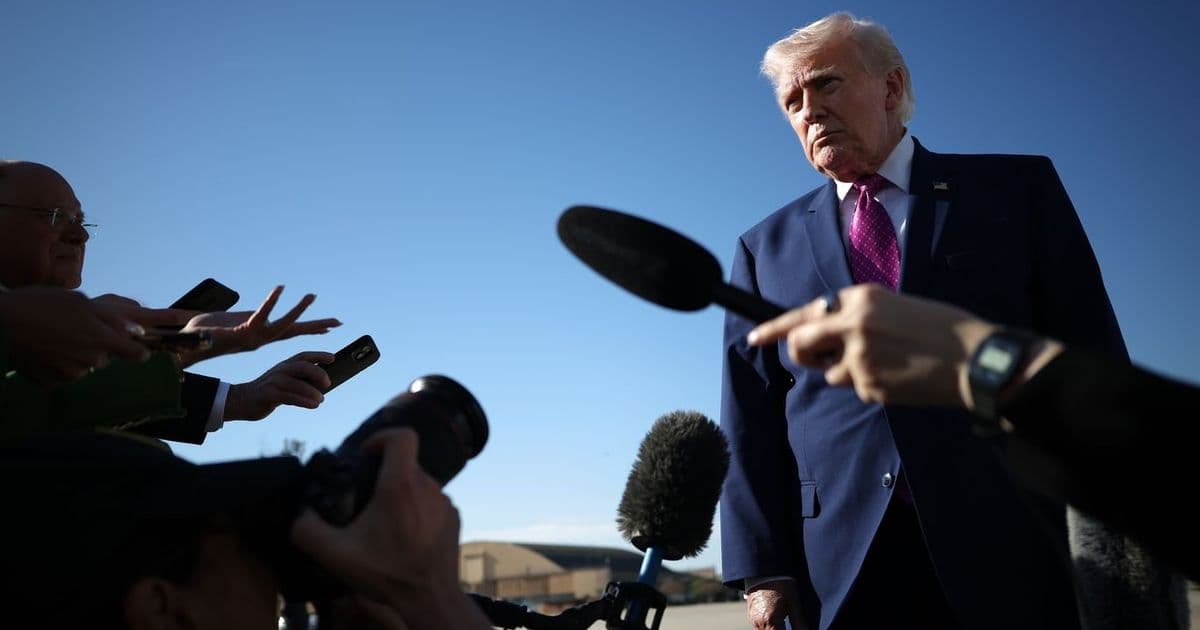
President Trump declares naval blockade on Iran following failed peace negotiations, escalating Middle East tensions to Cold War levels.
President Donald Trump announced a naval blockade of Iran on Friday, April 11, 2026, following the collapse of diplomatic peace talks aimed at curbing Tehran's nuclear program and regional influence.
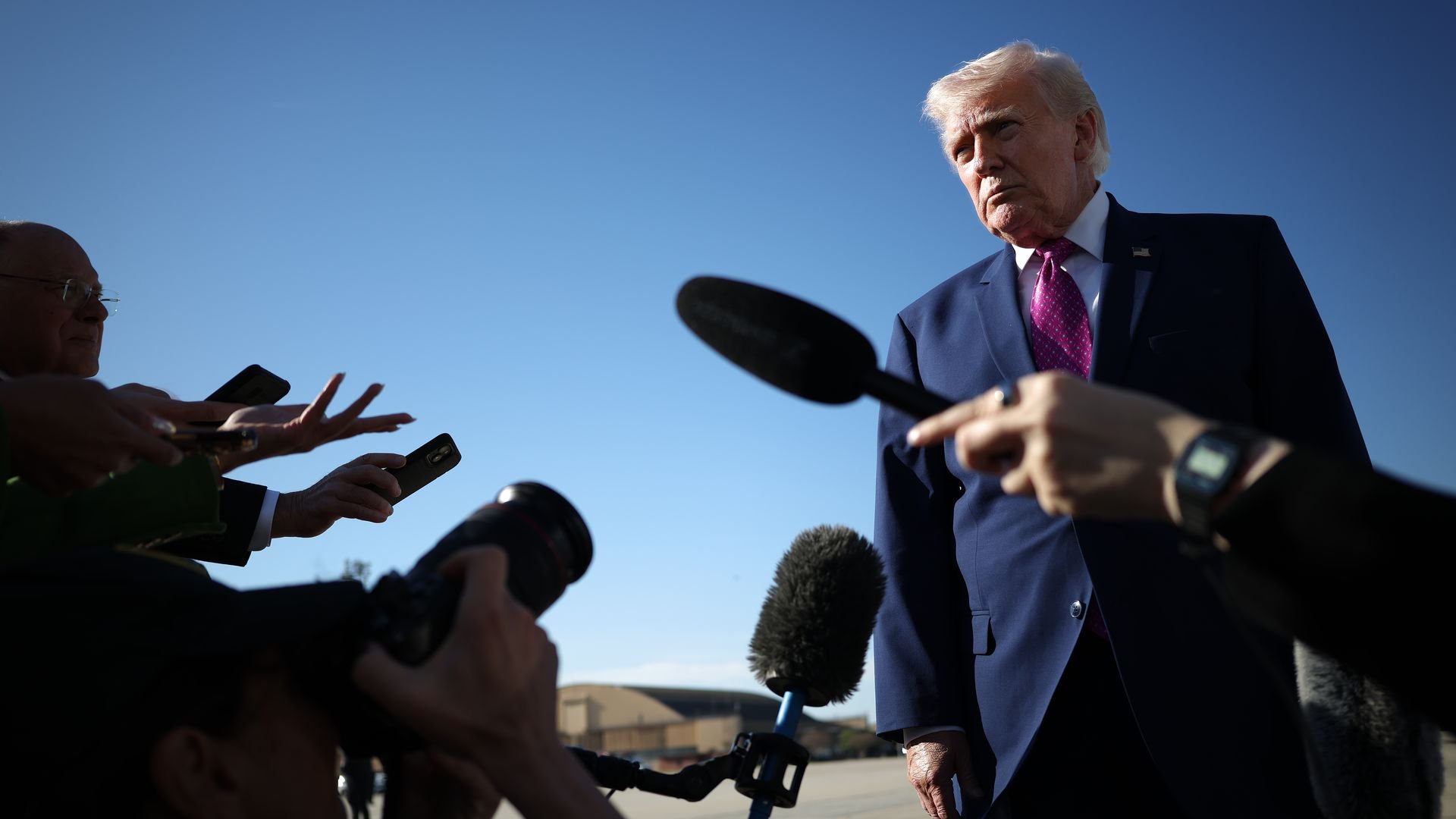
Speaking to reporters before boarding Air Force One at Joint Base Andrews, Maryland, Trump declared the blockade would remain in effect "until Iran agrees to dismantle its nuclear weapons program and cease all support for terrorist organizations throughout the Middle East."
The announcement comes after three days of intense negotiations in Geneva between U.S. and Iranian delegations broke down Thursday evening. Sources familiar with the talks revealed that Iran refused to accept American demands for complete nuclear disarmament and the withdrawal of Iranian forces from Syria, Lebanon, and Yemen.
Economic Impact and Market Response
Financial markets reacted immediately to the news, with crude oil prices surging 12% in overnight trading. The Brent crude benchmark reached $98 per barrel, its highest level since the 2022 Russian invasion of Ukraine. Major indices showed mixed reactions, with defense contractors Lockheed Martin and Northrop Grumman seeing their stock prices jump 8% and 6% respectively.
The blockade represents one of the most aggressive military actions taken by the United States against Iran since the 1979 Islamic Revolution. Naval assets from the Fifth Fleet, including aircraft carriers USS Gerald R. Ford and USS Dwight D. Eisenhower, have already begun positioning in the Strait of Hormuz, through which approximately 20% of the world's oil supply passes.
International Reactions
European allies expressed concern over the escalation. French President Emmanuel Macron called for "immediate de-escalation and a return to the negotiating table," while German Chancellor Olaf Scholz warned that "military confrontation in the region would have catastrophic consequences for global stability and energy markets."
Russia and China condemned the blockade as "an act of aggression" and "a violation of international law." Both nations have significant economic ties with Iran, with China importing approximately 800,000 barrels of Iranian oil daily.
Strategic Implications
The blockade marks a dramatic shift from the Biden administration's approach to Iran, which had focused on diplomatic engagement and the potential return to the Joint Comprehensive Plan of Action (JCPOA). Trump's decision appears to fulfill campaign promises to take a harder line against what he termed "the world's leading state sponsor of terrorism."
Military analysts note that enforcing a naval blockade against Iran presents significant logistical challenges. Iran's coastline stretches over 2,400 kilometers, and its military has invested heavily in asymmetric warfare capabilities, including advanced missile systems and naval mines.
Regional Security Concerns
Regional powers have begun mobilizing in response to the blockade. Israel has placed its military on high alert, while Saudi Arabia and the United Arab Emirates have requested increased American military support. Iranian-backed militias in Iraq, Syria, and Yemen could potentially launch attacks on American and allied targets in the region.
The collapse of peace talks follows months of escalating tensions, including Iranian cyber attacks on American infrastructure, the seizure of international shipping vessels in the Persian Gulf, and continued enrichment of uranium beyond the limits set by the 2015 nuclear agreement.
Energy Market Disruption
Energy analysts warn that sustained disruption to Iranian oil exports could push global oil prices above $120 per barrel, potentially triggering a global recession. Iran currently exports approximately 1.2 million barrels per day, with China, India, and Turkey being the largest buyers.
The International Energy Agency has called an emergency meeting to discuss potential release of strategic petroleum reserves to stabilize markets. The United States Strategic Petroleum Reserve contains approximately 365 million barrels, enough to offset Iranian exports for roughly ten months.
Diplomatic Fallout
The blockade announcement has effectively ended any remaining hopes for a negotiated settlement to the Iranian nuclear issue. Iranian Foreign Minister Mohammad Javad Zarif called the blockade "an act of war" and vowed that Iran would "respond with all means at our disposal."
European diplomats who had been working behind the scenes to salvage the peace talks expressed frustration with both sides. "We were so close to an agreement," said one senior European official who requested anonymity. "The Americans wanted too much, and the Iranians wouldn't budge on their core demands."
Military Preparations
The U.S. Navy has begun implementing the blockade with increased patrols in the Persian Gulf, Strait of Hormuz, and Gulf of Oman. Navy destroyers equipped with Aegis missile defense systems are conducting continuous surveillance operations, while P-8 Poseidon aircraft patrol from bases in Bahrain and Qatar.
Defense Secretary Mark Esper stated that the blockade would be "comprehensive but targeted," focusing on preventing the export of Iranian oil and the import of materials that could contribute to Iran's nuclear program. Humanitarian aid and civilian necessities would be permitted to pass through the blockade.
Economic Sanctions Context
The naval blockade represents an escalation of the "maximum pressure" campaign that began under the Trump administration in 2018 when the United States withdrew from the JCPOA. Since then, the United States has imposed over 1,500 individual sanctions on Iranian entities and individuals.
Iranian oil exports have declined from approximately 2.5 million barrels per day in 2017 to less than 1 million barrels per day today. The country's economy has contracted by an estimated 10% since the sanctions were reimposed, with inflation exceeding 40% and unemployment rising to 20%.
Potential for Conflict
Military experts warn that the risk of miscalculation and unintended escalation has increased significantly. Iran has demonstrated its willingness to use military force to protect its interests, as evidenced by the 2019 attacks on Saudi oil facilities and the 2020 downing of a U.S. surveillance drone.
The United States maintains approximately 45,000 troops in the Middle East, with major bases in Qatar, Bahrain, Kuwait, and the United Arab Emirates. Iran's Islamic Revolutionary Guard Corps, meanwhile, has developed sophisticated capabilities for conducting proxy warfare through allied militias across the region.
Global Economic Implications
Beyond energy markets, the blockade threatens to disrupt global supply chains that rely on the Suez Canal route. Approximately 15% of global maritime trade passes through the Suez Canal, with many vessels transiting the Strait of Hormuz en route.
Shipping insurance rates for vessels operating in the region have already increased by 300%, and major shipping companies are rerouting vessels around the Cape of Good Hope, adding approximately 10 days to transit times from Asia to Europe.
Historical Context
The United States has employed naval blockades as instruments of foreign policy throughout its history, from the Civil War's blockade of Southern ports to the Cuban Missile Crisis. However, the legal status of blockades remains contentious under international law, particularly when not authorized by the United Nations Security Council.
Iran has indicated it will challenge the blockade's legality at the International Court of Justice, arguing that it violates the United Nations Convention on the Law of the Sea. However, enforcement of any ICJ ruling would be problematic given the current geopolitical tensions.
Looking Forward
The success or failure of the naval blockade will likely determine the trajectory of U.S.-Iran relations for years to come. If effective in changing Iranian behavior, it could establish a precedent for using economic coercion to address nuclear proliferation concerns. If it fails or leads to military conflict, it could trigger a regional war with global consequences.
As tensions continue to mount, the international community watches anxiously to see whether diplomatic off-ramps can be found before the situation spirals into open conflict. The collapse of peace talks and the imposition of a naval blockade represent a dangerous escalation that could reshape the Middle East and global energy markets for generations to come.
Comments
Please log in or register to join the discussion