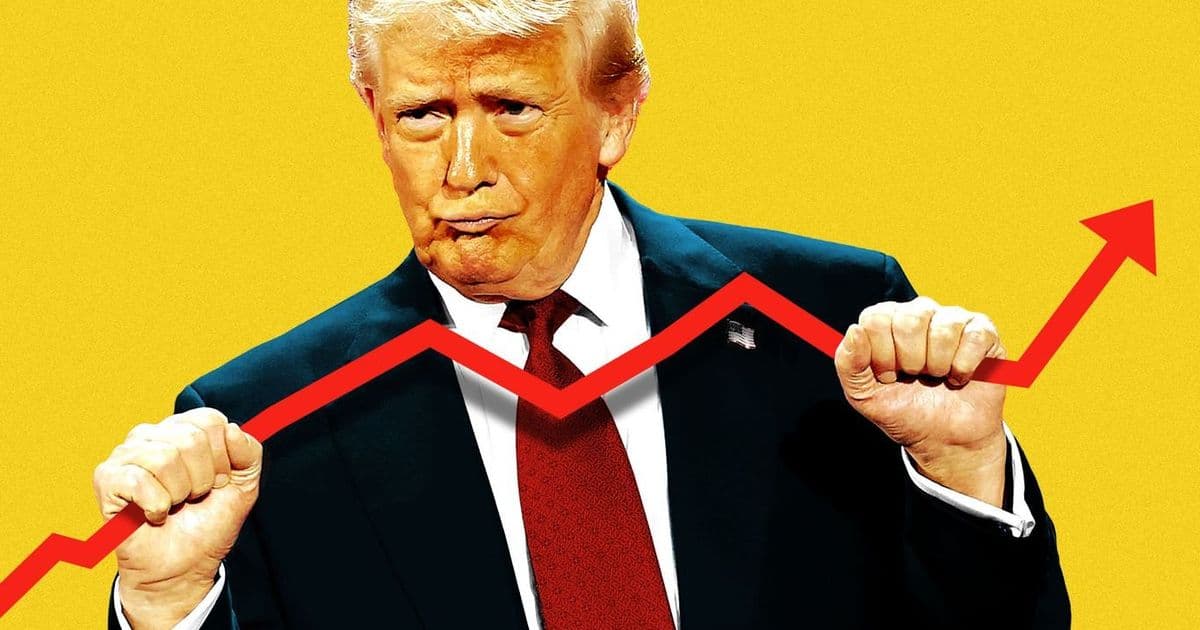
The re-emergence of aggressive trade policies and geopolitical posturing under a second Trump administration is injecting significant volatility back into global markets, with technology companies facing particular uncertainty due to their complex supply chains and international revenue exposure.
Financial markets have spent the past four years adapting to a more predictable, if slower, economic environment. That period of relative calm is now ending abruptly. The return of Donald Trump to the White House has immediately revived the volatility that characterized his first term, with a fresh wave of tariff threats and geopolitical maneuvers sending shockwaves through equity and currency markets.
The immediate catalyst was a series of statements and executive actions targeting key trading partners. Most notably, the administration has renewed threats of significant tariffs on goods from the European Union, citing trade imbalances. Simultaneously, renewed rhetoric regarding Greenland—echoing a 2019 proposal to purchase the territory—has added a layer of geopolitical uncertainty to an already tense market environment. For the technology sector, which relies on a finely tuned global supply chain and generates a substantial portion of its revenue from international markets, these developments represent a direct threat to profitability and operational stability.
Market Context: The Return of the Tariff Weapon
The initial market reaction was swift. The CBOE Volatility Index (VIX), often called Wall Street's "fear gauge," spiked over 20% in the days following the election, moving from a complacent level near 15 to above 18. This movement reflects a fundamental repricing of risk. Investors are no longer pricing in a stable trade environment; they are now accounting for the probability of renewed trade wars.
Tariffs function as a tax on imported goods. For U.S. tech companies, the impact is twofold. First, it increases the cost of manufacturing. Many hardware companies—from Apple to Dell—rely on components assembled in China, Vietnam, and Mexico. A 10% or 25% tariff on these components directly raises the cost of goods sold, compressing margins unless prices are passed on to consumers. Second, it invites retaliation. If the U.S. imposes tariffs on EU goods, the EU is likely to respond with tariffs on U.S. exports, which include software services, cloud computing, and high-end semiconductors.
The threat regarding Greenland, while seemingly peripheral, signals a broader willingness to use economic and geopolitical leverage in unconventional ways. Greenland is not a major tech hub, but the proposal underscores an unpredictable foreign policy approach. For multinational corporations, predictability is a currency. Unpredictable geopolitical moves increase the risk premium investors demand, leading to higher discount rates for future cash flows and lower valuations for growth stocks.
The Tech Sector's Specific Vulnerabilities
The technology sector is uniquely exposed to this volatility for several structural reasons:
Global Supply Chains: The semiconductor industry, in particular, is a global web. A single chip might be designed in the United States (e.g., by NVIDIA or AMD), manufactured in Taiwan (by TSMC), packaged in Malaysia, and assembled into a server in Mexico. Tariffs disrupt this flow at every node. The CHIPS Act was designed to bring some manufacturing back to the U.S., but building fabs takes years and billions of dollars. In the short term, tariffs create immediate cost pressures.
Revenue Concentration: Major tech firms derive a significant share of their revenue from international markets. For example, in 2023, over 60% of Apple's revenue came from outside the Americas. Similarly, companies like Microsoft and Alphabet have substantial European and Asian revenue streams. Retaliatory tariffs or trade barriers could limit market access or increase the cost of their services abroad.
Regulatory Scrutiny: The tech sector is already facing intense regulatory pressure in the EU (Digital Markets Act, Digital Services Act) and other jurisdictions. A trade war could exacerbate these tensions, leading to more stringent regulations or even bans on certain U.S. tech services as a form of political counter-pressure.
Strategic Implications for Tech Companies
In response, tech companies are likely to accelerate strategies to mitigate these risks. This includes:
- Supply Chain Diversification: The "China Plus One" strategy, already underway since the first Trump administration and the pandemic, will gain urgency. Companies will look to shift production to countries like India, Vietnam, and potentially the U.S. itself. However, this is a costly and time-consuming process.
- Pricing Power: Large, dominant companies with strong brands (like Apple) may have the pricing power to pass some tariff costs to consumers. However, in a competitive market, this could lead to volume declines.
- Lobbying and Diplomacy: Tech giants will intensify their lobbying efforts in Washington, D.C., to seek exemptions for critical components or to argue that tariffs ultimately harm U.S. innovation and competitiveness.
The return of volatility is not just a short-term trading phenomenon. It represents a structural shift in the operating environment for tech companies. The era of stable globalization is being replaced by an era of fragmented trade and geopolitical competition. For investors, this means higher risk premiums and a greater emphasis on companies with resilient supply chains and diversified revenue bases. For the companies themselves, it means navigating a more complex and costly global landscape, where strategic decisions will be as much about geopolitics as about technology.
Featured image: A visual representation of market volatility and geopolitical tension.
Comments
Please log in or register to join the discussion