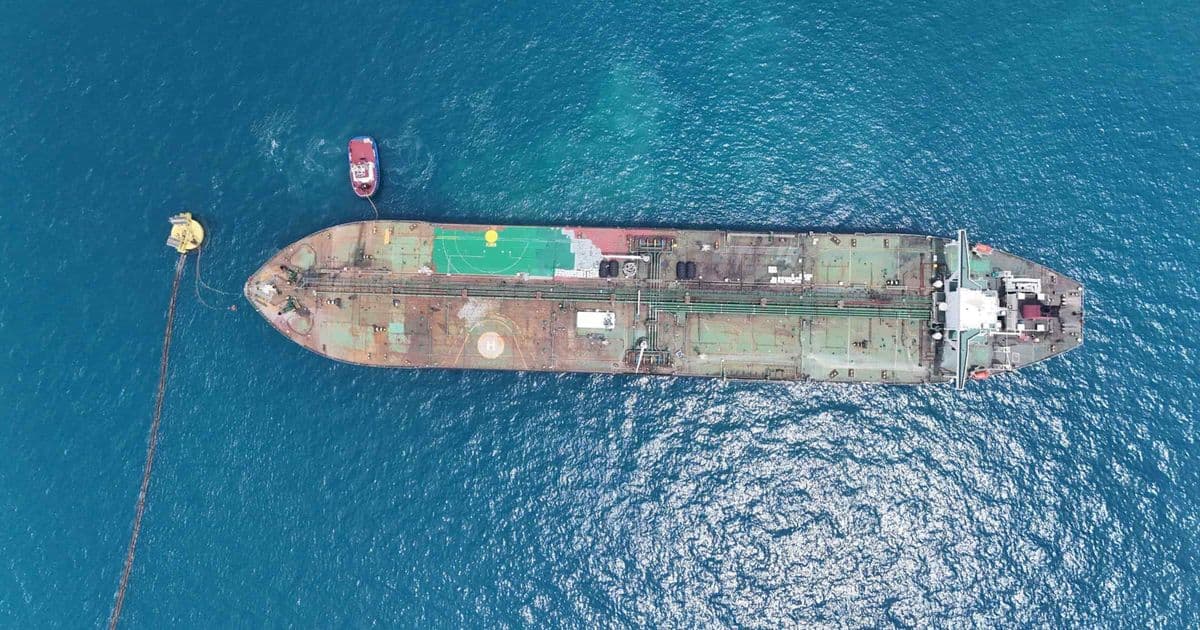
The United Arab Emirates and Iraq are accelerating construction of new pipeline capacity to shift crude exports away from the vulnerable Strait of Hormuz, aiming to secure up to 1.2 million barrels per day of alternative flow and mitigate geopolitical risk.
UAE and Iraq Expand Pipeline Network to Circumvent Hormuz Bottleneck
Business news
Dubai‑based officials confirmed that the United Arab Emirates and Iraq have jointly approved a $4.3 billion expansion of the existing pipeline corridor that runs from Iraq’s southern fields to the Gulf of Oman. The project, dubbed the “Great Bypass”, will add roughly 1.2 million barrels per day (bpd) of transport capacity, effectively creating a parallel route to the Strait of Hormuz for crude destined for Asian refiners.
The new line, scheduled for completion in late 2028, will link the Al‑Faw terminal on Iraq’s coast to the Fujairah port in the UAE, where crude can be loaded onto tankers for the Asia‑Pacific market. Construction is already under way on a 250‑km stretch of high‑pressure pipeline, with the first segment expected to be operational by Q4 2027.
Market context
The Strait of Hormuz, a 21‑nautical‑mile choke point, handles roughly 30 % of global oil trade and about 40 % of the United States’ imports. Since the escalation of hostilities between Iran and the United States earlier this year, Iranian forces have intermittently threatened to close the waterway, prompting a sharp rise in freight premiums. Spot freight rates for VLCCs (very large crude carriers) surged from $12 /‑tonne in January to $27 /‑tonne by mid‑May, reflecting heightened insurance costs and rerouting delays.
Analysts at BloombergNEF estimate that a prolonged closure could shave 100 days of global oil supply from inventories, pushing Brent crude above $115 /barrel. The UAE and Iraq’s pipeline push is therefore a risk‑mitigation measure aimed at preserving market stability and protecting export revenues that total $45 billion annually for the two nations combined.
What it means
- Revenue protection for Iraq and the UAE – By diverting up to 1.2 million bpd away from Hormuz, the two countries can avoid the freight‑rate premium that would otherwise erode net‑back prices. Assuming a $15 /‑tonne freight differential, the bypass could preserve roughly $1.8 billion in annual export earnings.
- Supply‑chain resilience for Asian refiners – Japan, South Korea and India, which together import over 10 million bpd of Middle‑East crude, will gain a more predictable supply line. Ship‑to‑ship transfers in the Red Sea, currently used as a stop‑gap, are less efficient and raise environmental concerns.
- Strategic leverage against Iran – While the pipeline does not eliminate Iran’s ability to disrupt oil flows, it reduces the leverage Tehran holds over global markets. In a scenario where Iran imposes a full closure, the bypass could sustain roughly 30 % of the region’s export volume.
- Capital allocation shift – The $4.3 billion investment, funded through a mix of sovereign wealth funds and private‑sector partners, signals a reallocation of capital from upstream drilling to midstream infrastructure. This trend mirrors similar moves by Saudi Arabia and Kuwait, which have announced parallel projects worth a combined $12 billion.
- Potential impact on freight markets – As the bypass comes online, freight forwarders may see a gradual compression of the Hormuz premium. Early estimates suggest a 10‑15 % reduction in VLCC spot rates by 2029, benefitting downstream logistics firms.
Overall, the UAE‑Iraq pipeline initiative underscores a broader shift in the Middle East toward infrastructure‑centric risk management. By investing in alternative export routes, oil‑producing nations are seeking to insulate their economies from geopolitical shocks while maintaining the flow of crude to the world’s largest demand centres.
Data sources: Reuters, BloombergNEF, International Energy Agency, company filings of the UAE Ministry of Energy and Iraq’s Ministry of Oil.
Comments
Please log in or register to join the discussion