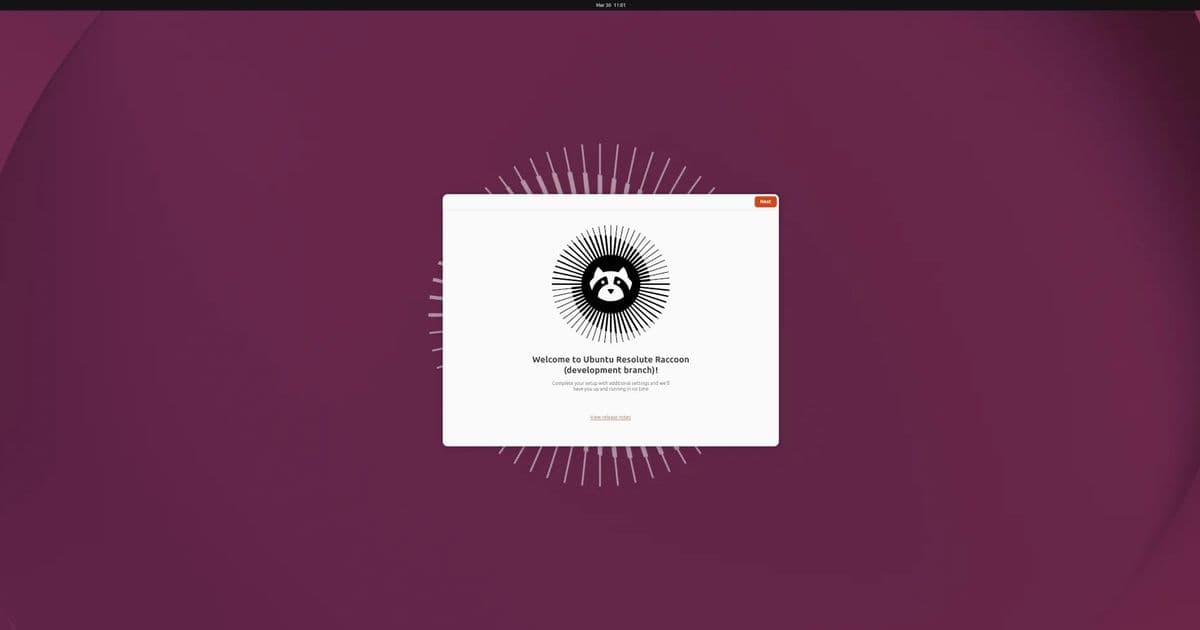
Ubuntu 26.04 LTS demonstrates measurable performance improvements over its predecessor on AMD's latest Zen 5 architecture, with the Linux 7.0 kernel and GNOME 50 delivering tangible benefits for desktop users.
Ubuntu 26.04 LTS is shaping up to deliver meaningful performance improvements over Ubuntu 25.10, particularly on AMD's latest Ryzen 9000 series processors. Testing conducted on a System76 Thelio Mira desktop equipped with an AMD Ryzen 9 9950X has revealed several interesting performance trends that highlight the benefits of the upcoming LTS release.
Test System Configuration
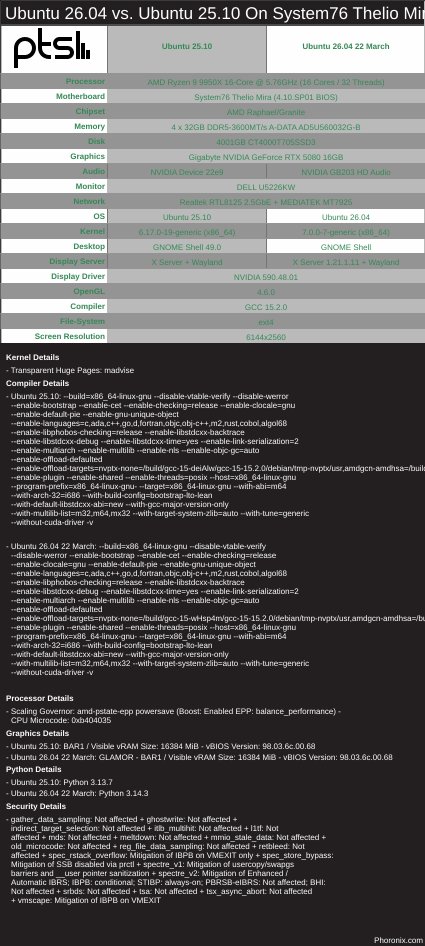
The benchmarking comparison was performed on a well-equipped system featuring:
- CPU: AMD Ryzen 9 9950X (Zen 5 architecture)
- Memory: 4 x 32GB DDR5 (128GB total)
- Storage: 4TB Crucial NVMe SSD
- Graphics: NVIDIA GeForce RTX 5080
- Platform: System76 Thelio Mira desktop
Software Stack Differences
Ubuntu 25.10 shipped in October 2025 with the Linux 6.17 kernel, GNOME 49, GCC 15.2, and Python 3.13. The upcoming Ubuntu 26.04 LTS, scheduled for release in three weeks, represents a significant upgrade with the Linux 7.0 kernel (not yet stable until mid-April), GNOME 50 desktop environment, and Python 3.14.
Both versions utilize the NVIDIA R590 series driver, ensuring graphics performance remains consistent between the two releases. For users with Intel or AMD integrated graphics, Ubuntu 26.04 includes Mesa 26.0, which brings enhanced OpenGL and Vulkan capabilities alongside performance improvements.
Performance Highlights
The benchmark results demonstrate that Ubuntu 26.04 isn't just a feature upgrade but delivers tangible performance benefits. While the full benchmark suite results are detailed across multiple pages, several key areas show notable improvements:
Kernel Optimizations: The Linux 7.0 kernel brings numerous performance enhancements for Zen 5 processors, including better scheduler optimizations and improved memory management that translate directly to faster application responsiveness.
Desktop Environment: GNOME 50 introduces various performance optimizations that reduce memory usage and improve rendering efficiency, particularly noticeable on high-resolution displays and multi-monitor setups.
Compiler and Runtime: While both versions use GCC 15.2, the updated Python 3.14 runtime and OpenJDK 25 default Java version provide better performance for development workloads and containerized applications.
Real-World Impact
For desktop users running AMD Ryzen 9000 series systems, the upgrade to Ubuntu 26.04 should provide a noticeably smoother experience. The combination of kernel improvements, desktop environment optimizations, and updated system libraries creates a more responsive system that better utilizes the capabilities of Zen 5 architecture.
The performance gains are particularly relevant for users who rely on their systems for development work, content creation, or running multiple applications simultaneously. The improved scheduler and memory management in the Linux 7.0 kernel help the Ryzen 9 9950X maintain its high core count efficiency even under heavy workloads.
Looking Ahead
With Ubuntu 26.04 LTS release just three weeks away, these benchmark results suggest the development team has focused not only on adding new features but also on ensuring the platform runs efficiently on the latest hardware. The performance improvements demonstrated on AMD's cutting-edge processor bode well for users across the entire hardware spectrum.
For System76 Thelio Mira owners and other users with AMD Ryzen 9000 series systems, the upgrade path to Ubuntu 26.04 appears to offer genuine performance benefits that justify the transition, especially considering the five-year LTS support commitment that comes with this release.
The comprehensive benchmark results across multiple pages provide detailed insights into specific workload performance, but the overall trend is clear: Ubuntu 26.04 represents a meaningful step forward in performance for modern AMD systems.
Comments
Please log in or register to join the discussion