The UK government's latest renewable energy auction secured record low prices for onshore wind and solar, making them significantly cheaper than new gas power plants and accelerating progress toward the country's 2030 clean energy targets.
The UK government has secured a record 7.4 gigawatts (GW) of solar, onshore wind and tidal power in its latest auction for new renewable capacity, with prices that demonstrate clean energy is now "50% cheaper" than new gas power stations.
Record-Breaking Auction Results
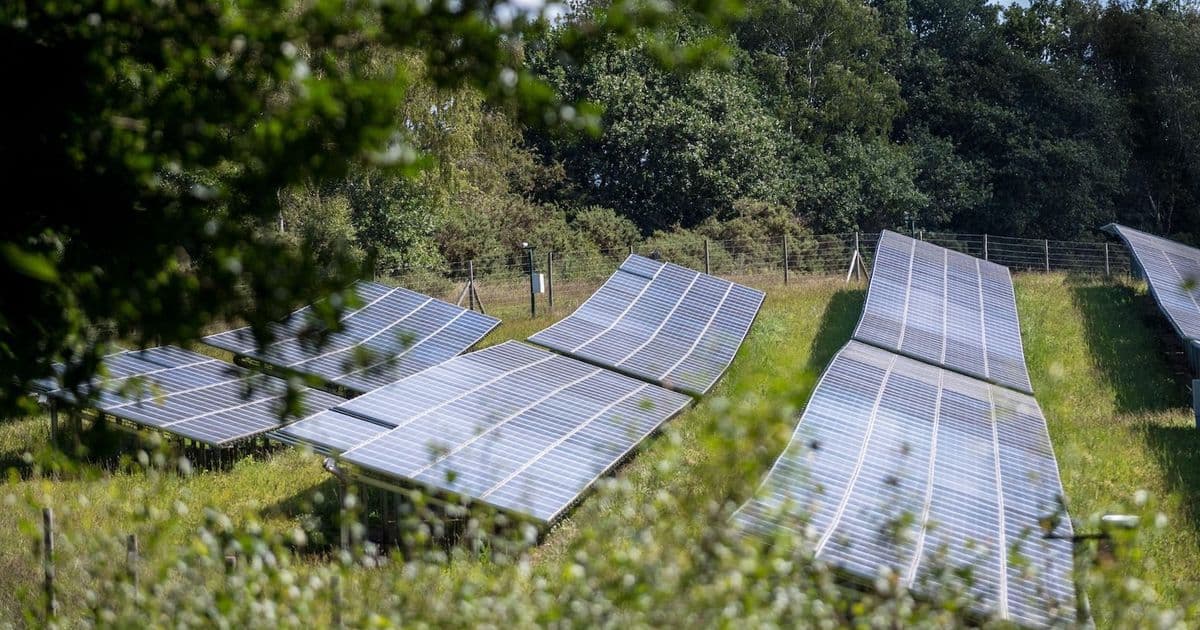
The second and final part of the seventh auction round (AR7a) secured 4.9GW of new solar capacity across 157 projects at £65 per megawatt hour (MWh), plus 1.3GW of onshore wind across 28 projects at £72/MWh. This makes AR7 the UK's single-largest auction round overall, with its 14.7GW of new renewable capacity being 50% larger than the previous record set by AR6 in 2024.
Energy Secretary Ed Miliband welcomed the outcome, stating that the new projects would be "50% cheaper" than new gas: "These results show once again that clean British power is the right choice for our country, agreeing a price for new onshore wind and solar that is over 50% cheaper than the cost of building and operating new gas."
Cost Comparison with Gas Power
The prices secured for onshore wind (£72/MWh) and solar (£65/MWh) are comfortably below recent wholesale power prices, which averaged £81/MWh in 2025 and £92/MWh in January 2026. This means the new projects will cut costs for UK electricity consumers.
The government noted that these results were less than half of the £147/MWh cost of building and operating new gas power stations, based on recently published government estimates.
Impact on Energy Security and Bills
The new projects will generate an estimated 9 terawatt hours (TWh) of electricity, equivalent to roughly 3% of current UK electricity demand. Combined with the 37TWh from offshore wind secured during the first part of the auction, AR7 projects will be able to generate 46TWh of electricity, 14% of current demand.
If this electricity were generated by gas-fired power plants, it would require around 95TWh of fuel. This is several times more than the 25TWh of extra gas that could be produced in 2030 if new drilling licenses are issued, according to the Energy and Climate Intelligence Unit (ECIU).
Progress Toward 2030 Clean Power Target
The AR7a results put the UK "on track for its 2030 clean power target," according to the government. The UK aims for 27-29GW of onshore wind and 45-47GW of solar by the end of the decade. As of September 2025, the UK had 16.3GW of installed onshore wind capacity and more than 21GW of solar capacity.
Analysis suggests the government will need to procure between 3.85GW to 4.85GW of onshore wind in the next two auctions for the 2030 goal to remain possible. The challenge now is delivery, with 2.5GW of the winners having a delivery year of 2027/28, and over half – 3.7GW – having a delivery year of 2028/29.
Regional Distribution and Community Benefits
Scotland dominated the auction for onshore wind, with 1,093MW of projects compared to 38MW in England and 185MW in Wales. Wales secured contracts for 20 renewables projects in AR7a, the largest ever number of Welsh projects to get backing in a CfD auction.
The onshore wind projects are expected to generate over £6.5m in "community benefit" funds for people living near them. Additionally, the projects that secured CfDs will help the UK avoid burning significant quantities of gas, the bulk of which would have been imported at a cost which the UK cannot control.
Investment and Job Creation
The government added that the AR7a projects will support up to 10,000 jobs and bring £5bn in private investment to the UK. Together with previous CfD auction rounds, the latest new renewable projects are expected to generate some 153TWh of electricity once they are all operating, around half of current UK demand.
This represents a significant shift in the UK's energy landscape, with renewables increasingly setting power prices and reducing the country's exposure to volatile international gas markets. The success of AR7 demonstrates that clean energy is not only environmentally beneficial but also economically advantageous for UK consumers and businesses alike.
Comments
Please log in or register to join the discussion