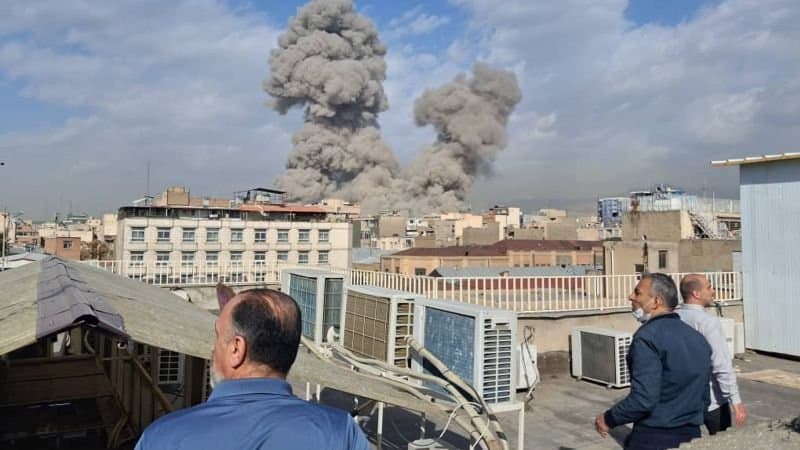
The US and Israel have launched major military strikes against Iran, targeting leadership and nuclear facilities, while Iran retaliates across the Middle East.
The United States and Israel have launched a major coordinated attack on Iran, with President Donald Trump declaring the operation would "lay waste" to Iran's military capabilities and potentially topple its regime. The strikes, which began Saturday morning local time, mark a dramatic escalation in tensions that have been building for months.
Unlike the brief US strikes in June 2025 that targeted Iran's nuclear facilities, these attacks appear designed for sustained pressure. US military sources indicate planning for several days of operations, suggesting broader strategic objectives beyond the previous limited strikes.
The Immediate Response
Iran has launched an unprecedented retaliatory wave across the Middle East, targeting multiple countries hosting US military bases. Explosions have been reported from Dubai's beaches to Doha's streets, with additional strikes in the UAE, Qatar, Bahrain, and Saudi Arabia. This marks one of the most extensive regional military responses in recent Middle Eastern conflict history.
The timing appears strategic - the daylight strikes on Iran's first workday maximize civilian disruption while military targets remain active. Iranian state media reported explosions in Tehran's Pasteur district, home to Supreme Leader Ayatollah Ali Khamenei's highly secured compound, though top officials claim to be safe.
Why Now?
Several converging factors appear to have precipitated this action. Iran has faced severe economic pressure since January, with nationwide protests following a harsh government crackdown that left thousands dead. The regime was already weakened by last summer's war with Israel, during which the US briefly joined military operations.
Despite recent diplomatic efforts, including nuclear talks in Switzerland that ended Thursday with Iran agreeing "never" to stockpile enriched uranium, the US proceeded with military action. Trump's administration, which had been moving significant military materiel to the region while simultaneously pursuing negotiations, ultimately chose force.
The Strategic Targets
Israeli sources indicate the strikes specifically targeted senior Iranian leadership, including Khamenei, President Masoud Pezeshkian, and armed forces chief Abdolrahim Mousavi. This targeting pattern suggests Israel aims to decapitate Iranian leadership rather than simply degrade military capabilities.
The operation, dubbed "Operation Epic Fury" by the Department of Defense, focuses on eliminating what Trump called "imminent threats from the Iranian regime," primarily its nuclear program. However, Trump's claims about Iran developing missiles capable of reaching the US mainland appear unsupported by current intelligence assessments.
Regional Implications
Both Trump and Netanyahu explicitly mentioned regime change as a desired outcome. Trump addressed Iranian citizens directly, telling them "the hour of your freedom is at hand" and encouraging them to overthrow their government. Netanyahu similarly called on Iranians to "cast off the yoke of tyranny."
This marks a significant departure from previous US policy, which has typically avoided explicit regime change rhetoric while pursuing strategic objectives. The combination of military pressure with political messaging suggests a comprehensive approach to reshaping Iran's government.
The Broader Context
Iran's ability to retaliate has been hampered since the June strikes destroyed much of its ballistic missile stockpile. The current wave of attacks may represent Iran's attempt to utilize remaining capabilities before further degradation.
Saudi Arabia, typically aligned against Iran, has vowed to take "all necessary measures" to defend itself, highlighting the complex regional dynamics at play. The conflict threatens to engulf multiple Middle Eastern nations as Iran targets countries hosting US bases while defending against Israeli strikes.
The operation represents the most significant US-Israeli military coordination against Iran to date, with potentially far-reaching consequences for regional stability and global energy markets. As damage assessments continue to emerge, the international community watches to see whether this marks the beginning of a broader regional conflict or a contained military operation with specific strategic objectives.
The coming days will prove critical in determining whether these strikes achieve their stated goals or trigger a wider conflagration that could reshape the Middle Eastern geopolitical landscape for years to come.
Comments
Please log in or register to join the discussion