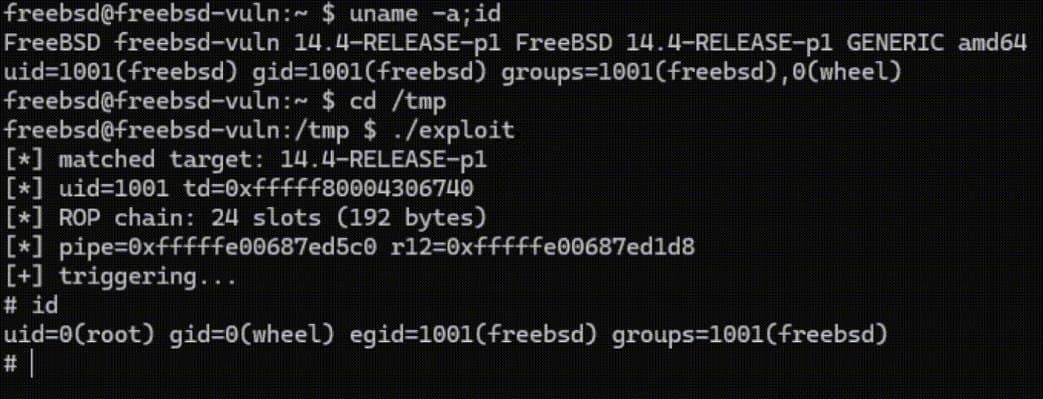
A team of security researchers paired with large‑language‑model assistants to hunt for critical bugs in the FreeBSD kernel, uncovering fifteen flaws—including remote code execution, local privilege escalation, and a bhyve guest‑to‑host escape—while refining a collaborative workflow that respects maintainers’ limited time.
When AI Becomes a Partner in Open‑Source Security: Inside the FreeBSD Kernel Audit
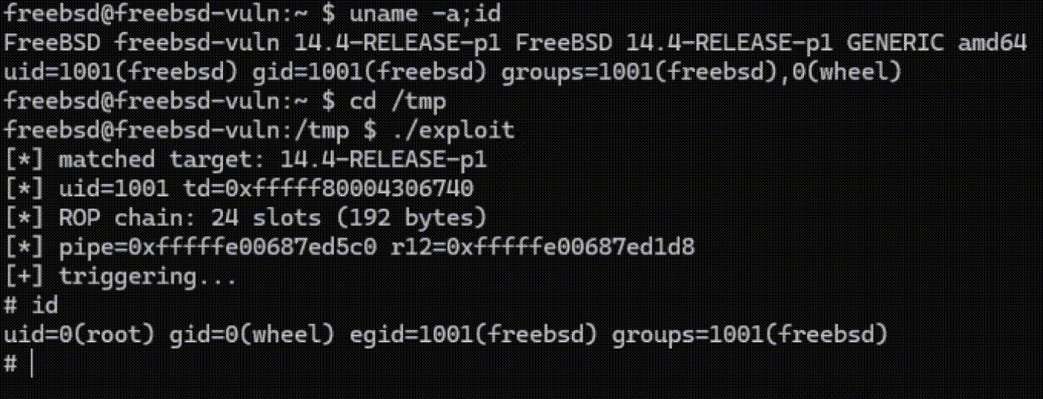
FreeBSD’s kernel, the heart of a network‑operating system that powers routers, storage appliances, and cloud hypervisors, has just been examined under a new microscope: a partnership between human experts and generative AI.
The Core Argument
The authors of the Calif newsletter argue that the most effective way to improve the security of critical open‑source infrastructure is not to flood maintainers with low‑impact reports, but to raise the cost of finding bugs for attackers while lowering the cost of fixing them for the community. By integrating large‑language‑model (LLM) assistants into their workflow, the team was able to discover a suite of high‑severity kernel vulnerabilities in a matter of weeks, then hand them to the FreeBSD maintainers in a format that maximized the chance of rapid remediation.
How the Audit Unfolded
1. Defining the Collaboration Model
The team met with the FreeBSD kernel maintainers and agreed on two guiding principles:
- Only high‑or‑critical bugs get reported. Anything less is filtered out before it reaches the maintainers’ inboxes.
- Reports stay concise. A one‑line description plus a minimal proof‑of‑concept (PoC) is preferred; deeper analysis is offered only on request.
These rules echo a broader shift in vulnerability research: attention is the scarcest resource.
2. The AI‑Assisted Hunting Loop
The workflow can be broken down into three stages:
- Static‑analysis prompting. The researchers fed the FreeBSD source tree into an LLM (OpenAI’s GPT‑4‑Turbo and Anthropic’s Claude 3) with prompts such as “Find functions that copy user‑controlled data into kernel buffers without size checks.” The model returned candidate functions, line numbers, and a brief rationale.
- Automated fuzzing scaffolding. For each candidate, a small harness was generated that linked the function into AFL++ or libFuzzer. The AI also suggested edge‑case inputs based on the function’s type signatures.
- Triage and PoC generation. When a crash or memory‑corruption event was observed, the model produced a minimal PoC in C, often leveraging existing kernel APIs like
ptraceorprocdesc.
The loop ran on a modest 32‑core server farm, consuming roughly 1,200 GPU‑hours over three weeks—far less than a traditional manual audit of comparable depth.
3. The Findings
In total, fifteen kernel bugs were reported, all confirmed by the FreeBSD team. Highlights include:
| Bug | Type | Affected Versions | CVE |
|---|---|---|---|
| setcred | Local privilege escalation (stack overflow) | 14.4 only | CVE‑2026‑45250 |
| ptrace | Local privilege escalation (out‑of‑bounds sysent indexing) | 14.3, 15.0 | CVE‑2026‑45253 |
| procdesc | Local privilege escalation (use‑after‑free) | 14.3, 15.0 | CVE‑2026‑45251 |
| bhyve escape | Guest‑to‑host escape | 14.4, 15.0 | — |
| Five additional LPEs and several DoS / memory‑disclosure bugs | — | — | — |
The AI wrote the exploit write‑ups verbatim; the researchers kept them as a historical snapshot of “what AI‑driven vulnerability research looked like in 2026.”
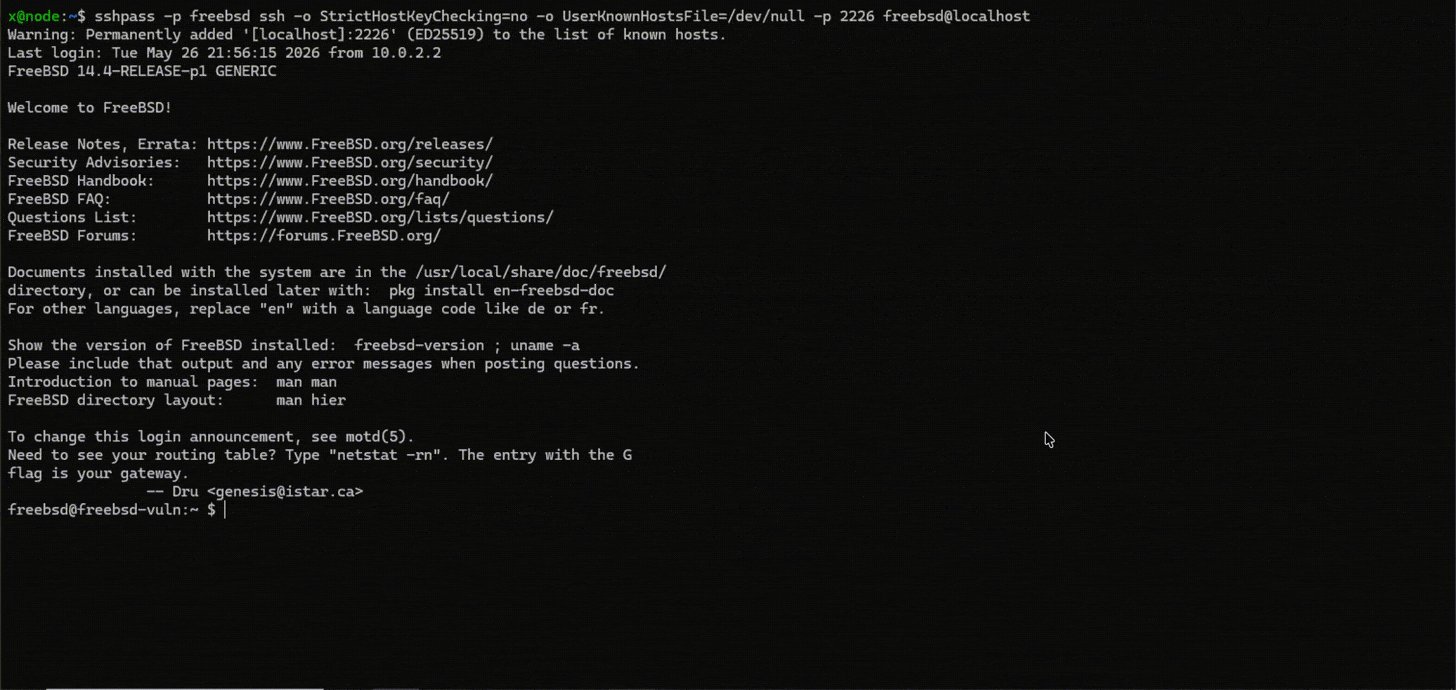
Implications for the Open‑Source Ecosystem
Reducing the “bug‑report fatigue” problem
Open‑source maintainers often receive dozens of low‑impact reports daily. By filtering at the source, the AI‑augmented team delivers a signal‑to‑noise ratio that is an order of magnitude higher than typical community submissions. This approach could be replicated across other critical projects such as OpenSSH, the Linux kernel, or the Rust compiler.
Accelerating patch development
Because each report includes a suggested patch (clearly labeled as optional), maintainers can apply a quick fix or use it as a reference when crafting a more comprehensive solution. In the FreeBSD case, many patches were merged within days, shrinking the window of exposure.
Democratizing expertise
The audit demonstrates that sophisticated kernel research no longer requires a team of senior C‑security veterans alone; an LLM can encode much of the pattern‑recognition knowledge and surface promising attack surfaces to a junior analyst. This lowers the barrier for smaller security outfits to contribute meaningfully.
Counter‑Perspectives and Risks
While the collaboration is promising, several concerns merit attention:
- Reliance on proprietary AI models. If future access to the underlying LLMs is restricted or cost‑prohibitive, the reproducibility of this workflow could suffer.
- Potential for weaponization. Publishing AI‑generated PoCs alongside the advisory could aid malicious actors, especially when the underlying vulnerability is not yet patched on all installations.
- False‑positive fatigue. Though the team filtered aggressively, any automated system can still surface spurious bugs, risking wasted maintainer time if not carefully vetted.
Balancing transparency with responsible disclosure will remain a nuanced challenge.
Looking Forward
The Calif team plans to extend this partnership model to other cornerstone projects—OpenSSH, the BIND DNS server, and the LLVM toolchain—while refining the prompting techniques that drive the LLM’s static‑analysis capabilities. They also intend to open‑source the audit harness library, which abstracts the fuzz‑generation and triage steps, enabling any security researcher to plug in their favorite LLM.
If you are a maintainer interested in trying a similar collaboration, the team encourages you to reach out via the contact link in the original newsletter. The goal is not to compete with existing security researchers, but to augment the limited human resources that keep the Internet’s infrastructure alive.
Comments
Please log in or register to join the discussion