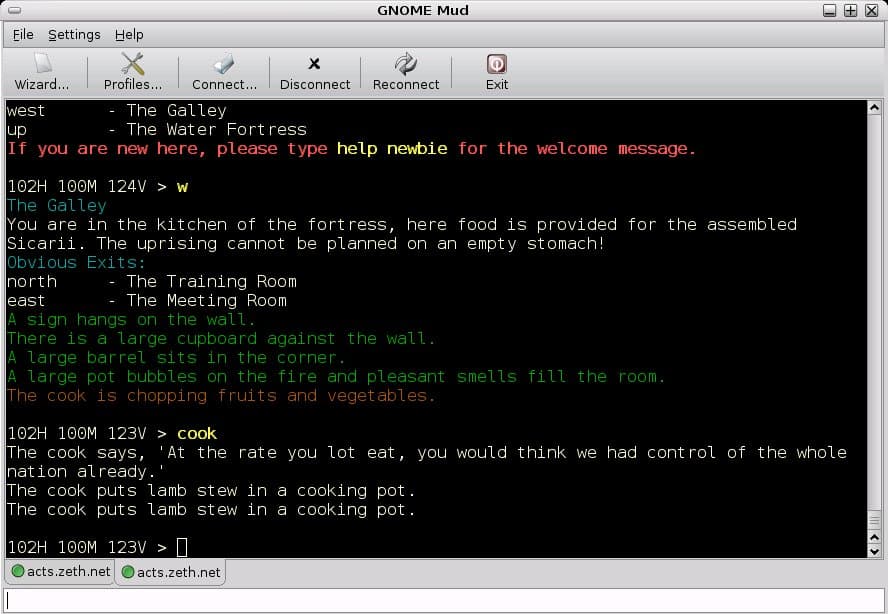
A nostalgic blog post about jumping from a 14.4k modem to broadband captures something modern connectivity has quietly erased: the visceral, almost physical thrill of watching a network get faster. The story of MUDs and 3 a.m. dial-up sessions points to a deeper question about how we experience technological progress.
There is a particular kind of memory that technologists carry around like worn photographs, and a recent reflection titled Those old modem upgrades taps directly into it. The author, riffing on Kev Quirk's post Upgrading My Home Internet to Full Fibre, notices something curious about his own jump to fiber. It was fine. It was fast. It did not, however, blow his mind. And that absence of wonder becomes the real subject, because once upon a time a modem upgrade was one of the most thrilling things a thirteen-year-old could experience.
The core argument here is small in scope but large in implication: the emotional intensity of a technological improvement is not proportional to its absolute magnitude. Going from 56k dial-up to 2Mbps broadband is, on paper, a forty-fold increase in throughput, vastly larger than the gain the author got from upgrading to a 14.4k modem in 1993. Yet it was the 14.4 that produced what he calls nerd-tingles. The reason is that the upgrade crossed a perceptual threshold. Below it, a single screen of text loaded a few lines at a time, arriving over several seconds in visible installments. After it, the entire screen snapped into place at once. The change was not just measurable, it was felt.
The world he was upgrading for
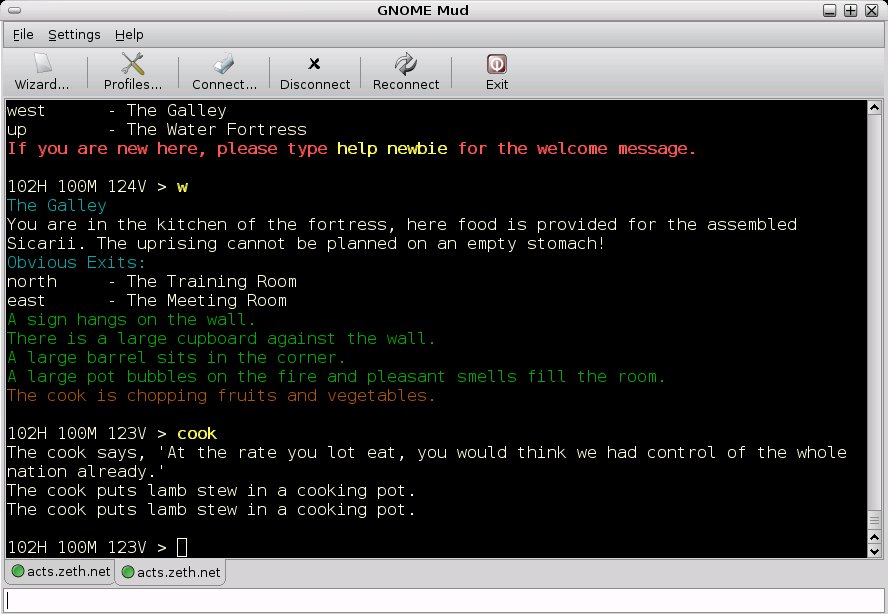
To understand why this mattered, you have to understand what he was doing at 3 a.m. on the family computer, bathed in CRT glow and listening for his parents stirring. He was playing MUDs, multi-user dungeons, the text-based multiplayer worlds that predate and in many ways prefigure games like World of Warcraft. A MUD was a persistent shared universe rendered entirely in words. Players typed commands like north, look, or attack goblin, and the server responded with descriptions of rooms, creatures, and other human players moving through the same space in real time. The first MUD was written by Roy Trubshaw and Richard Bartle at the University of Essex in 1978, and an entire family of descendants, DikuMUD, LPMud, and others, kept the form alive through the 1990s. Many are still running today.
What makes the MUD the perfect setting for this story is that it was almost pure text, which means it was almost pure latency. There were no textures to stream, no models to render, no assets to cache. The bottleneck between you and the world was simply how fast characters could travel down the wire. When that text crawled, the world felt sluggish and remote. When it raced down the screen in a single flash, the world felt immediate and alive. The author was not upgrading his ability to download files. He was upgrading the responsiveness of an imagined place, and the difference registered in his nervous system as something close to magic.
Why the wonder faded
The implications of this little anecdote reach further than nostalgia. We have entered a regime where bandwidth has outrun human perception for most everyday tasks. A page of text, the very thing that once loaded in visible increments, now appears faster than the eye can track regardless of whether your connection is 50Mbps or 500. The marginal upgrade no longer crosses a perceptual threshold because we are already far past the threshold that matters for the activity in question. Fiber is genuinely better, but its benefits are abstract: higher ceilings for simultaneous 4K streams, lower latency for competitive gaming, headroom for a house full of devices. These are real, and yet none of them produce the gut-level revelation of watching text suddenly stop crawling.
This is the diminishing returns of perception, and it is worth sitting with because it complicates the usual story we tell about progress. We tend to assume that better technology produces proportionally better experiences. The modem memory suggests instead that delight lives at the boundaries, in the moments when a constraint we had simply accepted as the texture of reality suddenly lifts. The 13-year-old in 1993 had internalized the slow drip of text as simply how computers were. The upgrade did not just speed things up, it revealed that the slowness had been a removable limitation all along. That revelation is the source of the wonder, and you can only experience it once per constraint.
The counter-perspective worth holding
It would be easy to read all this as a lament, the familiar complaint that things were more magical back when they were worse. That reading is too cheap, and the author mostly avoids it. The honest counter-perspective is that we have not lost wonder so much as relocated it. The child waiting for MUD text experienced delight at the infrastructure layer because the infrastructure was the binding constraint on his imagination. Today the binding constraints have moved up the stack. A teenager in 2026 is unlikely to feel anything about their connection speed, but they may feel exactly that kind of tingling astonishment the first time a large language model writes working code from a vague description, or the first time a generative model produces an image that did not exist a moment before. The threshold-crossing has not disappeared. It has simply migrated to whatever layer is currently scarce.
There is also a quieter point hiding in the structure of the memory. The author cannot remember what speed he upgraded from before the 14.4, only the feeling of the text racing down the screen. Technical specifications evaporate; the embodied experience endures. This is a useful corrective for an industry obsessed with benchmarks and headline numbers. The metric that mattered to a 13-year-old was never the figure on the box. It was the moment the world stopped making him wait. As we keep building faster pipes and bigger models, the question that actually predicts delight is not how much we improved a number, but whether we removed a wait that someone had stopped noticing they were enduring.
Comments
Please log in or register to join the discussion