As Wikipedia celebrates its 25th anniversary, the platform's journey from a single iMac edit to the world's 7th most popular website reveals a story of hardware evolution, community-driven scaling, and the triumph of open knowledge over commercial reference works.
The first edit to Wikipedia was made on a translucent, candy-colored Apple iMac—a machine that itself represented a turning point for personal computing. In January 2001, co-founder Jimmy Wales typed "Hello, World!" on that bulbous all-in-one computer, launching what would become the world's seventh most popular website. Today, Wikipedia hosts over 7 million English articles and serves approximately 7 billion monthly visitors, making it the most successful non-commercial, non-social, non-search destination on the web.
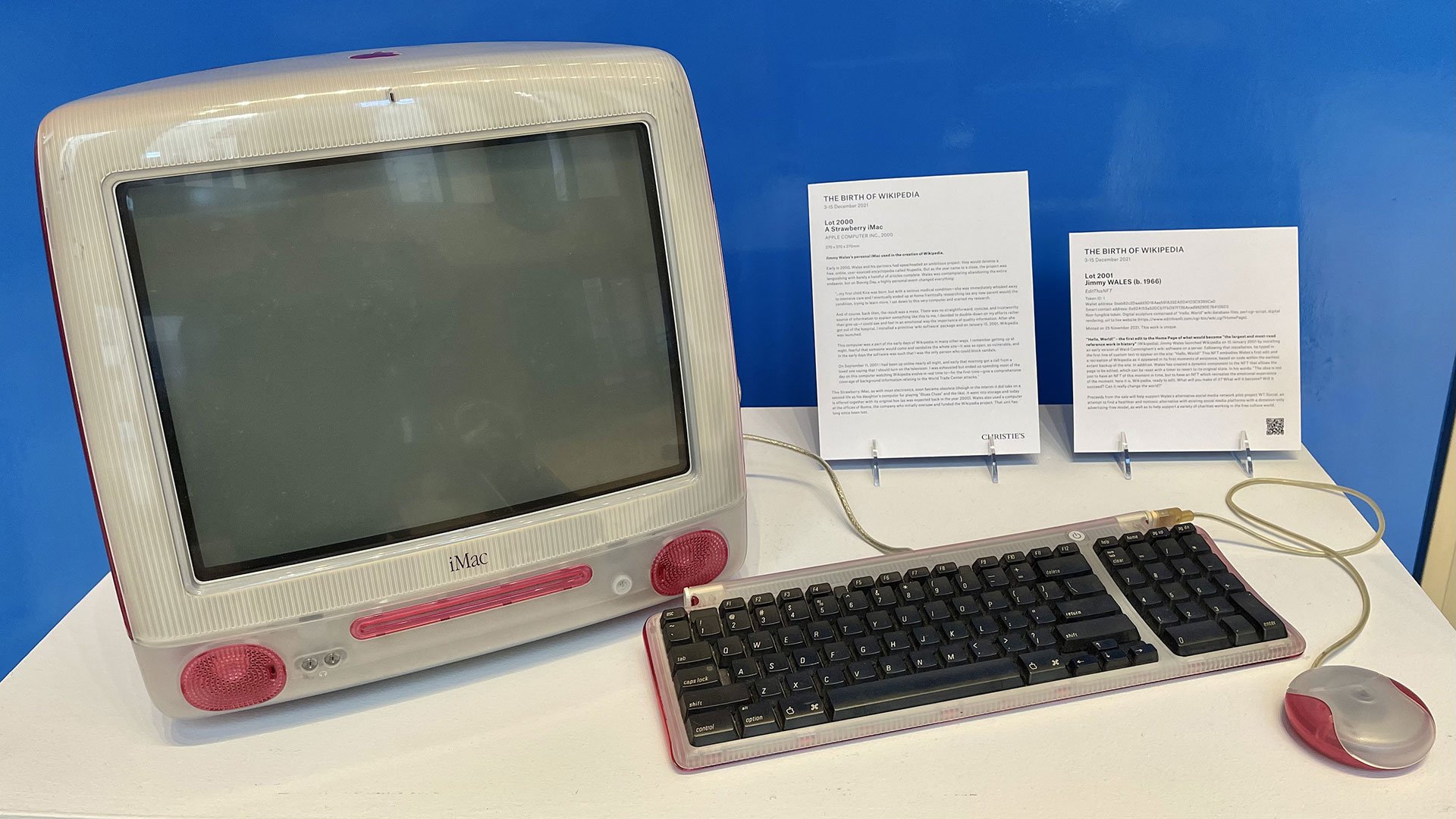
That inaugural iMac was more than just a typing device. It was the first major product under Steve Jobs' renewed leadership at Apple, pioneering USB ports while effectively ending the floppy disk era. The choice of hardware is symbolic: Wikipedia emerged during a period when computing was becoming more accessible, just as the platform itself would make knowledge more accessible.
From Amateur Optimism to Systematic Reliability
The early years of Wikipedia were defined by its radical openness. The initial edit carried an "amateurishly optimistic" tone, and for years, critics pointed to the platform's core vulnerability: anyone could edit anything. This openness led to well-documented issues—vandalism, edit wars, and the inevitable human biases that color any crowd-sourced knowledge base. Without a formal editorial board or fact-checking system, Wikipedia struggled to establish credibility against established reference works like Encyclopædia Britannica and Microsoft Encarta.
The turning point came in the mid-to-late 2000s. Through gradual structural changes, Wikipedia implemented more robust community moderation, citation requirements, and quality controls. Studies from this period began to show that Wikipedia's accuracy was approaching that of traditional encyclopedias. By the 2010s, the platform had transformed from a controversial experiment into a trusted resource, eventually becoming a primary data source for Google's knowledge graph.
The Hardware Scaling Challenge
While Wikipedia's software architecture is open-source (MediaWiki), the platform's growth has required significant hardware infrastructure. Serving 7 billion monthly requests across 342 language editions demands sophisticated content delivery networks, caching systems, and database optimization. The platform's non-commercial model means this infrastructure is funded through donations rather than advertising revenue—a remarkable achievement in an era of data monetization.
The hardware story extends beyond servers. Wikipedia's accessibility on mobile devices, particularly in developing regions, has been crucial to its global reach. The platform's lightweight design and efficient data compression allow it to function on low-bandwidth connections, making knowledge accessible where commercial alternatives might be prohibitively expensive.
Market Implications: The Reference Work Disruption
Wikipedia's success represents a fundamental shift in how reference information is created and consumed. Traditional encyclopedias required paid editors, physical printing, and distribution networks—costs that made them inaccessible to many. Wikipedia's model, while imperfect, democratized knowledge creation and access.
This disruption had ripple effects across the publishing and education sectors. Encyclopædia Britannica ceased its print edition in 2012, while Microsoft discontinued Encarta in 2009. The commercial reference market contracted significantly, though specialized academic and professional encyclopedias persist in niche domains.
Technical Architecture and Community Governance
Wikipedia runs on MediaWiki, an open-source software platform that has evolved alongside the site itself. The platform's architecture supports real-time collaboration, version control, and conflict resolution—technical features that enable its community governance model. Each article maintains a complete edit history, allowing transparency and accountability.
The platform's success relies on a delicate balance between openness and control. Automated systems detect vandalism, while experienced editors maintain quality standards. This hybrid approach—combining algorithmic oversight with human judgment—has proven scalable enough to manage millions of articles across hundreds of languages.
Future Challenges and Opportunities
As Wikipedia enters its second quarter-century, it faces new challenges. The rise of AI-generated content raises questions about authenticity and verification. The platform must also address persistent gaps in coverage, particularly regarding topics from the Global South and underrepresented subjects. Additionally, the sustainability of its donation-based model remains an ongoing concern as operational costs continue to grow with scale.
Despite these challenges, Wikipedia's 25-year milestone demonstrates the viability of non-commercial, community-driven platforms at internet scale. Its journey from a single iMac edit to a global knowledge repository offers a blueprint for how open collaboration can compete with—and often surpass—commercial alternatives.
The platform's success is measured not just in traffic statistics but in its integration into daily life. From students researching homework to professionals verifying facts, Wikipedia has become an indispensable tool for information access. Its 25th anniversary serves as a reminder that the most impactful technological innovations often combine accessible hardware, open software, and human collaboration to create something far greater than the sum of their parts.
Comments
Please log in or register to join the discussion