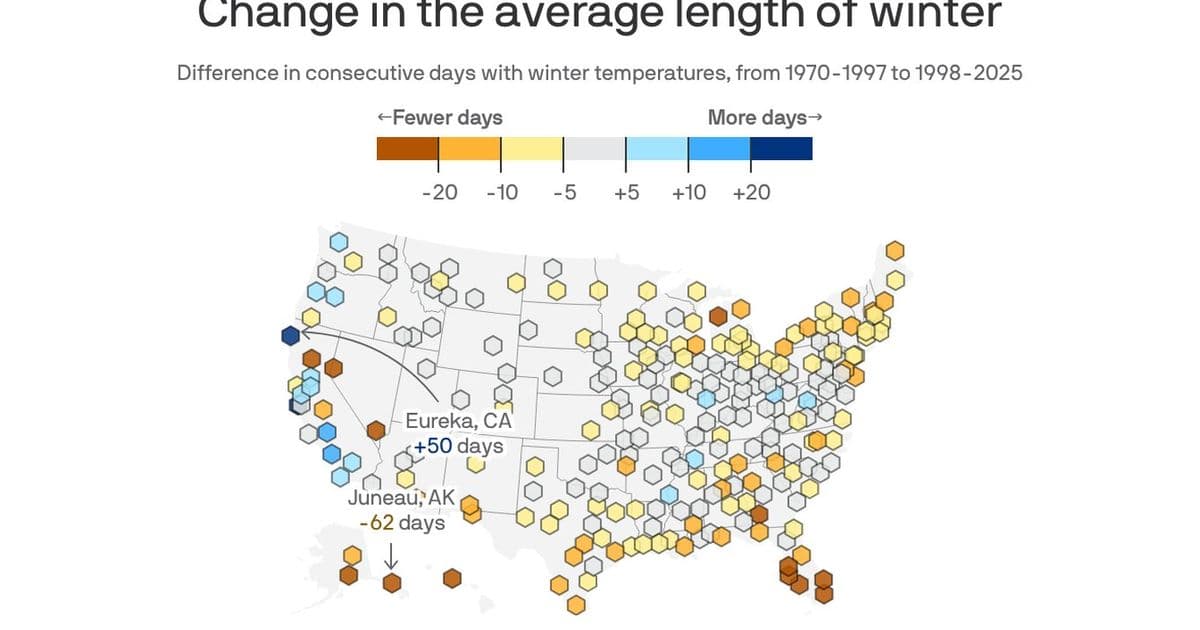
New climate data shows winter seasons are shrinking across America, with significant implications for energy consumption, agriculture, and urban planning.
New climate data reveals that winter seasons are getting shorter across most U.S. cities, marking a significant shift in seasonal patterns that could have far-reaching consequences for energy consumption, agriculture, and urban infrastructure.
According to recent climate analysis, the traditional winter season is contracting in duration across the majority of American metropolitan areas. This trend represents one of the most tangible manifestations of climate change that Americans experience in their daily lives, as the familiar rhythm of seasons that has structured life across the country for generations begins to shift.
The changing face of winter
The data shows that winter is not only becoming shorter but also milder in many regions. Cities that historically experienced consistent cold temperatures and regular snowfall are now seeing fewer freezing days and reduced snow accumulation. This pattern is particularly pronounced in northern states where winter has traditionally been the dominant season.
In the Northeast and Midwest, where winter sports and cold-weather activities have been cultural mainstays, the shortening season is already affecting local economies. Ski resorts are extending their seasons later into fall and earlier into spring, while some are investing in snow-making technology to compensate for natural snowfall deficits.
Energy implications
The shortening winter season has significant implications for energy markets and consumption patterns. As heating seasons become shorter, overall natural gas and heating oil demand may decrease, potentially affecting energy prices and utility company revenues. However, this shift is complicated by the increasing frequency of extreme weather events, including polar vortex disruptions that can cause brief but intense cold snaps.
Power grid operators are having to adapt their planning models to account for these changing patterns. The traditional peak winter demand periods are becoming less predictable, requiring more flexible and responsive energy infrastructure.
Agricultural impacts
For agriculture, the changing winter patterns present both opportunities and challenges. Some regions may benefit from longer growing seasons, potentially allowing for additional crop cycles or the introduction of new crop varieties. However, the loss of consistent winter cold periods can disrupt the natural cycles of many plants and agricultural pests.
Many fruit trees and perennial crops require a certain number of "chill hours" during winter dormancy to produce properly in the following season. As winters warm, some traditional growing regions may become unsuitable for these crops, forcing agricultural adaptation or relocation.
Urban planning challenges
Cities across the country are having to reconsider their winter infrastructure planning. The traditional models for snow removal budgets, road salt storage, and winter storm response are based on historical patterns that are increasingly unreliable. Municipalities are finding that the old rules of thumb for winter preparation no longer apply.
At the same time, the reduction in severe winter weather is reducing some infrastructure stresses. Fewer freeze-thaw cycles mean less damage to roads and bridges from frost heaves, potentially reducing maintenance costs in northern regions.
Economic ripple effects
The economic implications extend beyond energy and agriculture. Winter clothing retailers are seeing shifts in purchasing patterns, with demand for heavy winter gear declining in some regions. Conversely, regions that previously had limited winter tourism are seeing new opportunities as milder conditions make winter travel more appealing.
The construction industry is also affected, as frozen ground conditions that traditionally limited winter building activity become less common in many areas, potentially extending the construction season and affecting labor markets.
Looking ahead
Climate scientists project that this trend toward shorter winters will continue and likely accelerate in coming decades. The rate of change varies by region, with northern areas experiencing the most dramatic shifts. Some southern regions are actually seeing slight increases in winter duration as seasonal boundaries blur, though overall temperatures continue to rise.
The shortening winter season represents one of the most immediate and noticeable impacts of climate change for many Americans. Unlike abstract temperature averages or sea level measurements, the changing character of winter is something people experience directly in their daily lives, from the clothes they wear to the activities they pursue.
As this trend continues, communities, businesses, and individuals will need to adapt to a new seasonal reality where the traditional boundaries between winter and other seasons become increasingly fluid and unpredictable.
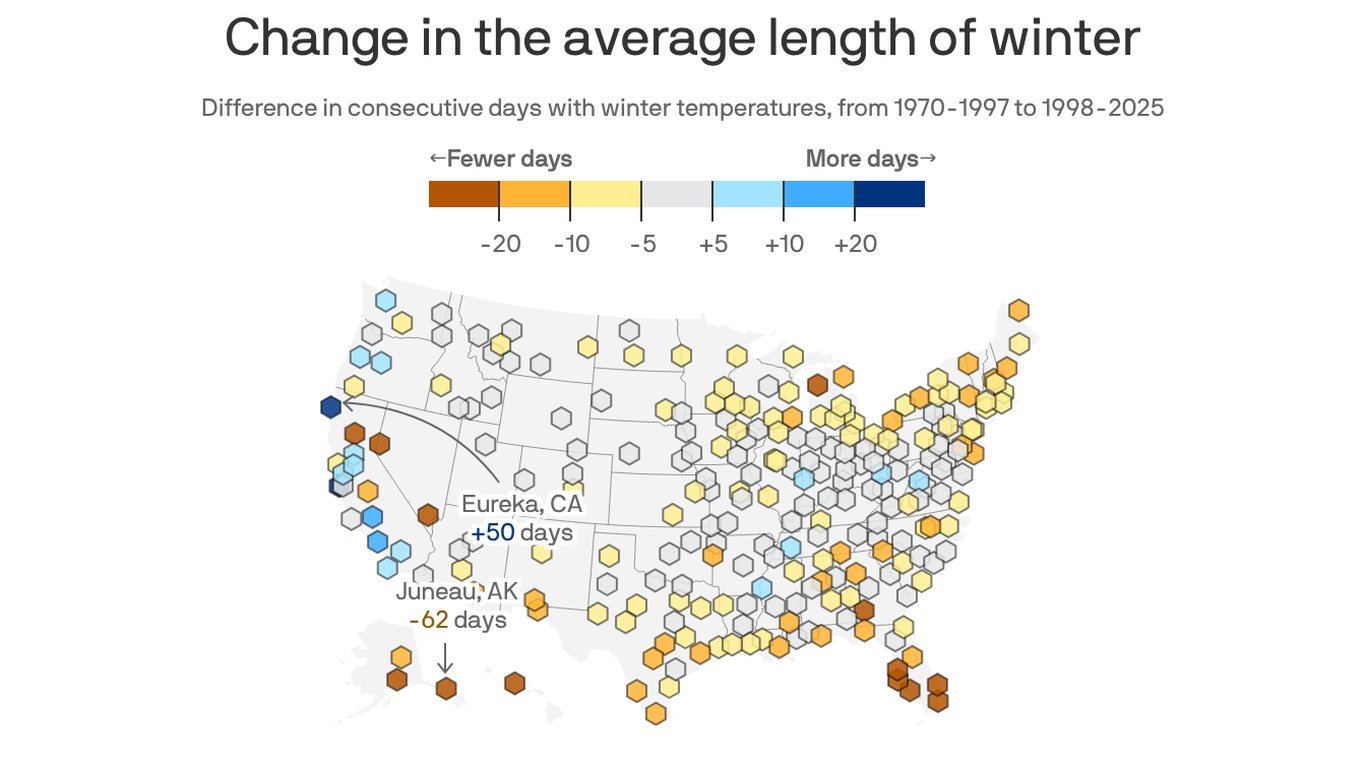
The featured image shows temperature trend data illustrating the shortening winter season across major U.S. metropolitan areas from 2000 to 2024, with northern cities showing the most pronounced changes in winter duration and average temperatures.
Comments
Please log in or register to join the discussion