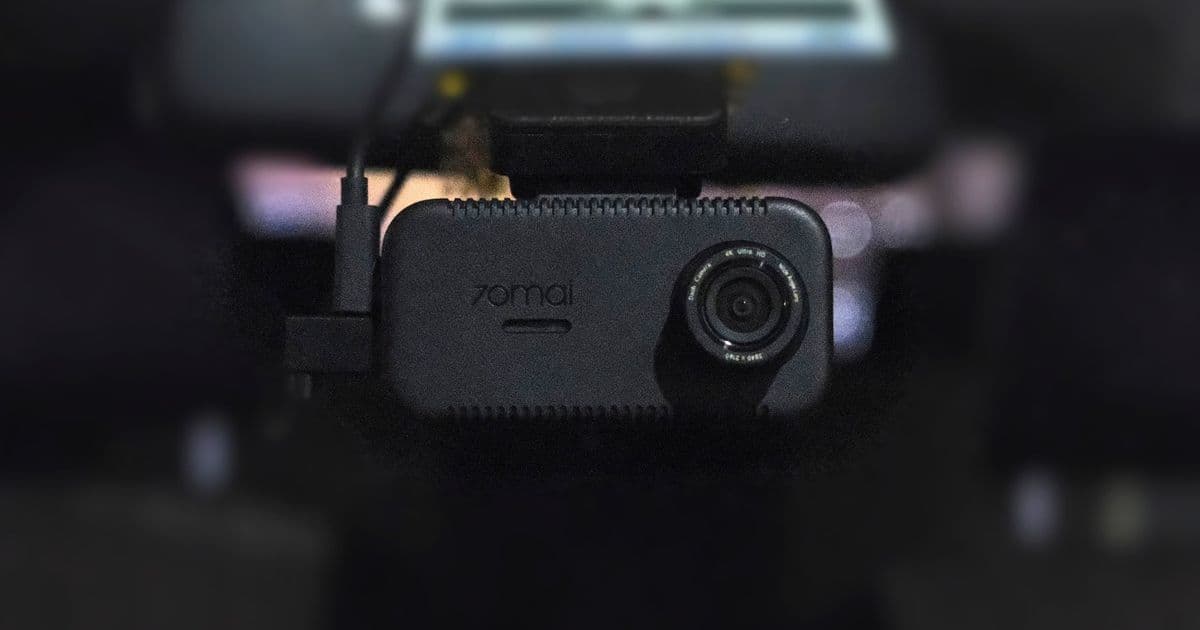
70mai’s A810 Lite trims the price without gutting the parts that matter most: readable 4K front footage, heat-resistant power, GPS, and fast phone transfers.
What's new
The 70mai 4K A810 Lite is not trying to be the most advanced dash cam 70mai sells. That job belongs to pricier models such as the 70mai 4K Omni and the three-channel T800 class of hardware. The A810 Lite is more interesting because it aims at the part of the market where most buyers actually shop: around $150, with front and rear recording included, no subscription requirement, and enough image quality to make license plates and road signs readable when the footage matters.
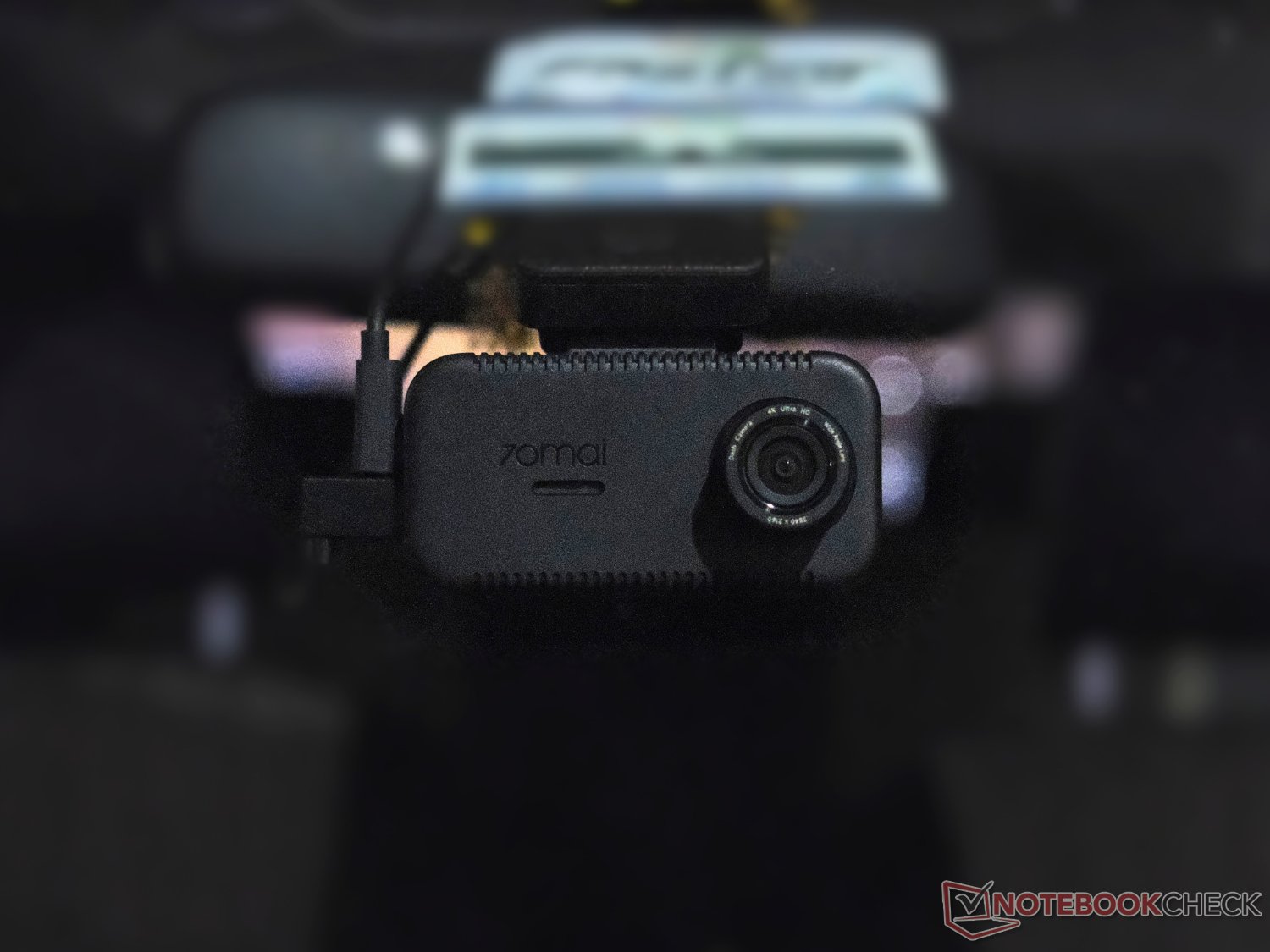
The bundle reviewed by Notebookcheck is priced at $149.99 and includes the main 4K front camera, the RC21 1080p rear camera, and a 64 GB microSD card. That matters because many dash cams advertise an attractive base price, then quietly require a rear camera, storage card, hardwire kit, or GPS module to match the spec sheet buyers had in mind. The A810 Lite starts from a more complete package. You can check the brand’s current catalog through the official 70mai site or the 70mai store, with availability also commonly listed on Amazon.
The headline spec is 3840 x 2160 front recording from a 140-degree lens with an f/1.55 aperture. That is paired with a GalaxyCore GC8613 sensor, built-in GPS, dual-band Wi-Fi 6, support for microSD cards from 32 GB to 512 GB, and a 3.18-inch IPS display. The rear RC21 camera records at 1920 x 1080 with a 130-degree field of view. In single-channel mode, the front camera records 4K at 30 fps. In dual-channel mode, the front camera drops to 24 or 25 fps while the rear camera records 1080p at 25 fps.
That frame-rate drop is the key trade-off. A true 4K 30 fps front feed plus 1080p rear feed would be cleaner on the spec sheet, especially for fast highway footage where every frame can help. In practice, 24 or 25 fps is still usable for evidence capture, but it gives moving objects less temporal detail than 30 fps or 60 fps footage. If your priority is reading plates in stop-and-go traffic, parking incidents, and everyday commuting, the front camera’s resolution and night performance matter more. If you spend a lot of time at speed, especially on poorly lit roads, higher frame-rate systems remain preferable.
Physically, the A810 Lite is compact at 91 x 46 x 24.4 mm. That makes it roughly bank-card sized, although thicker, and much easier to tuck behind a rearview mirror than the larger three-channel units that dominate premium dash cam shelves. The matte black housing is plain in the right way. A dash cam should disappear from the driver’s sightline, avoid drawing attention from outside the car, and stay easy to reach when a setting needs changing. The 3.18-inch display helps here because you do not need to open the phone app for every small adjustment.
{{IMAGE:3}}
The box contents are also part of the value argument. You get the main camera, the rear camera, mounting parts, wiring, and the included 64 GB card. A 64 GB card is not huge for 4K loop recording, but it is enough to get started without another purchase on day one. Buyers who drive daily should still budget for a high-endurance 128 GB, 256 GB, or 512 GB card, since dash cams overwrite constantly and cheap cards tend to fail at the worst time.
{{IMAGE:4}}
The biggest hardware change compared with older budget dash cams is the move to a supercapacitor instead of a lithium-ion battery. That sounds like a small internal part, but it has real ownership consequences. A car cabin can become brutally hot in summer, especially when parked in direct sun. Lithium-ion cells do not enjoy that environment. They can swell, degrade, or fail over time. A supercapacitor is better suited to short power-buffer duties in high heat, and the A810 Lite is rated for cabin temperatures up to 85 C.
The downside is equally practical. A supercapacitor is not a battery replacement for long recording after ignition-off power is removed. If you want parking surveillance, buffered impact clips, or time-lapse recording while the vehicle is off, you should plan on the optional hardwire setup. That means routing power to the fuse box, selecting voltage cutoff behavior carefully, and accepting a more involved install. For many buyers, the basic 12 V power setup is enough for driving footage. For apartment parking, street parking, or high-risk lots, hardwiring is the more complete setup.
How it compares
Against the regular 70mai A810 family and nearby competitors, the A810 Lite looks like a value-focused version that keeps the main reason to buy the line: strong front-facing 4K footage. Notebookcheck’s testing found the front camera particularly convincing after dark, which is where many cheap 4K dash cams fall apart. Resolution alone does not make a dash cam good. A weak sensor can produce noisy, smeared night video at 4K, and aggressive sharpening can make signs look crisp while destroying fine plate detail. The A810 Lite’s front camera appears to avoid the worst of that budget-camera behavior.
The rear camera is less impressive. Its 1080p resolution is normal for this price class, but low-light performance trails the front unit. That is not surprising. Rear cameras in affordable dual-channel kits are usually smaller, less light-sensitive, and mounted behind rear glass that may be tinted, dirty, heated, or angled. During the day, a 1080p rear feed is useful for proving following distance, rear impacts, lane position, and traffic behavior. At night, it is more about context than plate capture.
{{IMAGE:5}}
Compared with ultra-compact dash cams such as Garmin’s Mini line, the A810 Lite is less invisible but much more complete. A Garmin Mini-style camera wins when the buyer wants the smallest possible front-only recorder and does not care about a display. The 70mai counters with 4K front video, GPS, rear coverage, local screen controls, and a bundled card. For drivers who do not want to manage everything from an app, the built-in screen is a meaningful advantage.
Compared with budget 4K rivals such as Miofive’s S1-class cameras, the A810 Lite’s strongest points are the dual-channel bundle, the supercapacitor, and Wi-Fi 6 transfers. Large 4K clips are annoying to move over slow Wi-Fi. Dual-band Wi-Fi 6 does not make the camera record better footage, but it changes how often owners will actually retrieve and save clips. If downloading a two-minute incident takes too long, people stop doing it until they absolutely need to. Faster transfer makes the camera feel less like an appliance and more like a usable recording tool.
Compared with premium models such as the 70mai 4K Omni or T800, the A810 Lite is clearly less ambitious. The Omni’s rotating camera design and higher-end feature set are better suited to buyers who want cabin coverage, parking intelligence, and unusual recording angles. The T800-class hardware moves toward multi-camera premium coverage, including stronger sensors and more complete surveillance features. But those systems cost much more and take more commitment to install properly. The A810 Lite is the better answer for a driver who wants a sensible evidence camera, not a rolling security platform.
The most direct comparison is with other sub-$170 dual-channel dash cams. In that group, the A810 Lite’s $149.99 bundle price is aggressive because it includes the rear camera and storage card. Some competitors offer higher frame rates, better rear sensors, or cleaner apps, but many also force a choice between price and completeness. The A810 Lite’s compromises are specific and visible: reduced front frame rate in dual-channel mode, a rear camera that weakens at night, and a hardwire kit requirement for serious parking coverage.
Installation is typical for a dual-channel dash cam. The front unit mounts using an electrostatic sticker and adhesive bracket, then adjusts vertically. The rear RC21 camera requires routing a cable to the back glass. That is the part buyers often underestimate. On a hatchback or small sedan, it may be simple. On vehicles with complex trim, curtain airbags, or tight headliners, the rear camera line deserves care. The review unit’s installer needed professional help for the rear run, and that is a realistic warning rather than a flaw specific to 70mai.
Software setup is handled through the 70mai app, which can sync time, location, and device settings. GPS data can be embedded into footage with speed and coordinates, which is useful for insurance claims and incident reconstruction. The camera also allows settings changes from the built-in display, including features such as time lapse, parking surveillance, and emergency video options. That dual control approach is better than app-only designs because dash cam apps can be inconsistent across regions, phones, and login systems.
Storage behavior is another point buyers should think through. At 4K, files become large quickly. A 64 GB card is fine for initial testing, but it will not preserve much history once front and rear loop recording are running. For a commuter who drives an hour or two per day, 128 GB should be the practical minimum. For rideshare work, long-distance driving, or regular parking mode use, 256 GB or 512 GB makes more sense. Use endurance-rated microSD cards rather than repurposed phone or action camera cards.
Who it's for
The 70mai A810 Lite is best for buyers who want strong front evidence footage, rear context recording, and heat-resistant hardware without paying premium dash cam money. Its ideal owner drives daily, parks in hot conditions, wants GPS evidence, and values quick phone transfers. In that role, the A810 Lite’s mix of 4K front recording, 1080p rear capture, Wi-Fi 6, built-in screen, and supercapacitor power is unusually complete for $149.99.
It is also a good fit for buyers replacing an older 1080p dash cam. The upgrade from 1080p to 4K is not just about prettier video. It gives the camera more pixels to describe plate characters, road signs, lane markings, traffic lights, and smaller details at distance. That extra detail matters most when the car is moving, the windshield is reflecting sunlight, or a frame needs to be cropped. The A810 Lite will not turn every night plate into a readable still, but it gives the front view a much better starting point than entry-level Full HD cameras.
Buyers who should look elsewhere are just as clear. If rear night performance is a top priority, a model with a better rear sensor or 2K rear camera is worth paying more for. If you want smoother motion capture, target 4K 60 fps or at least dual-channel 4K 30 fps systems. If you want full cabin recording for rideshare work, the A810 Lite is the wrong layout. A three-channel camera with interior infrared illumination will be more appropriate. If you want remote monitoring, live view, and cloud-style parking alerts, expect to buy a hardwire kit and consider a more connected model.
The frame-rate compromise deserves the final buying weight. In single-channel mode, 4K at 30 fps is straightforward. In dual-channel mode, the front drops to 24 or 25 fps. I would not reject the camera on that alone, because image clarity and exposure control often matter more than a five-frame difference for insurance footage. But I would not ignore it either. Fast-moving plate capture is always a fight between shutter speed, sensor sensitivity, lens quality, compression, and frame rate. The A810 Lite spends its budget on resolution, front-camera night quality, and bundle value rather than maximum motion smoothness.
For most private drivers, that is a fair trade. The front camera is the part that does the heavy evidentiary work. The rear camera adds context. The supercapacitor improves heat durability. GPS makes the clip more useful. Wi-Fi 6 makes retrieval less painful. The display means the camera remains usable even when the app is not convenient. At $149.99 with the rear camera and 64 GB card included, the A810 Lite sits in the practical sweet spot of the dash cam market.
The short version for buyers: choose the 70mai A810 Lite if you want a compact, affordable dual-channel setup with genuinely strong front 4K footage and good everyday usability. Spend more if you need better rear night video, higher frame rates, interior coverage, or connected parking features. For a normal commuter car, especially one that sits in hot weather, this is one of the more sensible 4K dash cam bundles to put on the shortlist.
Comments
Please log in or register to join the discussion