The MIT Marble Center for Cancer Nanomedicine marks ten years of translating nanotechnology into diagnostics, drug delivery, and liquid‑biopsy platforms, highlighting startup spin‑outs, AI‑driven RNA therapeutics, and new funding for nanoscale sensing.
A decade of turning nanotech ideas into patient impact
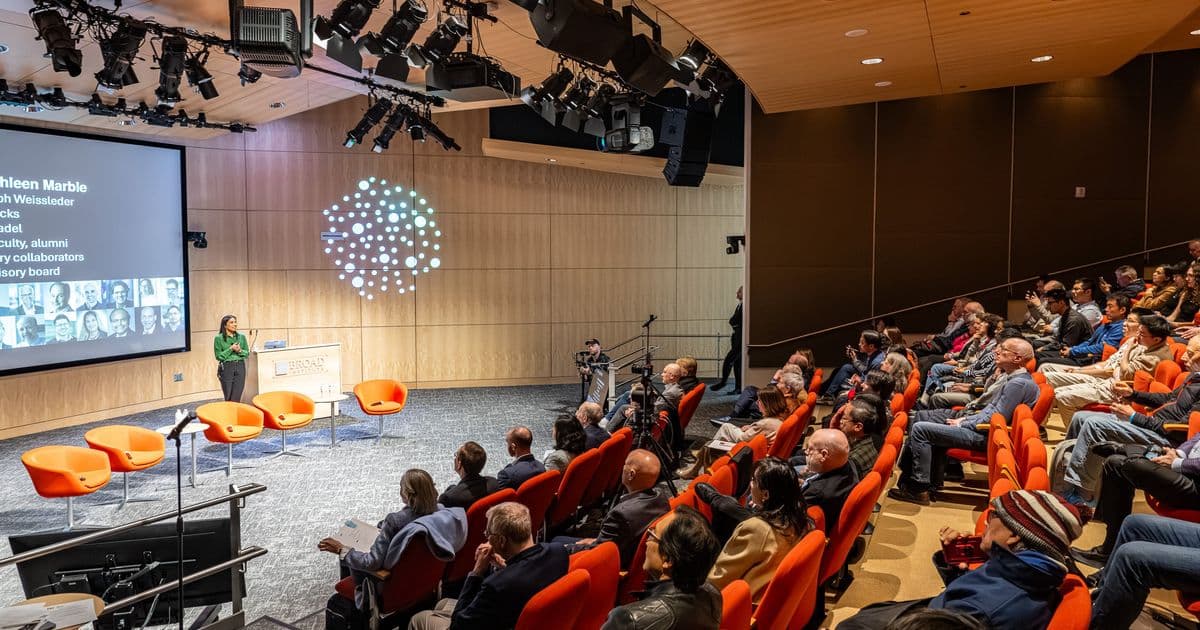
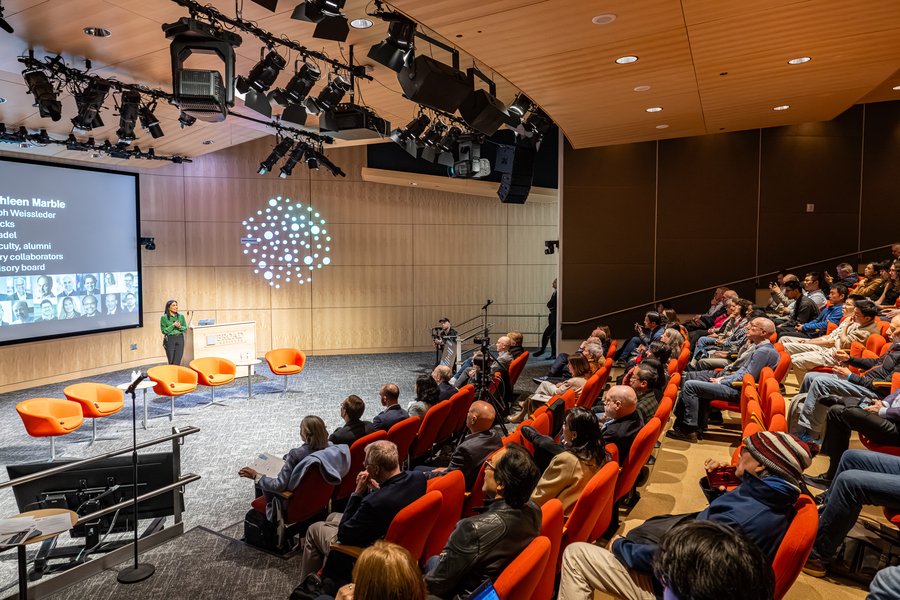
On April 9, the MIT Marble Center for Precision Cancer Medicine celebrated its 10th anniversary at the Broad Institute and the Koch Institute. Faculty director Sangeeta Bhatia and founding member Robert Langer opened the event with a look back at how miniature technologies have moved from proof‑of‑concept papers to clinical trials and commercial products. The gathering, attended by about 150 researchers, clinicians, and industry partners, underscored a simple premise: miniaturization plus interdisciplinary collaboration can reshape cancer care.
Technical foundations of the Marble Center
The Center was founded in 2016 with a gift from Kathy and Curt Marble ’63. Its research agenda rests on three technical pillars:
- Nanoparticle‑based delivery – engineering particles that range from 10 nm to a few hundred nanometers to carry drugs, nucleic acids, or imaging agents directly to tumor cells or the tumor microenvironment.
- Nanobody and protein‑binder platforms – using engineered single‑domain antibodies (nanobodies) that can penetrate dense extracellular matrices and bind with high affinity to tumor‑specific proteins.
- Lymph‑node targeting amphiphiles – leveraging albumin’s natural transport pathways to shuttle therapeutics into lymph nodes, where immune activation can be amplified.
These approaches share a common set of engineering challenges: controlling size distribution, surface chemistry, and payload release kinetics while maintaining biocompatibility. The Center’s labs routinely combine microfluidic synthesis, high‑resolution cryo‑EM characterization, and computational modeling to iterate designs rapidly.
From bench to business: translational highlights
Elicio Therapeutics – lymph‑node amphiphiles
Peter DeMuth ’13 described how his graduate work in Darrell Irvine’s group led to an amphiphile platform that binds albumin and escorts peptide‑based cancer vaccines to draining lymph nodes. The technology is now in a Phase 2 trial for pancreatic ductal adenocarcinoma and colorectal cancer, testing whether enhanced T‑cell priming improves survival.
Matrisome Bio – nanobody‑mediated payload delivery
Former postdoc Noor Jailkhani co‑founded Matrisome Bio to develop nanobodies that home to the extracellular matrix of tumors and metastases. Their current program uses a radioligand conjugated to a nanobody to deliver high‑energy particles directly to cancer cells, sparing surrounding tissue. Early‑phase data show favorable tumor uptake and low off‑target signals.
Amplifyer Bio – priming agents for liquid biopsy
Viktor Adalsteinsson ’15 explained the concept of a priming agent injected before a blood draw to temporarily slow clearance of circulating tumor DNA (ctDNA). By increasing the ctDNA concentration up to 100‑fold, the approach could make liquid‑biopsy detection of early‑stage cancers feasible where current methods fall short.
Soufflé Therapeutics – receptor‑mediated siRNA delivery
Vadim Dudkin outlined a cell‑specific ligand library that couples to siRNA payloads, enabling receptor‑mediated uptake across a wide range of cell types. The platform integrates high‑throughput screening of surface receptors, ligand optimization, and chemically stabilized siRNA chemistry to achieve picomolar potency in preclinical models.
These companies illustrate a common trajectory: identify a nanoscale mechanism, prove it in animal models, then focus on a single clinical indication to satisfy regulatory and manufacturing constraints.
---\n## Enabling technologies and recent advances
AI‑guided RNA therapeutic design
In 2023 the Center received the Global Oncology in Nanomedicine grant, supporting Professor Giovanni Traverso (Mechanical Engineering) to apply machine‑learning models to predict RNA secondary structures and optimize delivery particles. The effort accelerated the design‑build‑test cycle for RNA vaccines, cutting iteration time from months to weeks.
Integrated Nanoscale Sensing, Imaging, and Health Technologies (INSIHT)
Starting June 2026, the Marble Center will fund the INSIHT program, targeting ultra‑sensitive nanosensors that can detect biomarkers at sub‑femtomolar concentrations and integrate with wearable electronics. Early proposals include plasmonic nanorod arrays for real‑time monitoring of tumor metabolites.
Lessons learned: what works, what stalls
Panelists at the anniversary event highlighted several practical take‑aways for researchers aiming to commercialize nanomedicine:
- Early manufacturability planning – design synthesis routes that can be scaled to gram‑level production before filing INDs.
- Regulatory‑friendly chemistry – favor materials already approved for human use (e.g., PLGA, lipids) to reduce safety review timelines.
- Focus on a narrow indication – broad‑platform claims look impressive on paper but dilute resources; a clear first‑in‑human trial pathway is essential.
- Reproducibility at scale – batch‑to‑batch variability in particle size or surface charge can derail both preclinical studies and GMP manufacturing.
- Institutional partnerships – the Marble Center provides shared facilities, pilot‑scale GMP support, and access to clinicians, dramatically lowering the barrier for academic spin‑outs.
Outlook: the next ten years of nanomedicine at MIT
Looking ahead, the Center plans to deepen computational‑experimental convergence, integrating molecular dynamics simulations with high‑throughput screening to discover new nanomaterials. There is also a push to expand beyond oncology into autoimmune disease, neurodegeneration, and infectious disease, where targeted delivery and precise sensing could unlock therapies that are currently impossible.
"The next decade will be defined by our ability to translate nanoscale insights into precision medicine," Bhatia said. With a growing portfolio of startups, a pipeline of AI‑enhanced designs, and new funding mechanisms like INSIHT, the Marble Center is positioned to keep bridging the gap between tiny technologies and big patient outcomes.
For more information on the Marble Center’s programs and spin‑outs, visit the official website and explore the Center’s GitHub repository of open‑source nanofabrication protocols.
Comments
Please log in or register to join the discussion