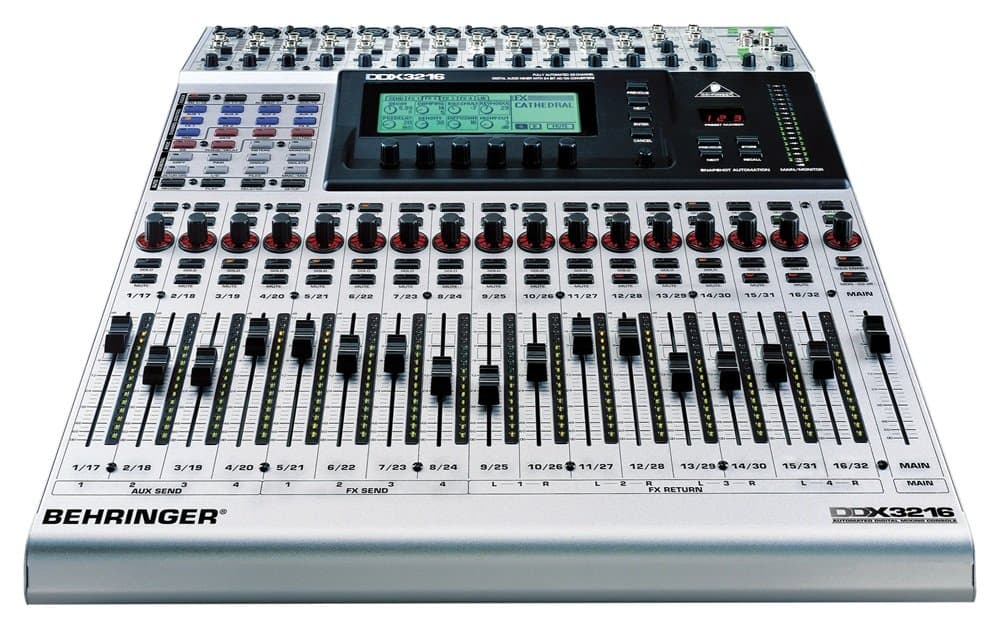
A retrocomputing project turned a digital mixing console into a working 386-class DOS machine, and the interesting part is not that AI was involved. It is how much old-fashioned register work still mattered.
What's claimed
Chris.Dev.Blog describes a custom x86 BIOS written from scratch for the Behringer DDX3216 digital mixer, a console built around an AMD Elan SC300 386-class SoC. The project reaches a real milestone: the machine boots FreeDOS 1.4 from CompactFlash using a BIOS implementation tailored to the DDX3216 hardware. The source is available in the DDX3216 GitHub repository.
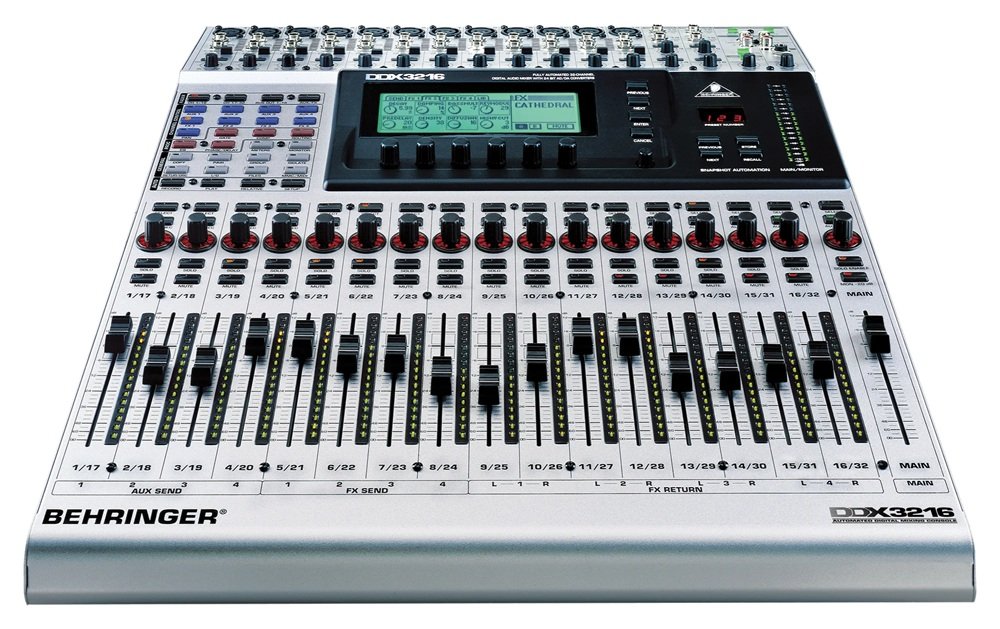
The headline claim is not that a vintage PC was repaired. It is stranger and more interesting: a digital audio mixer, never sold as a general-purpose PC, contains enough PC-compatible x86 hardware to behave like one if given the right firmware. The DDX3216 has an AMD Elan SC300, 16 MB of DRAM, ROM storage, SRAM used as video RAM, an LCD interface, UARTs, PCMCIA, and enough ISA-era compatibility to support BIOS-style interrupts and DOS boot assumptions.
The author also describes using AI tools, including Google Gemini and a university ChatAI system reportedly running Claude Sonnet 4.6, as technical assistants. That part should be read carefully. The AI did not produce a magic BIOS. It helped answer targeted questions, such as how to initialize DRAM registers from the AMD Elan SC300 programmer documentation. The author then checked those suggestions against the manual before implementing them. No benchmark results are reported because this is not a model release or ML performance claim. The practical AI result is narrower: LLMs were useful as searchable, context-sensitive documentation assistants during low-level firmware work.
What's actually new
The substance is the BIOS work. The DDX3216 already had the hardware, but booting DOS requires recreating a large amount of PC firmware behavior that old software assumes exists. That means reset-vector setup, real-mode segment handling, UART initialization, display output, BIOS Data Area state, Interrupt Vector Table entries, disk services, timer behavior, and enough compatibility glue for DOS loaders to keep going.
On x86, reset starts near the top of the address space, at the reset vector. The project places executable code at 0xFFF0 in a 64 KB ROM image, then jumps into the BIOS body. That is historically normal for PC firmware, but implementing it from scratch on a device like this is not a copy-paste exercise. The ROM layout, linker script, segment assumptions, and early CPU state all have to line up.
The article spends a useful amount of time on segmentation, which is where many simplified explanations of real-mode x86 become misleading. In real mode, physical addresses are calculated as segment << 4 + offset, allowing a 20-bit address space despite 16-bit segment and offset registers. That gives access to roughly 1 MB, with conventional memory below 640 KB and upper regions reserved for video memory, BIOS ROM, option ROMs, and device windows. DOS software is full of assumptions about this layout.
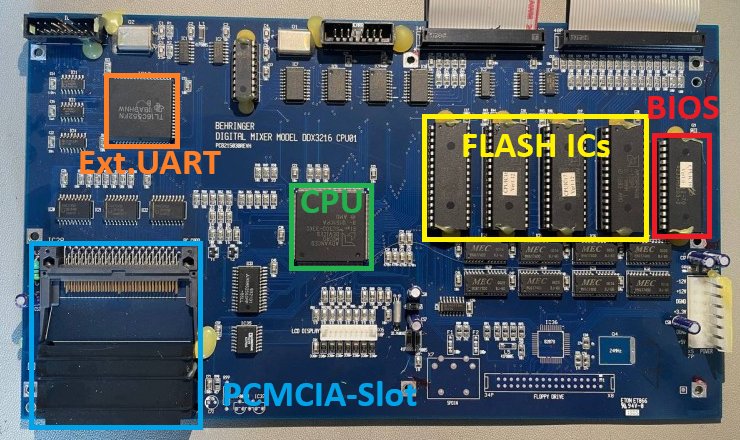
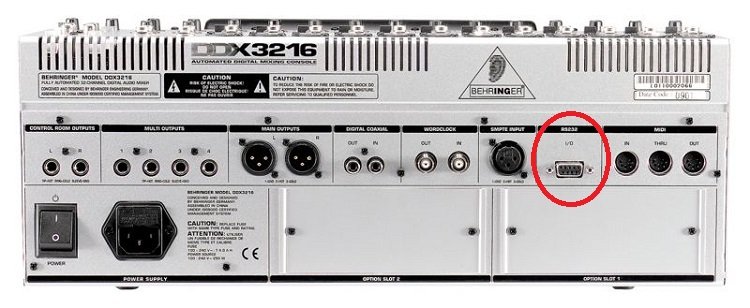
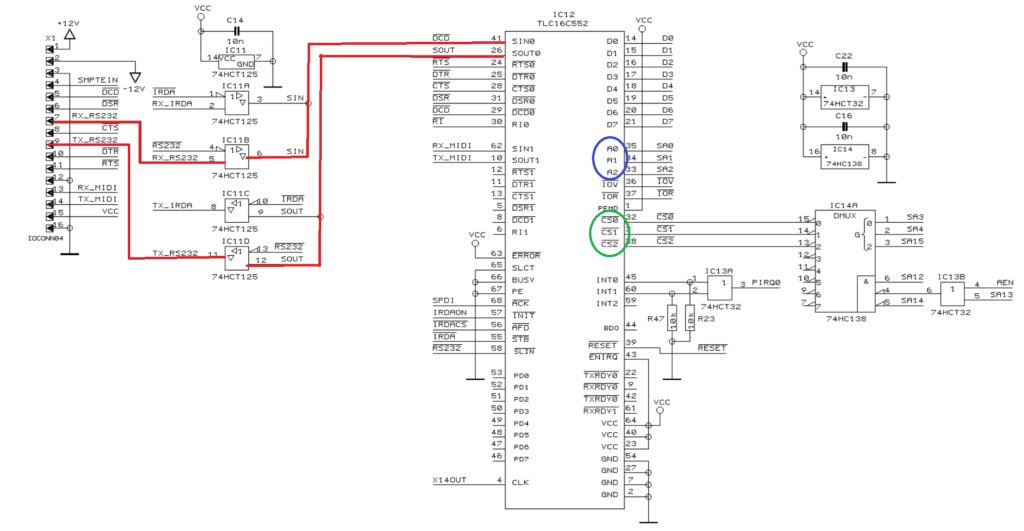
The first visible debugging path came through serial output. The DDX3216 has a rear RS-232 connector, but it is not wired to the SC300 internal UART. It goes through a Toshiba TLC16C552 external UART, with chip-select logic mapped into I/O address ranges around 0x1000. Before serial output works, the firmware has to enable the relevant logic path and configure the UART registers. That is the kind of detail that separates a plausible blog post from an actual board bring-up.
Once serial worked, the project moved to the LCD. The SC300 exposes a CGA/HGA-compatible text interface backed by video memory at 0xB800. Writing to that from BIOS code running in another segment requires far memory access helpers, not normal C pointer writes. The author implemented inline assembly routines to temporarily load ES and write bytes into the desired segment. Even then, the LCD was not immediately useful because the hardware did not provide a ready-made character ROM. The project needed an 8x8 font table, reportedly generated with AI assistance and then manually corrected.
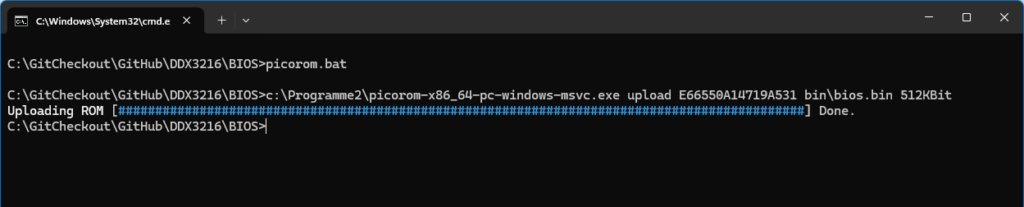
The disk path is more involved. The DDX3216 exposes PCMCIA, and CompactFlash can act like an IDE disk, but only after the card is configured into the right mode. The BIOS has to access the Card Information Structure, switch the CF card from PCMCIA memory mode toward I/O mapped behavior, reset the device, select the drive, and then issue ATA-style reads through ports like 0x1F0 through 0x1F7. The implementation reads sectors into far memory and supplies INT 13h disk services that DOS expects.
This is the key compatibility layer. DOS does not know about Behringer's mixer hardware. It asks the BIOS for services. Display output goes through INT 10h. Disk reads go through INT 13h. Keyboard access goes through INT 16h. Memory size may come through INT 12h. Time services touch INT 1Ah. If those calls return surprising values, corrupt registers, mishandle flags, or use the wrong stack model, DOS can fail without a clean error message.
The MS-DOS 6.22 attempt shows that exact problem. The firmware got far enough to print Starting MS-DOS..., then stalled later while loading system components. The author traced interrupt calls and found stack behavior issues, then moved BIOS interrupt handling to a separate stack near the top of conventional memory. That helped, but MS-DOS still did not reach COMMAND.COM. This is a useful negative result. Compatibility is not binary. A BIOS can be good enough to load early sectors and still fail because a later DOS component relies on behavior the firmware only approximates.
FreeDOS 1.4 was more forgiving, or at least exercised the firmware differently. The author installed FreeDOS into a raw disk image using QEMU, copied it sector-for-sector to a CF card, and booted it on the DDX3216. That is the concrete outcome: a custom BIOS on a digital mixer booting a real DOS-compatible operating system.
Limitations
The AI angle is easy to overstate. The article does not show an autonomous agent designing firmware, proving correctness, or producing a working BIOS from a prompt. It shows a developer using LLMs as interactive documentation tools while doing conventional low-level engineering: reading manuals, checking registers, testing on hardware, watching serial output, and narrowing failures by interrupt trace behavior.
That distinction matters. LLMs can be helpful when the problem is buried across manuals, tables, and initialization sequences. They are much less reliable as final authorities for register-level programming. A wrong bit in a DRAM controller register or PCMCIA configuration path does not produce a polite compiler error. It can produce a blank screen, invalid memory timing, or a device that seems alive until a later boot phase fails. The author's workflow, ask a narrow question, verify against the manual, then implement, is the defensible version of AI-assisted firmware work.
There are also no model benchmark results here, and none should be implied. Gemini and Claude Sonnet 4.6 are mentioned as assistants, but the project does not compare model accuracy, latency, context handling, or code generation quality. The result is anecdotal but still useful: for a practitioner, the value was not replacing expertise. It was reducing lookup friction while preserving manual verification.
On the hardware side, the BIOS is not yet a complete PC clone. MS-DOS 6.22 still fails before reaching the shell. Keyboard support through INT 16h needs more work. The author mentions an AT-to-XT keyboard conversion path because the SC300 keyboard controller expects XT-style input. Graphics modes are future work. The DDX3216 also contains proprietary PIC16 microcontrollers and SHARC DSPs behind custom logic, which limits how much of the mixer can realistically be repurposed without more documentation or reverse engineering.
The practical application is therefore narrow but technically meaningful. This is not a path for turning old mixers into daily-use computers. It is a demonstration that PC-compatible firmware assumptions can be reconstructed on embedded x86 hardware when the board exposes enough of the old architecture. It also gives a grounded example of where LLMs fit in serious technical work: useful for summarizing and cross-referencing, risky if treated as the source of truth, and most effective when the human already knows how to test the answer.
Comments
Please log in or register to join the discussion