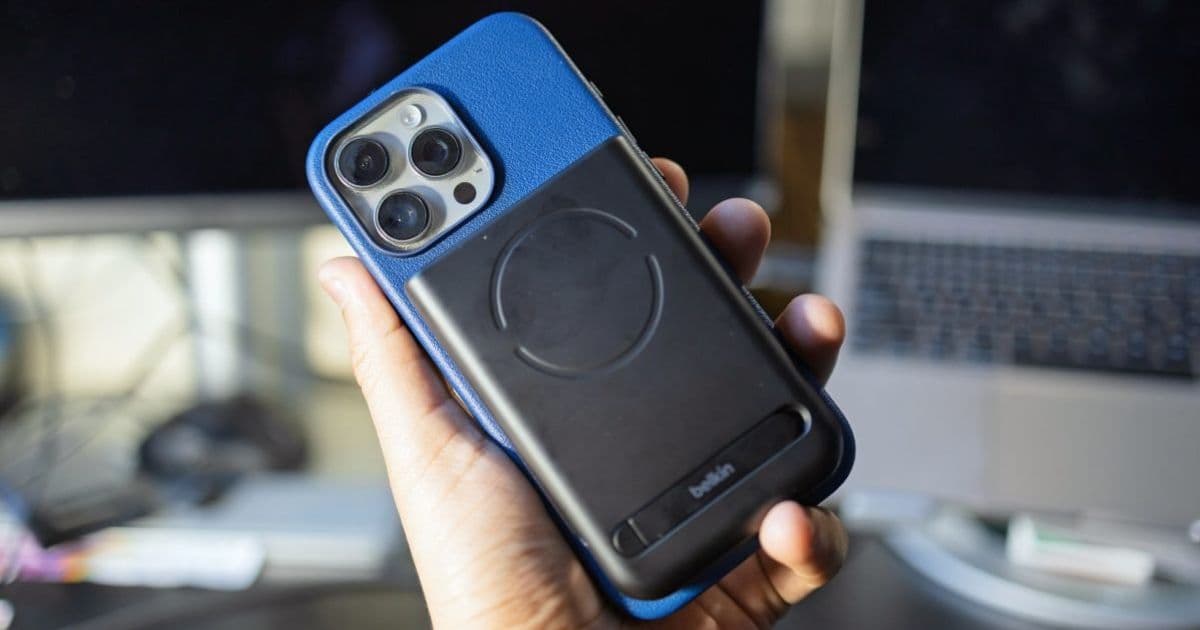
Belkin’s UltraCharge Pro Power Bank 10K is less about raw capacity alone and more about making MagSafe charging fit the way iPhone users actually carry accessories.
Belkin’s UltraCharge Pro Power Bank 10K with Magnetic Ring is now available after its CES 2026 debut, giving iPhone users a larger magnetic battery with 10,000mAh of rated capacity, 25W Qi2.2 wireless charging, 30W USB-C output, a side battery display, a kickstand, and a second magnetic ring on the outside.
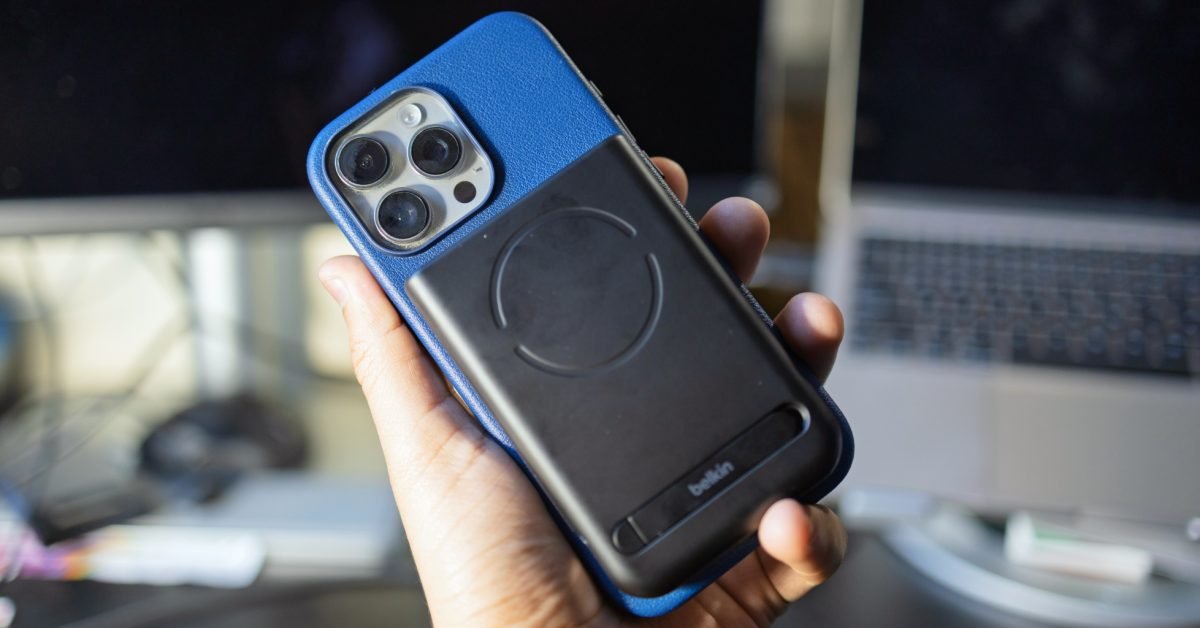
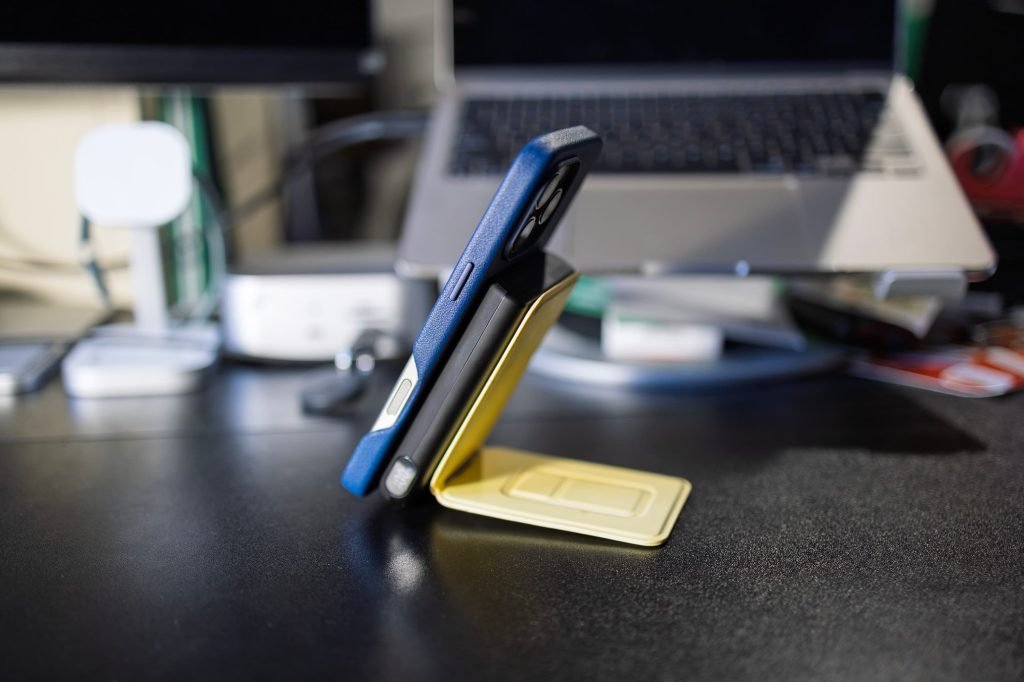
That last detail is the practical twist. Most magnetic batteries take over the back of the phone while they charge, which means a MagSafe wallet, grip, or stand has to come off. Belkin’s design adds another magnetic attachment point on the rear of the battery, so the power bank can sit between the iPhone and the accessory. For people who treat MagSafe as more than a charger, that makes this battery feel much more compatible with real daily use.
The product sits in Belkin’s broader UltraCharge accessory push and follows the industry shift toward Qi2 magnetic charging, the open standard managed by the Wireless Power Consortium. Qi2 brought Apple-style magnetic alignment to a wider device market, while Qi2.2, also branded around 25W charging, raises the ceiling beyond the 15W limit that defined the first wave of Qi2 accessories.
Announcement
The UltraCharge Pro Power Bank 10K is a mobile battery built first for MagSafe and Qi2-style phone charging. The core spec is straightforward: 10,000mAh rated capacity, up to 25W magnetic wireless output, and up to 30W wired charging through USB-C. Belkin is offering it in Black and Sand finishes, with a mixed material design that uses a softer silicone surface against the phone and a harder plastic exterior.
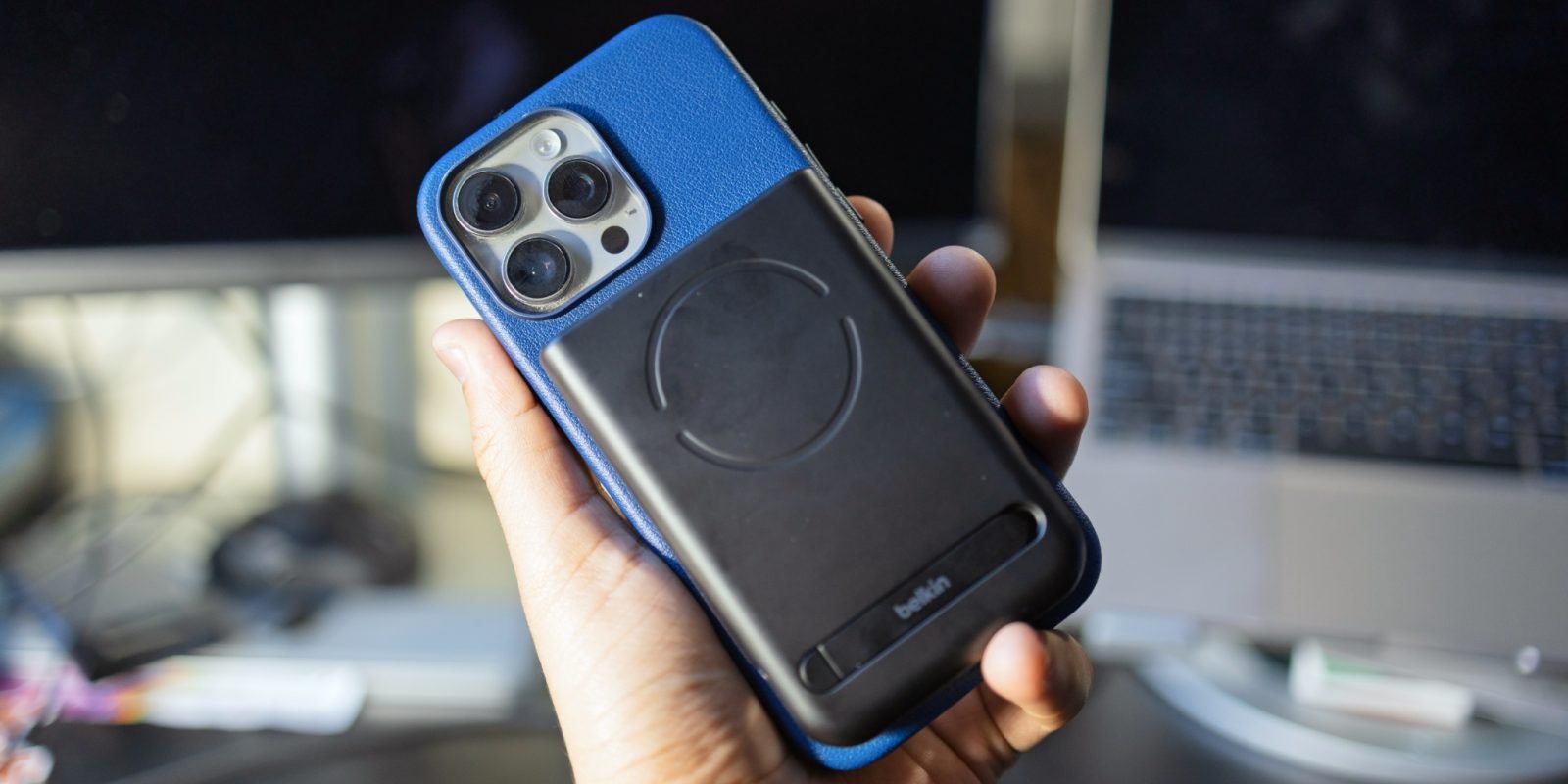
In hand, the trade-off is clear. A 10,000mAh magnetic battery is not going to feel like Apple’s old compact MagSafe Battery Pack. It is closer to a serious travel battery that happens to attach magnetically. The upside is that it should have enough rated capacity to meaningfully extend a modern iPhone during a long day, a flight, or a weekend away from convenient outlets. The downside is thickness and weight, since the battery is roughly in the category of doubling the depth of an iPhone in a case.
The rated 10,000mAh figure also needs normal power-bank context. Phone batteries and power banks are measured at different internal voltages, and wireless charging adds heat and conversion loss. In practice, users should not expect two perfect 5,000mAh phone refills from a 10,000mAh pack, especially over wireless. The real value is more likely one very comfortable full recharge for many iPhones, plus extra headroom, or a strong partial refill while using the phone throughout the day.
Key features
The headline charging spec is 25W Qi2.2 wireless output. That matters because older Qi chargers often topped out at 7.5W for iPhones, while original Qi2 and earlier MagSafe-compatible third-party batteries commonly sat around 15W. Moving to 25W narrows the gap between magnetic wireless charging and plugging in, especially for quick top-ups where the first 30 to 50 percent of a charge matters most.
Compatibility still deserves careful reading. Full 25W wireless charging depends on the phone supporting the required standard and power profile. Recent iPhones, especially the iPhone 16 generation and newer models designed around higher-speed MagSafe charging, are better positioned to benefit. Older MagSafe iPhones can still attach and charge, but many will not draw the full 25W. For iPhone 12, 13, 14, and 15 owners, this battery can still be useful, but the speed advantage may be smaller than the spec sheet suggests unless the phone supports the newer charging profile through hardware and iOS support.
The wired side is more predictable. A 30W USB-C output gives the Belkin pack a second role as a general-purpose battery for devices that do not support MagSafe, including Android phones, earbuds cases, handheld accessories, and small tablets in a pinch. USB-C is also the safer choice when efficiency matters. Magnetic wireless charging is convenient, but wired charging usually wastes less energy as heat, which matters when you are trying to stretch a battery pack through travel.
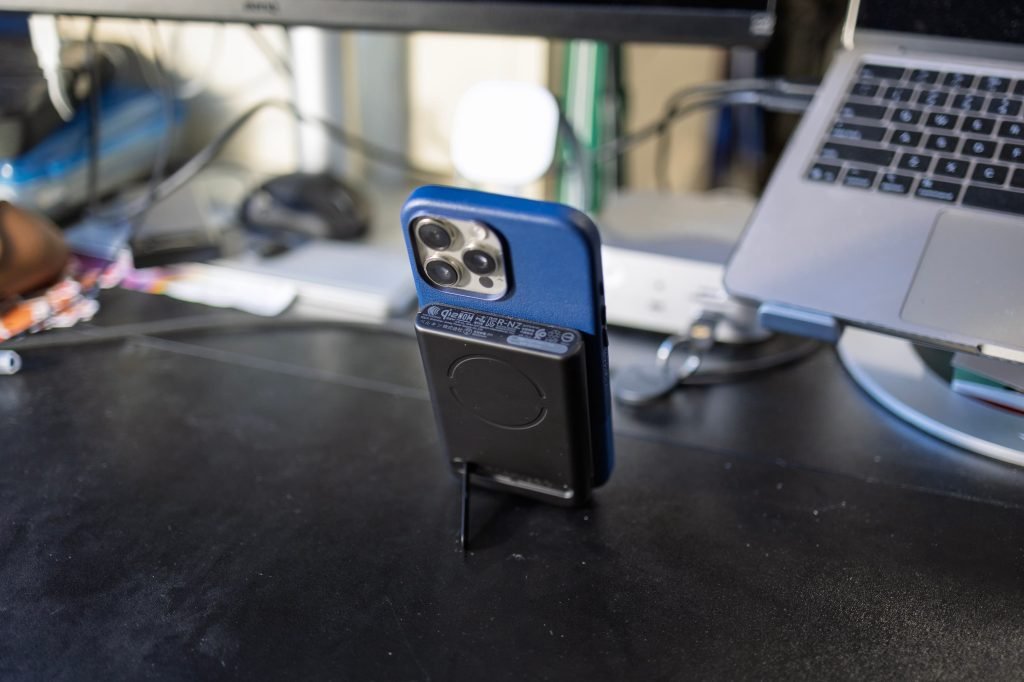
The second magnetic ring is the design feature that separates this model from a generic 10K magnetic power bank. If you use a MagSafe wallet, a PopSocket-style grip, or a magnetic stand, a typical battery forces you to choose between charging and keeping that accessory attached. Belkin’s rear ring lets the accessory move to the back of the battery while the battery charges the phone. It will still add bulk, and a stacked phone, battery, and wallet will not feel pocket-friendly, but it keeps the accessory chain intact.
The kickstand reinforces the same idea. A magnetic battery often turns an iPhone into a slightly awkward slab while charging, but a stand gives the added thickness a purpose. Propping the phone up for video, StandBy-style glanceable information, or a desk charging session makes sense for a 10,000mAh pack. This is where the product feels less like emergency power and more like a portable dock.
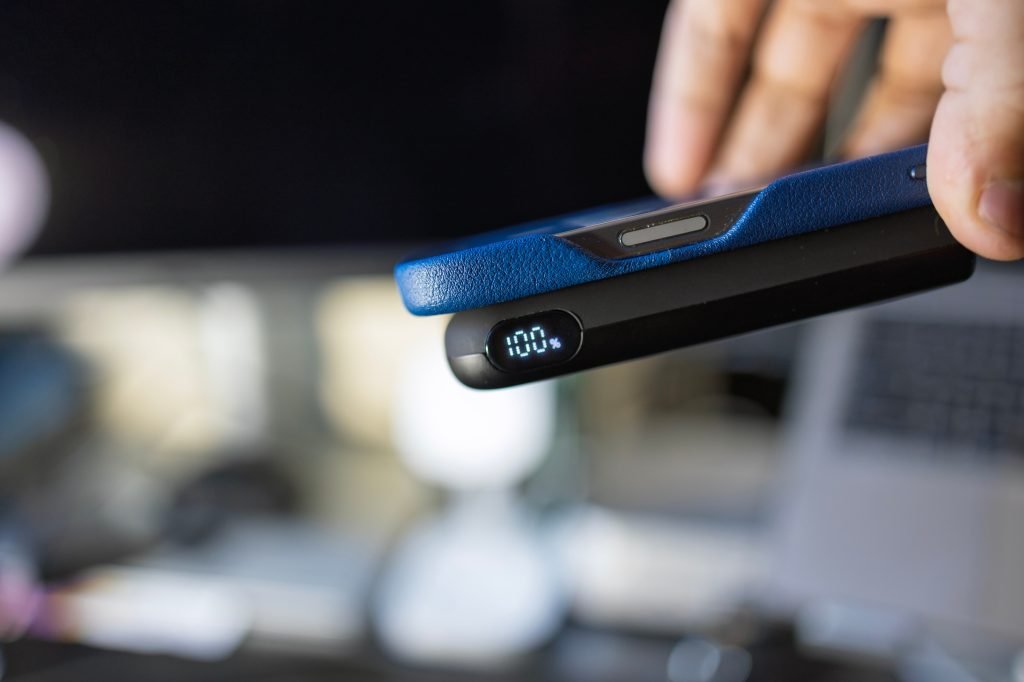
Belkin also includes a small LED display on the side for battery percentage. That sounds minor until you compare it with four-dot indicators, which often leave you guessing whether a power bank has enough charge for a commute or a flight. A percentage display is more useful when the device has enough capacity to be managed over multiple sessions.
Ecosystem context
This battery is very much an Apple-adjacent accessory, but it also shows how MagSafe ideas have escaped Apple’s walled garden. Apple’s magnetic alignment system made wireless charging less fussy because the coils line up automatically. Qi2 took that basic benefit and standardized it for more devices, with Google, Samsung, accessory makers, and the Wireless Power Consortium pushing magnetic wireless charging beyond iPhone-only use.
That does not mean every phone gets the same experience. iPhone users have the cleanest path because MagSafe magnets are built into most modern models and the accessory market is mature. Android support depends more heavily on the specific phone. Some newer Android devices support Qi2 or Qi2 25W directly, while many others need a magnetic case to align properly. That case can solve the attachment problem, but charging speed and thermal behavior still depend on the phone’s hardware.
The ecosystem lock-in angle is practical rather than abstract. Once you buy into MagSafe wallets, car mounts, nightstand chargers, desk stands, and magnetic batteries, switching phones becomes less about the handset alone. You start thinking about which accessories still work, whether your case supports the same magnets, and whether your charger delivers full speed. Belkin’s second-ring design acknowledges that users are stacking accessories now, not just attaching one charger at a time.
There is also a subtle OS layer. iOS battery management, charging limits, heat controls, and StandBy behavior all affect how useful a magnetic battery feels in daily life. A 25W-capable pack may still slow down if the iPhone gets warm, if the battery is already near full, or if iOS decides to protect long-term battery health. That is not a Belkin-specific problem. It is part of modern fast charging, where the advertised wattage is a peak, not a constant rate from zero to 100 percent.
For buyers, the decision comes down to priorities. If you want the thinnest possible magnetic battery, a 5,000mAh pack will be easier to carry. If you want the fastest and most efficient charge, a USB-C cable remains hard to beat. Belkin’s pitch is different: one accessory that can magnetically refill an iPhone at modern speeds, keep a grip or wallet in the mix, show exact battery status, and turn into a stand when you are done walking around.
That makes the UltraCharge Pro Power Bank 10K most appealing for heavy iPhone users who already live with MagSafe accessories. It is less compelling as a first power bank for someone who only needs occasional emergency charging, since smaller and cheaper USB-C batteries can cover that job. For the Apple ecosystem crowd, though, the second magnetic ring is the kind of small hardware decision that solves an everyday annoyance instead of just adding another spec to the box.
Comments
Please log in or register to join the discussion