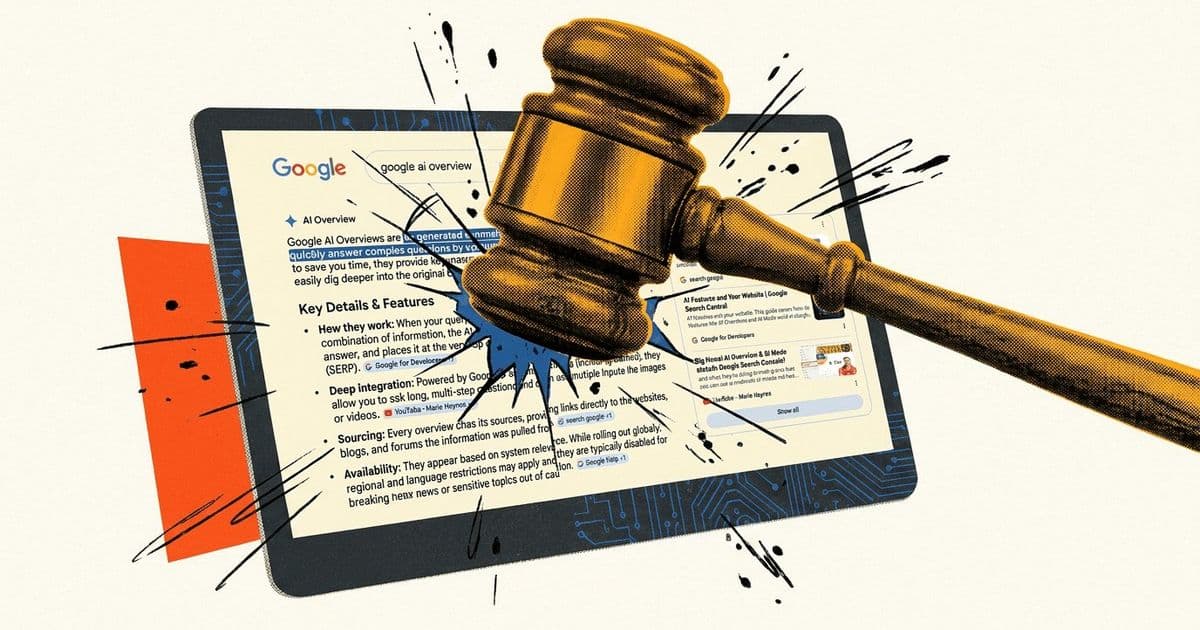
The Regional Court of Munich ruled that Google's AI Overviews are Google's own statements, not a neutral list of links, making the company directly liable when its AI invents defamatory claims. The decision rejects the search-engine liability shields that have protected Google for years, and it lands at a moment when developers and AI builders are quietly worried about exactly this kind of exposure.
A regional court in Munich has done something that legal scholars and AI engineers have been arguing about for two years: it drew a hard line between a search engine that points at content and an AI system that writes its own. The Regional Court of Munich (case no. 26 O 869/26) issued a temporary injunction against Google, barring it from spreading false claims about two Munich-based publishers through its AI-generated search overviews. The reasoning matters more than the injunction itself. The court treated the AI Overview as Google's own speech, rejected the liability shields that have protected search engines for a decade, and even questioned how much free-speech protection an algorithm's output deserves.
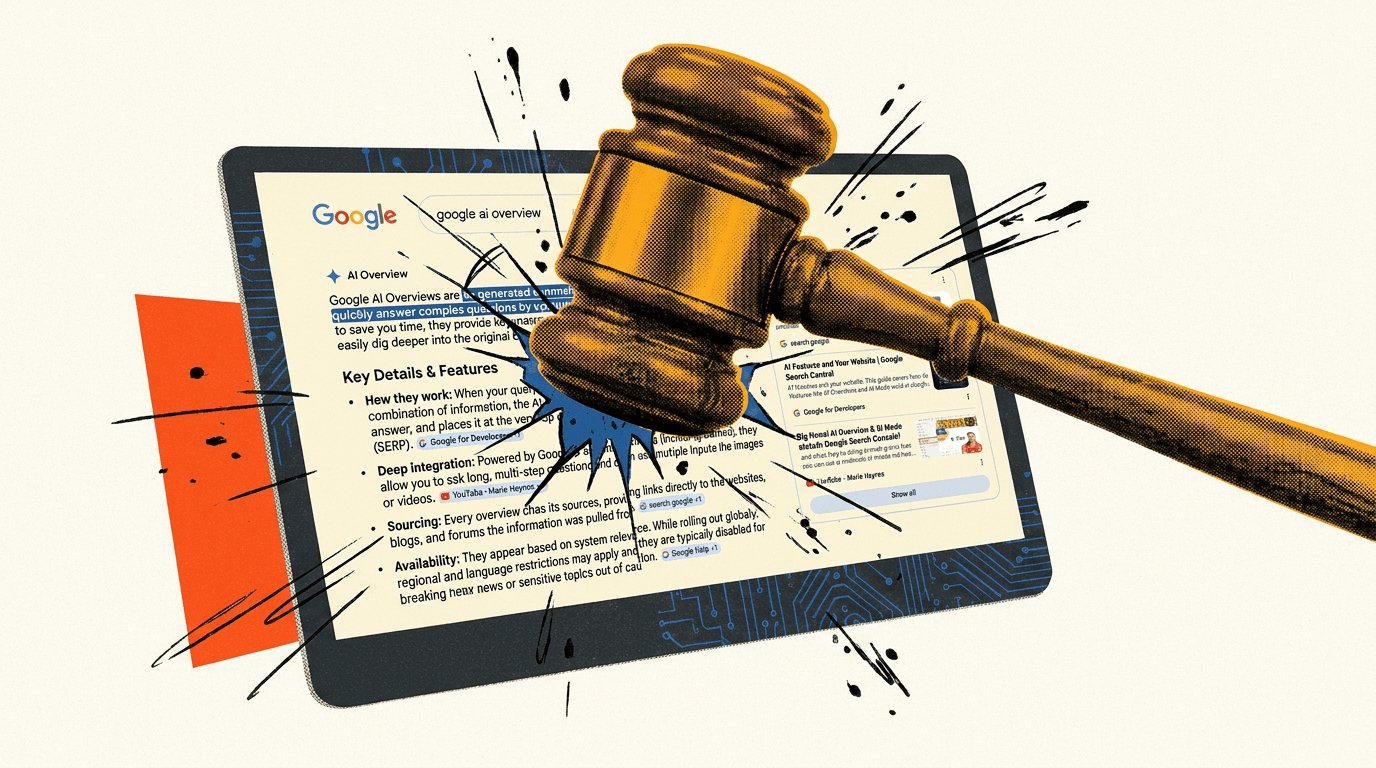
The facts are the kind of thing that makes AI safety researchers wince. Google's AI Overviews had tied two publishing companies to scams, subscription traps, and shady business practices for certain search queries. According to the court, the AI mixed up information about genuinely sketchy companies with the plaintiffs and drew connections that appeared in none of the linked sources. It opened with confident phrasing like "Yes, [company] is known for dubious business practices," then built out a tidy structure: a summary, red flags for the alleged scam, and tips for users. The plaintiffs sent a cease-and-desist letter. Google, per the ruling, didn't respond appropriately.
The argument that AI overviews aren't search results
The core of the decision is a distinction that engineers will recognize immediately. A traditional search engine retrieves and ranks third-party documents. An AI Overview reads those documents and generates new text. The court leaned hard on this, writing that the AI rewrites and judges results "in its own words and according to its own structure." Crucially, it found that the overview made claims "that are not even made in the search results." None of the linked pages connected the plaintiffs to the companies the AI named.
That's the part that should worry anyone shipping a retrieval-augmented generation system. The failure mode here isn't a hallucination from thin air. It's the model synthesizing a defamatory inference across multiple legitimate sources, none of which made the claim individually. The court called these "the defendant's own statements," and the logic was blunt: Google built the AI, offered it to users, and alone controls the algorithms, so Google owns the output.
Germany's Federal Court of Justice (BGH) had previously given search engines and autocomplete only indirect liability, on the theory that operators merely make third-party content findable and shouldn't bear a proactive duty to check everything. The Munich court said that reasoning collapses for AI Overviews, because the system produces "independent, new, and substantive statements" rather than pointers. It also noted, pointedly, that the overview is "by no means absolutely necessary" for using the internet. The blue links already work. The summary is an extra feature, and a feature Google chose to build.
The defense that fell apart
Google's argument at the hearing is the one that has circulated in product and policy circles for a while: users can click the sources and verify for themselves, and people generally know AI output shouldn't be blindly trusted. There's a real irony in a company arguing that its own flagship feature shouldn't be trusted, and the court didn't miss it. If the overview were "generally recognized as unreliable," the court noted, that would "significantly diminish" the benefit of the feature in the first place.
The court rejected the self-check defense outright. The possibility of disproving a statement through further research doesn't "regularly exempt from liability," especially when the overview is "understandable on its own" and reads as a self-contained claim. The judges drew a parallel to press law, where a publisher is liable for a teaser even if a reader never opens the full article. And the empirical backdrop cuts against Google: studies consistently show users almost never click the source links under AI Overviews. The summary is the product. The citations are decoration most people never touch.
There's also a protection-gap argument that I find the most legally durable part of the ruling. The third parties whose sites were cited never made the defamatory claims, so the plaintiffs couldn't sue them. Under the old search-engine rules, they couldn't effectively sue Google either. That leaves a defamed party with no remedy at all, which courts tend to treat as a sign the framework is wrong. The court also held that Google couldn't hide behind Digital Services Act host-provider protections or the standard notice-and-takedown process built for search engines.

The free speech wrinkle
The court went further than strict liability and questioned whether AI output deserves the same free-speech weight as human expression at all. An AI's opinion, the judges wrote, is "not the expression of an acquired conviction of the persons expressing it, but the result of an algorithm." Offering AI research is "above all an expression of Google's business activities" and "at most a secondary expression" of an interest in free expression. Weighed against the plaintiffs' privacy rights, Google lost, particularly because the statements rested on untrue facts backed by sworn affidavits that no connection existed.
This is the passage that should generate the most disagreement, and reasonably so. Treating algorithmic output as categorically lower-value speech is a stance with consequences far beyond defamation. A US court operating under the First Amendment would almost certainly land somewhere different, and even within Europe the reasoning will be tested on appeal. It's a defensible move in a defamation case about false facts, but as a general principle about machine-generated speech it's a much bigger claim than the case strictly required.
Why builders beyond Google should pay attention
Google covers 80 percent of the legal costs, with the plaintiffs splitting the remaining 20. That's a footnote. The signal is the precedent, and the court itself suggested the ruling may have international reach.
The scale problem is what turns this from a single dispute into a structural risk. An analysis by AI startup Oumi for the New York Times found Google's AI Overviews, running the current Gemini 3 model, answered correctly 91 percent of the time. For casual use, that's fine. At Google's volume, 9 percent wrong still means millions of incorrect answers every hour. A fraction of those will name real companies and real people. The same Oumi analysis found that 56 percent of the correct answers couldn't be traced back to the sources Google linked, which is exactly the disconnect the Munich court seized on: the model asserts things its citations don't support, and the operator answers for it.
That exposure isn't unique to Google. The same architecture sits underneath ChatGPT, Claude, and Perplexity. Any system that paraphrases the open web into confident prose, then attaches citations that don't fully back the prose, inherits the same liability shape if this reasoning spreads. The counter-case is straightforward and worth stating: a single regional court in Germany is not settled law, the free-speech reasoning is aggressive, and appellate courts may narrow it considerably. Google hasn't commented, and an appeal is likely.
Still, the engineering takeaway is independent of how the appeal goes. The defect the court identified is real and reproducible. Citation-grounded generation does not guarantee citation-grounded claims, and teams shipping these features have mostly treated the source links as a liability shield rather than testing whether the generated text actually follows from them. The Munich court just put a number on what happens when that assumption fails in public. Whoever ships the next RAG product would do well to read the ruling as a spec, not just a headline.
Comments
Please log in or register to join the discussion