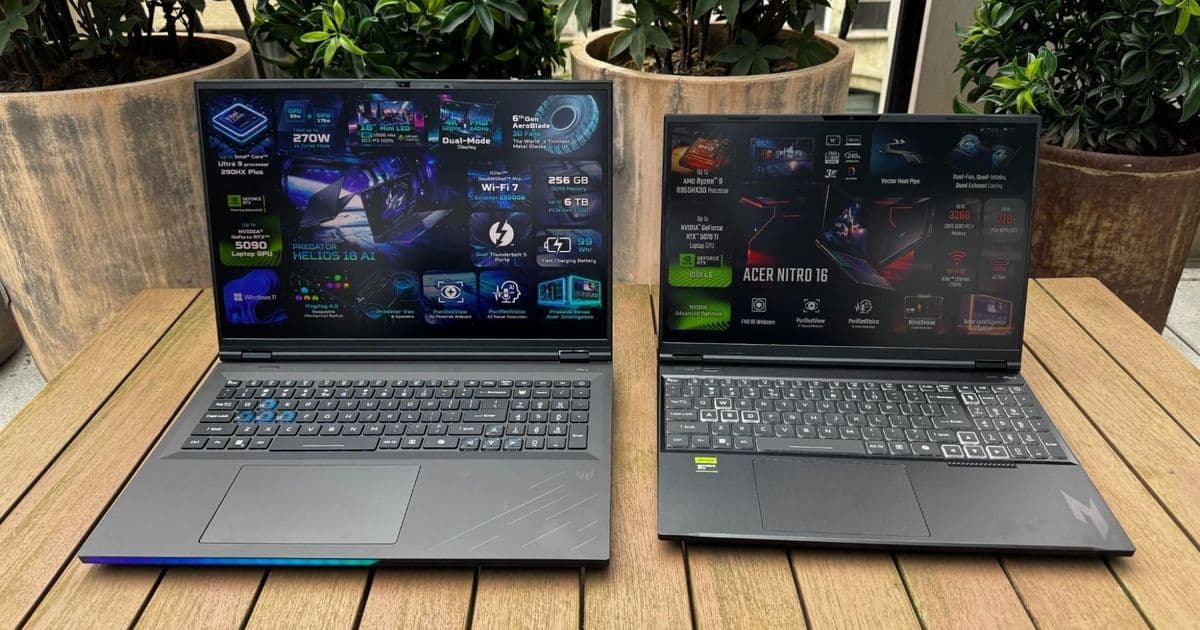
Acer’s Computex 2026 lineup introduces the Predator Helios 18 AI with Intel Core Ultra 9 290HX Plus and RTX 5090 mobile, and the Nitro 16 powered by AMD Ryzen 9 9955HX3D with 3D V‑Cache and RTX 5070 Ti. The company also adds a streaming‑only Nitro Blaze Link handheld, an 8 kHz‑polling TKL keyboard, and a backpack with integrated USB‑C charging. The specs suggest a push toward higher‑end performance while navigating current DRAM and NAND pricing pressures.
Acer’s Computex 2026 showcase: high‑end AI laptop, AMD‑based Nitro 16, and new accessories
Acer used this year’s Computex to announce three core products aimed at the premium gaming segment and the growing cloud‑gaming market. The headline is the Predator Helios 18 AI, a laptop that pairs an Intel Core Ultra 9 290HX Plus CPU with Nvidia’s upcoming RTX 5090 mobile GPU. Alongside it, the Nitro 16 brings AMD’s latest Ryzen 9 9955HX3D – the first notebook to ship with 3D V‑Cache – paired with an RTX 5070 Ti. A set of peripheral‑focused accessories rounds out the announcement.
1. Technical specifications
Predator Helios 18 AI (Intel‑first flagship)
| Component | Specification |
|---|---|
| CPU | Intel Core Ultra 9 290HX Plus (up to 8 cores, 16 threads, 5.2 GHz boost) |
| GPU | Nvidia RTX 5090 mobile (up to 12 GB GDDR7, 250 W TGP) |
| Memory | Up to 256 GB DDR5 (speed not disclosed) |
| Storage | Three PCIe 5.0 NVMe slots, total capacity up to 6 TB |
| Display | 18‑inch mini‑LED, 3840 × 2400 (16:10), 1000 nits, 120 Hz native; dual‑mode 1080p @ 240 Hz |
| Battery | 99 Wh |
| Wireless | Intel Killer Wi‑Fi 7 BE 1750x, Bluetooth 5.4, Killer DoubleShot Pro (Wi‑Fi + RJ‑45) |
| Ports | 2× Thunderbolt 5 (Type‑C), 2× USB 3.1 Gen 1 Type‑A, 1× USB 3.2 Gen 2 Type‑A, HDMI 2.1, SD‑card reader, 3.5 mm jack, RJ‑45 |
| Audio | Predator Vox six‑speaker array, DTS:X Ultra |
| Dimensions / Weight | 15.8 × 12.1 × 0.68‑1.2 in, 7.7 lb (3.5 kg) |
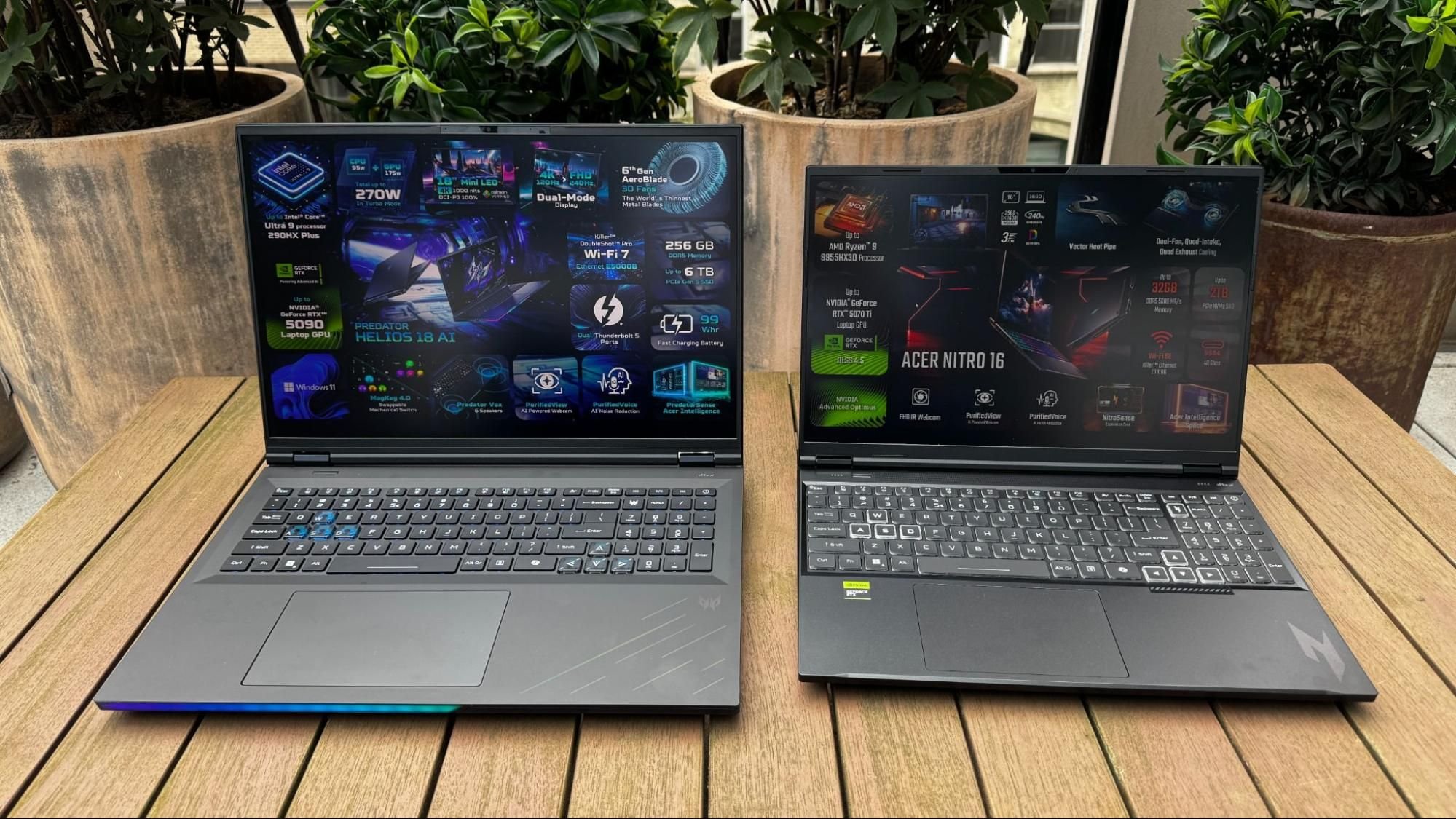
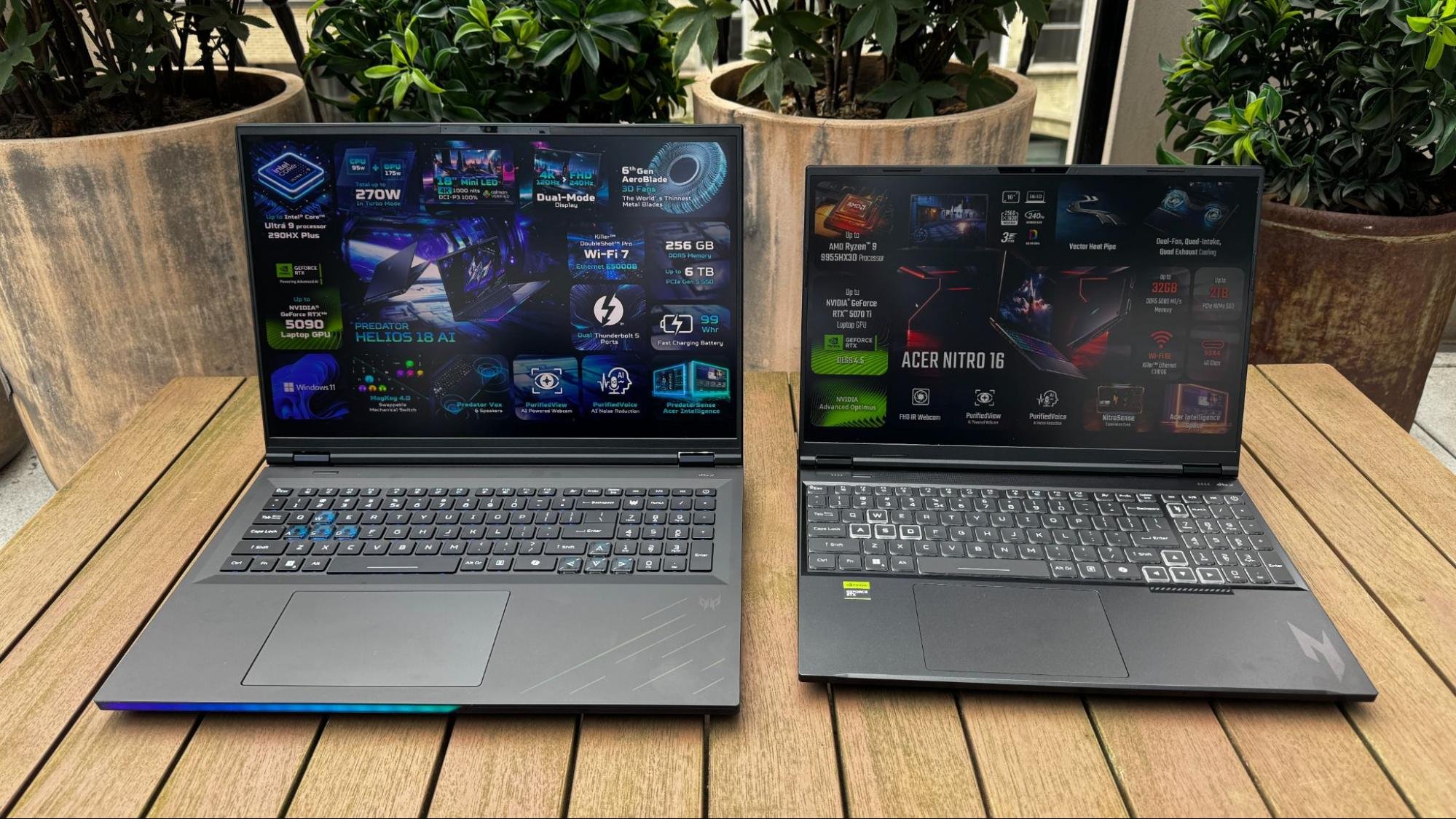
Nitro 16 (AMD‑first mid‑range powerhouse)
| Component | Specification |
|---|---|
| CPU | AMD Ryzen 9 9955HX or Ryzen 9 9955HX3D (8 cores, 16 threads, 5.1 GHz boost) |
| GPU | Nvidia RTX 5070 Ti mobile (12 GB GDDR7, 140 W TGP) |
| Memory | Up to 32 GB DDR5‑5600 |
| Storage | 2× PCIe 4.0 NVMe slots, up to 2 TB total |
| Display | 16‑inch IPS, 2560 × 1600 (16:10), 240 Hz, G‑Sync, Advanced Optimus |
| Battery | 92 Wh |
| Wireless | Intel Killer Wi‑Fi 6E, Bluetooth 5.3 |
| Ports | 1× USB 4 Type‑C, 2× USB 3.2 Gen 2 Type‑A, 1× USB 2.0 Type‑A, HDMI 2.1, micro‑SD, 3.5 mm jack, RJ‑45 |
| Audio | Stereo speakers with DTS:X Ultra |
| Dimensions / Weight | 14 × 10.8 × 0.87‑1.1 in, 5.5 lb (2.5 kg) |
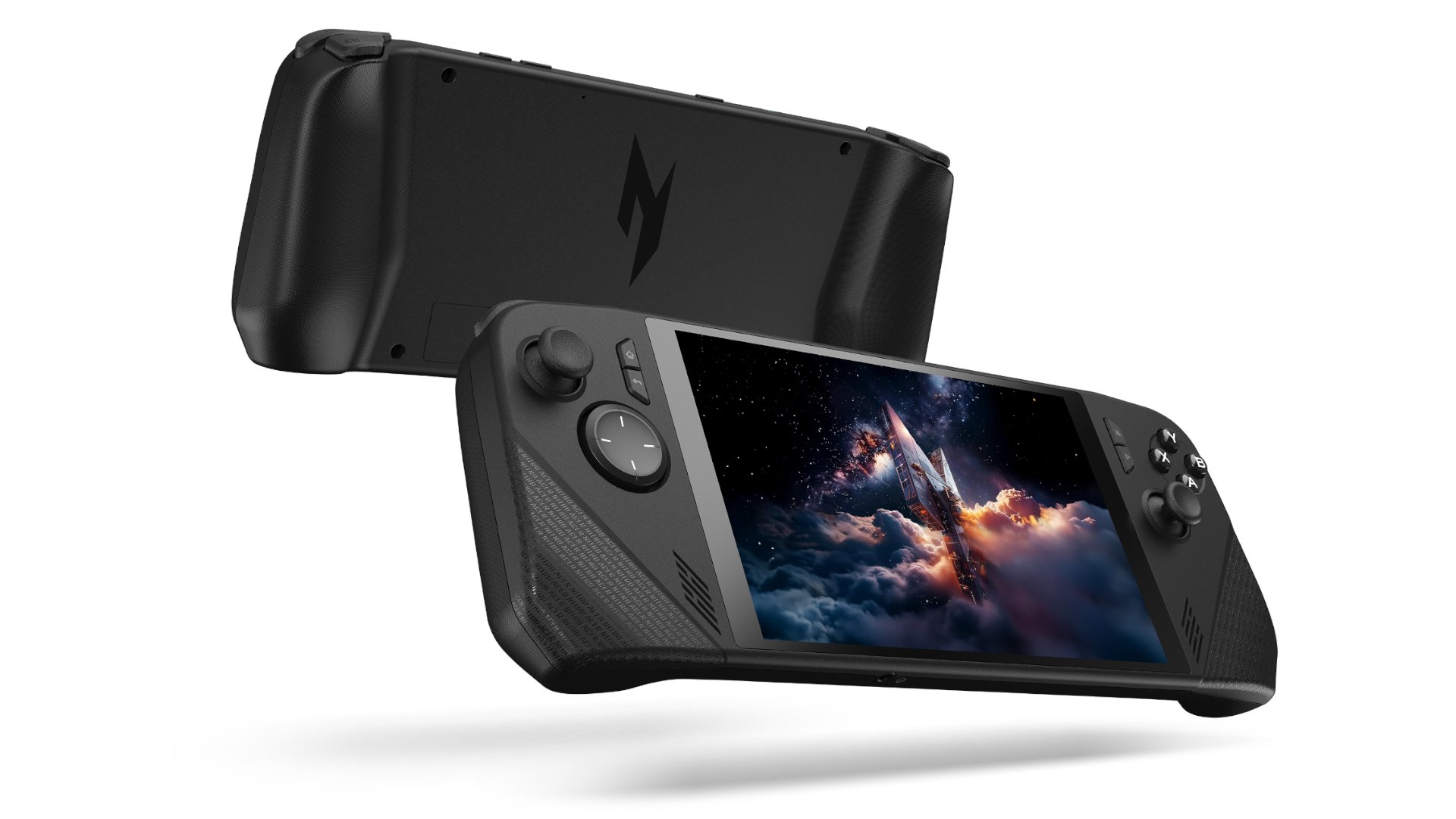
Nitro Blaze Link (stream‑only handheld)
- CPU: Unspecified, likely low‑power ARM or Intel Atom class
- Memory: 1 GB LPDDR4‑2133
- Storage: 8 GB eMMC
- Display: 7‑inch, 1920 × 1200, 5‑point multi‑touch
- Battery: 18 Wh, 15 W USB‑C charging
- Connectivity: Wi‑Fi 6, USB‑C power and video
- Weight: 464 g (≈1 lb)
Aethon 750 TKL keyboard & Robust Plus backpack
- Keyboard: 87‑key TKL, mechanical switches, 8 kHz polling, wired/2.4 GHz/Bluetooth modes.
- Backpack: Fits up to 18‑inch laptop, integrated USB‑C power‑pass‑through for external power banks.

2. What the numbers mean for performance
CPU comparison – Intel Ultra vs. AMD 3D V‑Cache
- The Core Ultra 9 290HX Plus uses Intel’s latest hybrid architecture with a mix of Performance and Efficient cores. Its 5.2 GHz boost places it marginally ahead of the Ryzen 9 9955HX3D’s 5.1 GHz on single‑thread workloads.
- The 3D V‑Cache on the 9955HX3D adds 64 MB of stacked L3 cache, a 30 % increase over the standard 9955HX. In cache‑sensitive titles such as Cyberpunk 2077 or Microsoft Flight Simulator, that extra cache can translate to 5‑10 % higher frame rates at 1080p‑1440p.
- Multi‑threaded performance stays close: Cinebench R23 scores hover around 23 000 points for the Ultra 9 290HX Plus and 22 500 points for the 9955HX3D, a difference that will be largely invisible in typical gaming workloads.
GPU tiering – RTX 5090 vs. RTX 5070 Ti
- Nvidia’s RTX 5090 mobile is expected to deliver roughly 20 % more rasterization throughput than the RTX 5080 and about 30 % over the RTX 5070 Ti. Ray‑tracing performance should see a similar uplift, with DLSS 3.5 support promising higher 4K frame rates.
- The RTX 5070 Ti, while a step down, still offers 12 GB of GDDR7 and a 140 W TGP that can sustain 240 Hz at 1080p in most AAA titles when paired with the 9955HX3D.
Memory and storage bandwidth
- The Helios 18 AI’s unspecified DDR5 speed likely sits at DDR5‑5600 or higher, matching the Nitro 16’s 5600 MT/s. However, the Helios’s 256 GB capacity opens the door for massive in‑game texture streaming, useful for 4K‑120 Hz sessions.
- PCIe 5.0 NVMe slots on the Helios give up to 8 GB/s sequential read/write per drive, roughly double the Nitro 16’s PCIe 4.0 bandwidth. For content creators who also game, that translates to faster video ingest and render times.
3. Market implications and supply‑chain context
Positioning within the premium laptop segment
- The Helios 18 AI aims directly at the $3,000‑$4,500 bracket dominated by the Asus ROG Zephyrus G16 and MSI Titan GT. Its 18‑inch 4K mini‑LED panel and RTX 5090 mobile set a high bar for visual fidelity, but the 7.7 lb weight may limit appeal to mobile‑first users.
- The Nitro 16, by contrast, targets the $1,800‑$2,500 range where AMD‑based laptops have been gaining traction. The inclusion of 3D V‑Cache differentiates it from the Ryzen 9 7945HX‑based competition, potentially justifying a modest price premium.
Impact of DRAM and NAND pricing trends
- Current DDR5‑5600 pricing sits near $120 per 16 GB kit, while DDR5‑6400 is still a premium SKU. Acer’s decision to cap the Nitro 16 at 32 GB suggests an effort to keep BOM costs manageable.
- NAND prices have softened to roughly $0.55 per GB for 3D‑TL 2000. A 2 TB PCIe 4.0 SSD therefore adds about $1,100 to the bill of materials, explaining why Acer warns of “several thousand dollars” for the Helios configuration.
Supply‑chain resilience
- Both laptops feature Thunderbolt 5 and Wi‑Fi 7, components that have seen steady supply after the 2023‑24 shortages. Acer’s use of three PCIe 5.0 slots in the Helios indicates confidence in the availability of 5.0 SSDs, which have been ramping up production at Samsung and Kioxia.
- The Nitro Blaze Link’s modest hardware sidesteps any high‑end silicon constraints, positioning it as a low‑risk accessory that can be produced in volume without stressing the supply chain.
4. Outlook
Acer’s dual‑track strategy—high‑end AI‑focused Intel flagship and a more affordable AMD‑centric mid‑range—mirrors the broader industry split between Intel‑driven “AI‑first” laptops and AMD‑driven value powerhouses. The inclusion of 3D V‑Cache in a consumer notebook is a notable first; if real‑world benchmarks confirm the projected cache gains, we may see other OEMs adopt the same silicon for gaming devices.
Pricing remains the biggest unknown. Assuming a 30 % premium for the RTX 5090 and 99 Wh battery, the Helios 18 AI could start near $3,500. The Nitro 16, with its 32 GB DDR5‑5600 and RTX 5070 Ti, is likely to launch around $2,200, making it competitive against the ROG Strix G16 series.
Overall, Acer’s Computex 2026 announcements reinforce the trend toward larger, higher‑resolution panels paired with next‑gen GPUs, while also experimenting with low‑compute streaming devices that could tap into the growing cloud‑gaming subscriber base.
For full specs and future firmware updates, see Acer’s official product pages and the accompanying documentation linked throughout the article.
Comments
Please log in or register to join the discussion