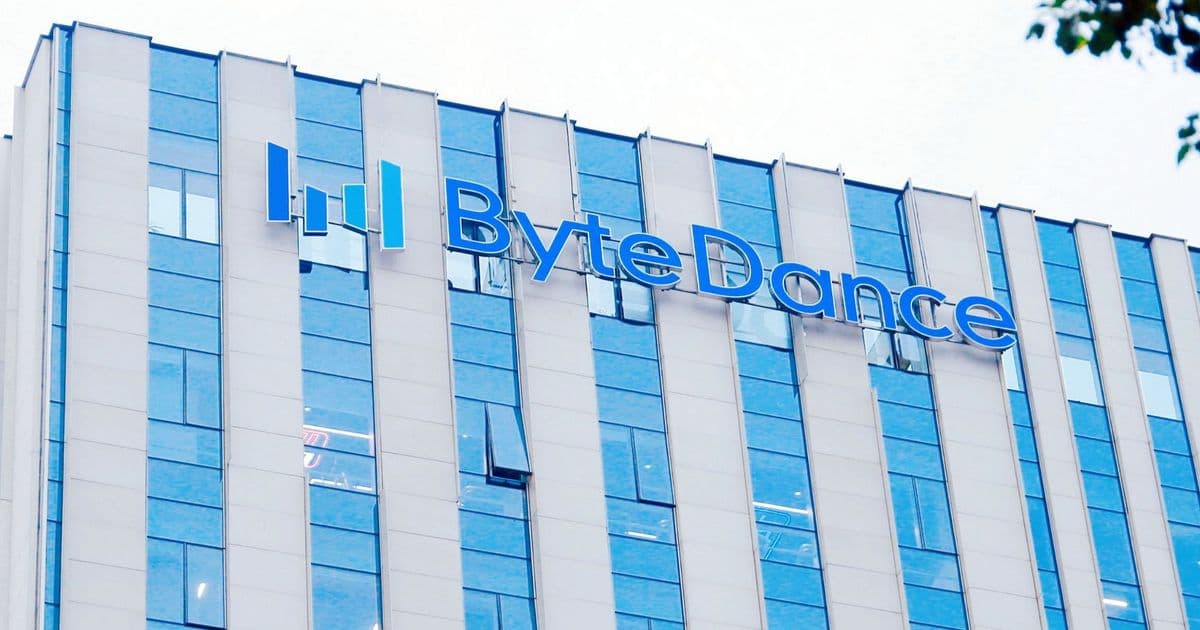
ByteDance is exploring custom AI inference processors, weighing Arm and RISC‑V IP and partnering with InnoStar for memory, in an effort to cut reliance on U.S. GPUs amid tightening export controls.
ByteDance announces a push for home‑grown AI inference silicon
ByteDance, the parent company of TikTok, has entered the AI‑chip arena with a project aimed at designing a custom CPU optimized for inference workloads. Reuters reports that the effort is still in the concept stage, but the company is already evaluating two major instruction‑set families: Arm and RISC‑V. The design is said to be inspired by Groq’s “language processing unit” (LPU) architecture, a block that focuses on low‑latency model execution rather than the massive matrix math needed for training.
Technical direction and memory strategy
- Instruction‑set choice – Arm offers a mature ecosystem, extensive software toolchains, and proven high‑performance cores. RISC‑V, by contrast, provides a royalty‑free licence and the flexibility to add custom extensions for tensor operations, which could give ByteDance a tighter integration between the ISA and its own AI kernels.
- Memory subsystem – The Information cites a partnership with InnoStar Semiconductor, a Chinese startup backed by ByteDance and Alibaba, to develop on‑chip HBM‑like memory. If successful, InnoStar’s solution could replace traditional HBM stacks sourced from Samsung or SK Hynix, reducing both cost and supply‑chain exposure.
- Manufacturing – ByteDance does not appear to own a fab; the plan calls for external foundries to fabricate the silicon. Likely candidates include TSMC’s 5 nm N5 or SMIC’s 7 nm processes, depending on export‑control constraints.
Why inference‑only silicon matters now
The AI market has split into two distinct hardware demands:
- Training – dominated by Nvidia’s H100/H200 GPUs, which require massive memory bandwidth and inter‑connect fabric.
- Inference – increasingly handled by specialized accelerators that prioritize latency and power efficiency for serving models at scale.
ByteDance’s internal AI services—such as the Doubao chatbot and a suite of recommendation models powering TikTok—run primarily inference workloads. A dedicated LPU could deliver sub‑10 ms latency for language models that currently sit on Nvidia H100s, while consuming 30‑40 % less power per query.
Geopolitical and market context
China’s recent ban on Nvidia’s H200 Blackwell GPUs follows a broader tightening of U.S. export controls. Companies that depend on foreign GPU supply now face two risks:
- Supply disruption – lead times for HBM‑equipped GPUs have stretched beyond six months.
- Cost escalation – Nvidia’s quarterly price hikes have pushed inference‑node pricing above $12 k per unit for a 40‑core configuration.
By developing its own inference silicon, ByteDance can sidestep these pressures. The move mirrors similar strategies by Alibaba (Aliyun’s Hanguang 800) and Baidu (Kunlun chips), which have already shipped custom AI processors to their cloud services.
Timeline and realistic expectations
- 2024 Q4 – Architecture definition and simulation using Arm/RISC‑V cores, plus memory prototype testing with InnoStar.
- 2025 H1 – Tape‑out of a test chip on a 7 nm (SMIC) or 5 nm (TSMC) node. Early silicon will likely be a heterogeneous tile combining a few dozen LPU cores with a modest amount of on‑die SRAM.
- 2025 H2‑2026 – Pilot deployment in ByteDance’s data centers for low‑traffic services (e.g., content moderation, short‑form video recommendation). Full‑scale rollout for high‑traffic inference (Doubao) could follow in 2027.
Given the absence of an in‑house design team, ByteDance will rely on external IP vendors (e.g., Arm’s Cortex‑A78AE, SiFive’s custom RISC‑V cores) and design houses such as Cadence or Synopsys for RTL-to-GDSII flow. This partnership model adds cost but accelerates time‑to‑market.
Market implications
- Reduced Nvidia exposure – If ByteDance can achieve a 30 % cost advantage on inference nodes, it may pressure Nvidia to offer more competitive pricing for China‑based customers.
- RISC‑V momentum – A high‑profile Chinese internet company adopting RISC‑V could spur additional IP development, especially around vector extensions for AI.
- Supply‑chain diversification – Success would validate the viability of domestically sourced memory solutions, encouraging other Chinese firms to invest in HBM alternatives.
- Investor perception – While the chip project is still speculative, analysts may begin to factor a potential $1‑2 billion cost saving into ByteDance’s long‑term cash‑flow models.
Bottom line
ByteDance’s AI‑CPU initiative reflects a broader shift: Chinese tech giants are moving from pure software platforms to vertically integrated hardware stacks to mitigate geopolitical risk. The combination of Arm/RISC‑V flexibility, a home‑grown memory partner, and external foundry manufacturing positions ByteDance to field a competitive inference processor within the next 18‑24 months. Whether the chip will ever rival Nvidia’s GPUs on raw throughput remains to be seen, but even a modest improvement in latency‑per‑watt could translate into significant operational savings for TikTok’s recommendation engine and Doubao’s chatbot services.
For further reading on RISC‑V AI extensions, see the RISC‑V Vector Extension specification.
Comments
Please log in or register to join the discussion