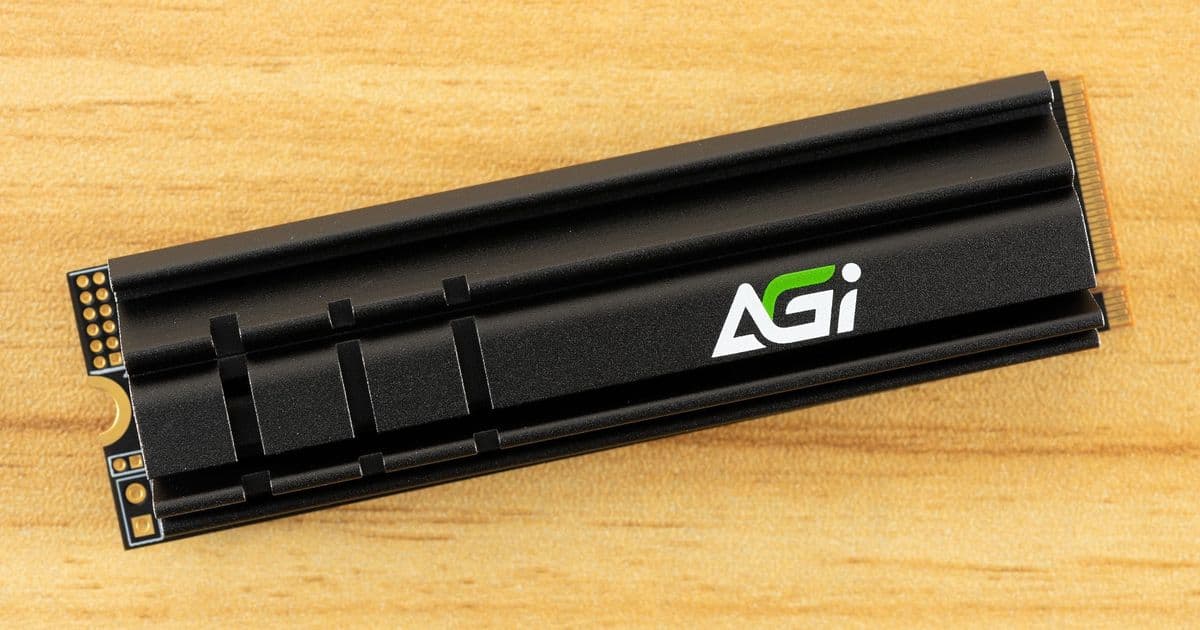
AGI uses Silicon Motion’s SM2508 controller, Micron 232-layer TLC NAND and an included heatsink to push the AI858 into high-end PCIe 5 territory at lower pricing than many flagship SSDs.

Announcement
Tom's Hardware tested the AGI AI858 2TB SSD and found a rare budget entry with high-end PCIe 5.0 behavior. AGI lists the AI858 with a PCIe 5.0 x4 interface, NVMe 2.0 support, sequential reads up to 14,000 MB/s and sequential writes up to 13,000 MB/s on the 2TB and 4TB models.
AGI prices the 1TB model at $253.99 and the 2TB model at $512.99 in the review data. That puts the AI858 in a tense part of the SSD market, where buyers want top-end bandwidth without paying the full premium attached to better-known brands.
The review verdict favors the drive. Tom's Hardware credits the AI858 with strong all-around performance, low random read latency, good sustained write behavior and an effective heatsink. The main drawback comes from AGI's support package: AGI offers a spec sheet, but no management software.
Technical specs
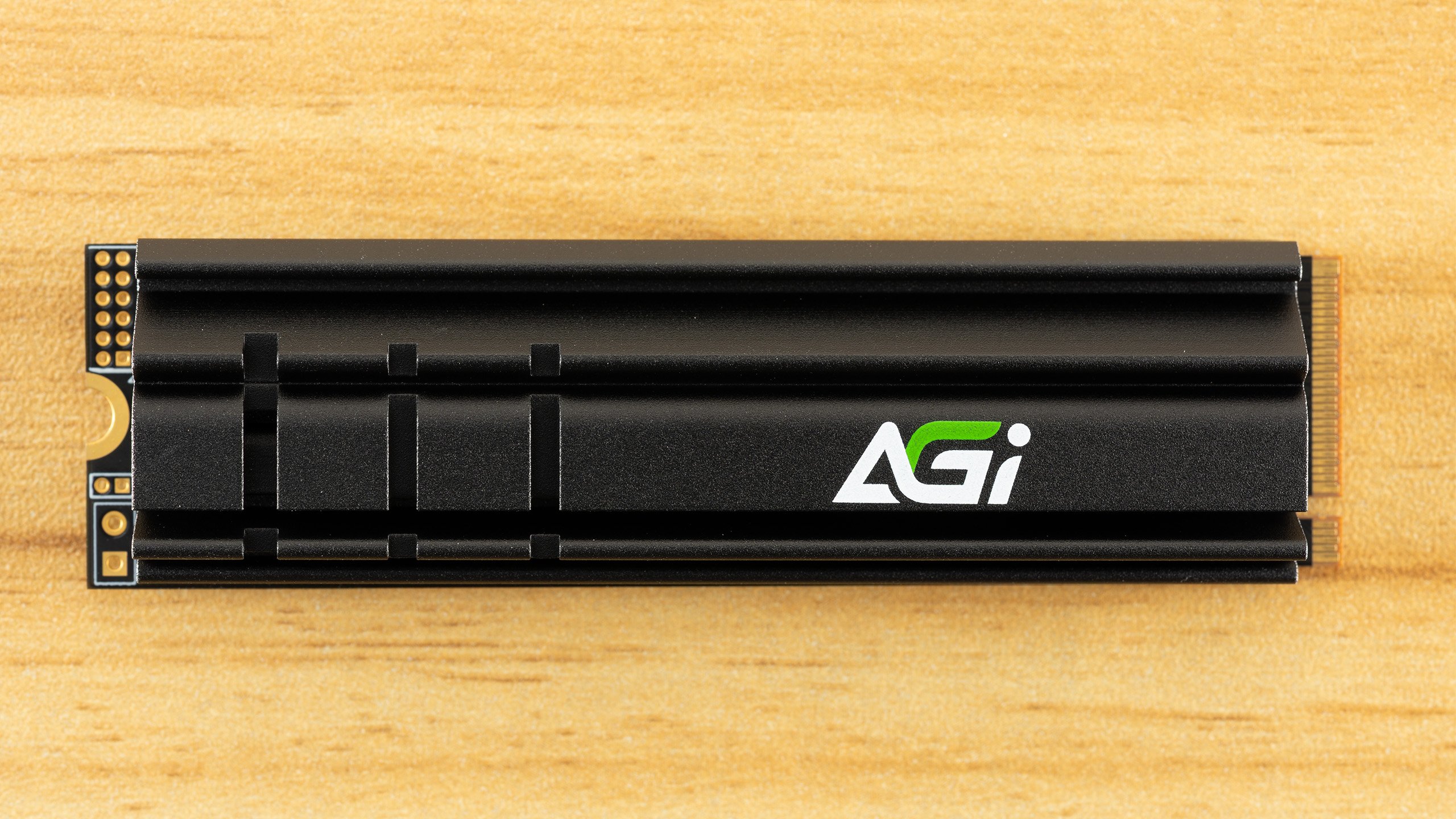
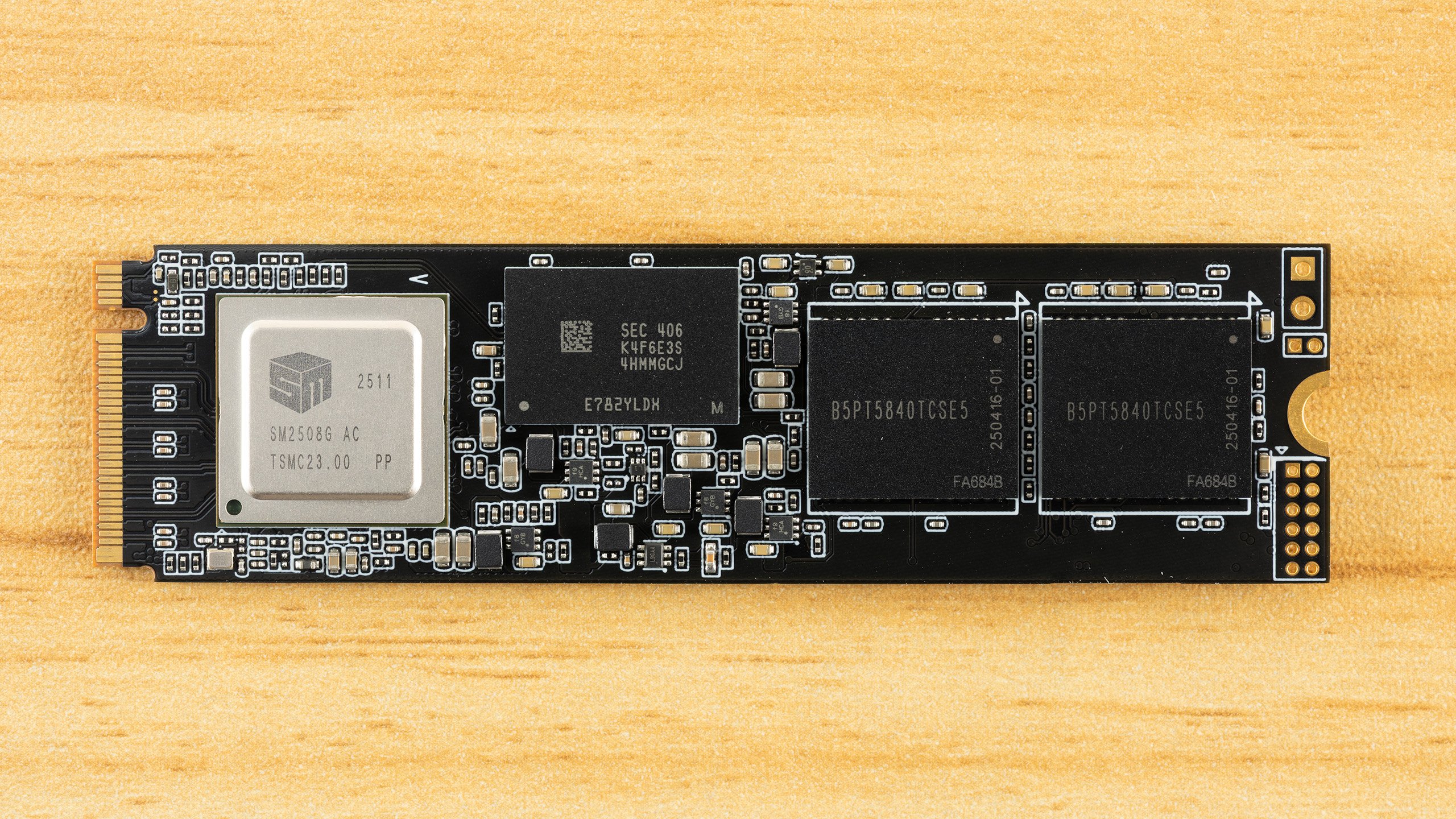
AGI built the AI858 around Silicon Motion's SM2508 controller, a high-end PCIe 5.0 SSD controller family that has become a key alternative to Phison-based designs. The drive uses Samsung LPDDR4 DRAM and Micron 232-layer TLC NAND, which gives AGI a familiar controller, DRAM and NAND combination for a modern enthusiast SSD.
The capacity stack covers 1TB, 2TB and 4TB. AGI rates all three models for 14,000 MB/s sequential reads. The 1TB model reaches 10,000 MB/s sequential writes, and the 2TB and 4TB models reach 13,000 MB/s. AGI assigns endurance ratings of 750TBW, 1,500TBW and 3,000TBW across those three capacities, with a five-year warranty.
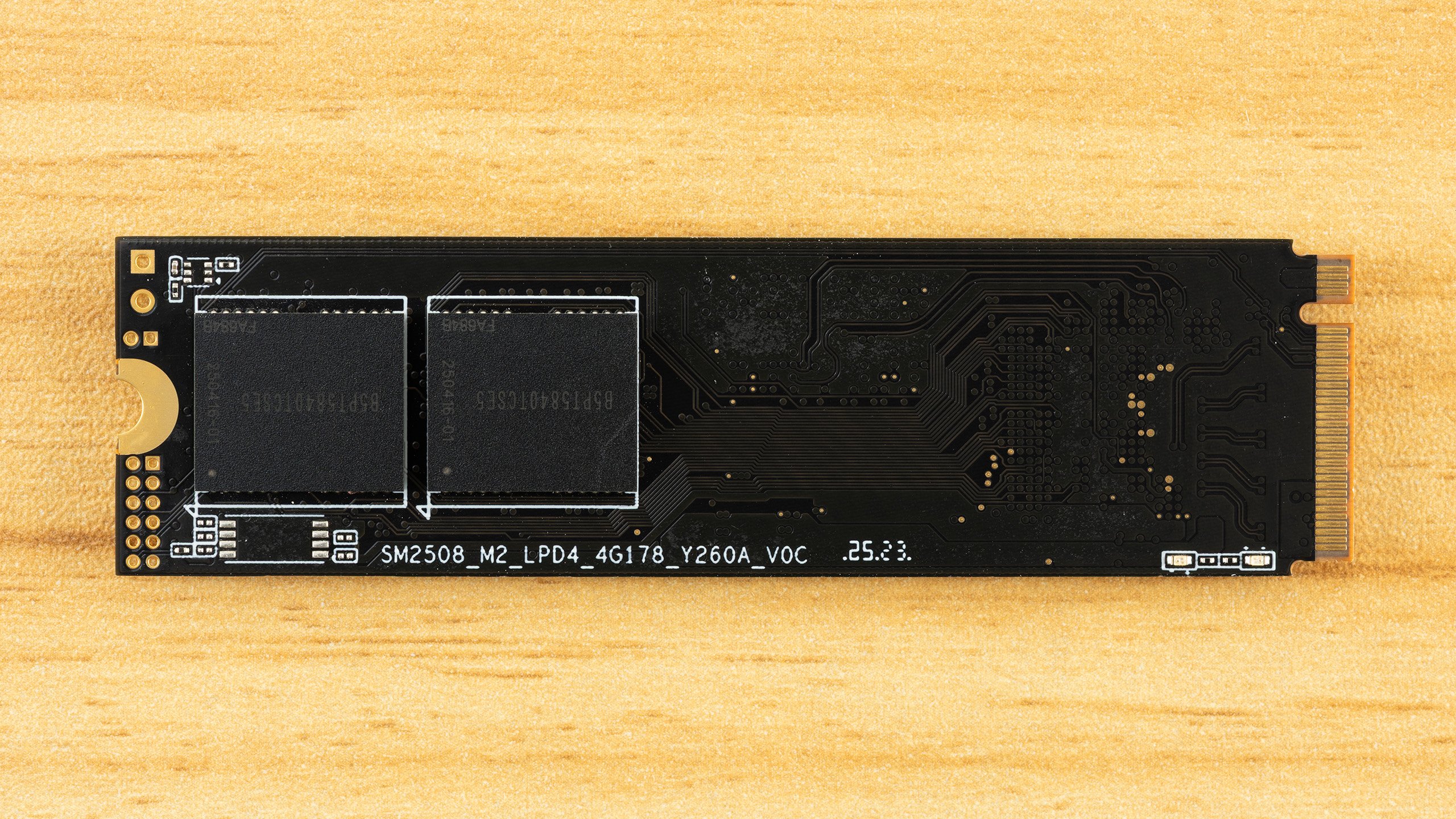
The 2TB model uses one Samsung LPDDR4 memory package in a 16Gb, or 2GB, configuration. That gives the drive the common 1GB of DRAM per 1TB of NAND ratio. Four NAND packages sit on the PCB, and Tom's Hardware identifies the flash as Micron 232-layer TLC.
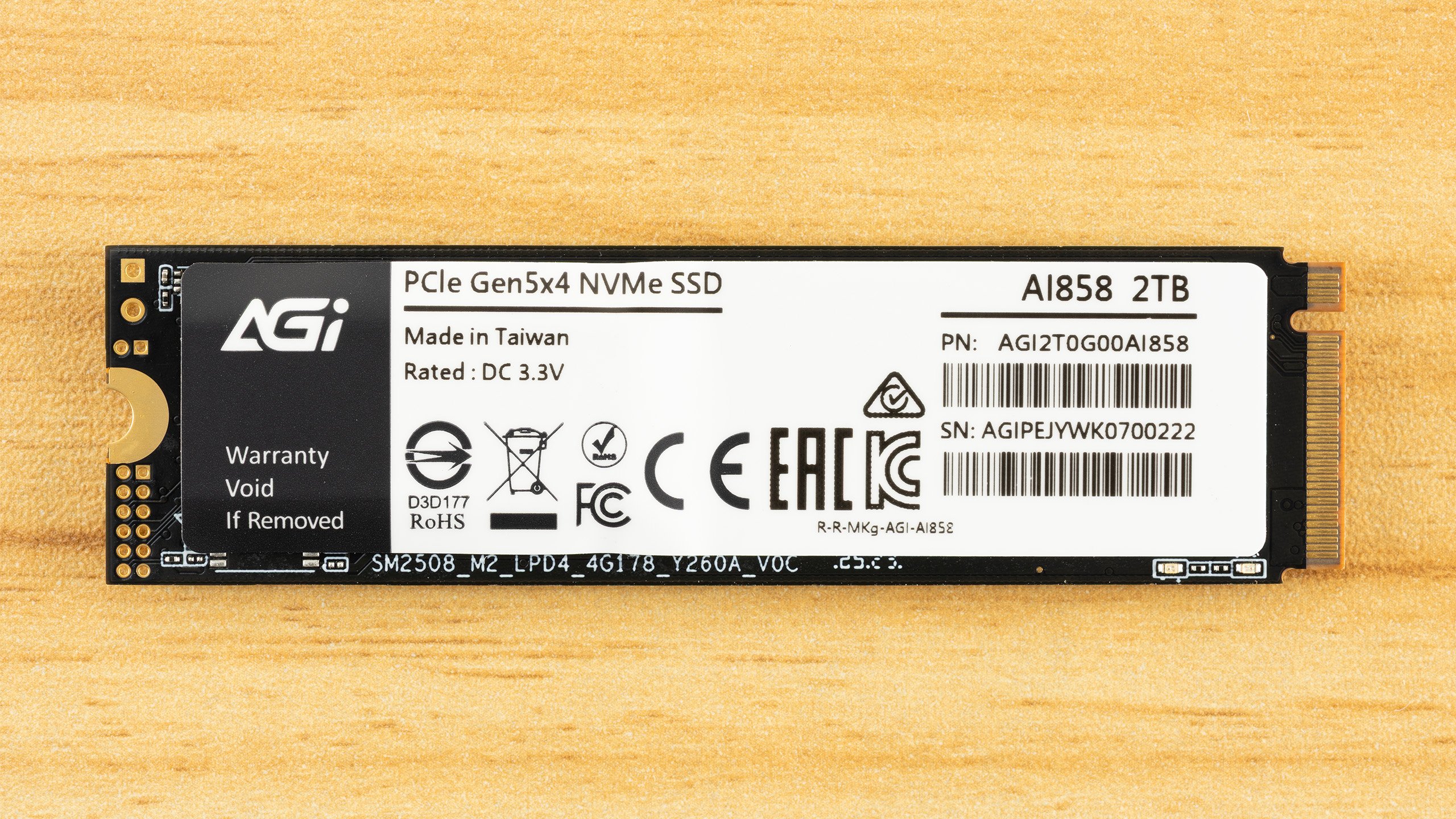
The PCB markings give buyers a useful way to check samples. The markings identify the SM2508 controller, M.2 form factor, LPDDR4 memory, four BGA178 NAND packages and an SMI reference design. The reviewed sample also carries a week 23, 2025 manufacturing mark.
AGI ships the drive with a heatsink, and that choice matters for this class. PCIe 5.0 SSDs can hit thermal limits under long writes, especially in cramped desktop builds or console slots with limited airflow. The included heatsink makes the AI858 a better fit for enthusiast desktops and, in some cases, PlayStation 5 upgrades. Laptop buyers need to check clearance because the double-sided design and heatsink can block installation.
AGI does not publish random read and write IOPS figures for the AI858. Tom's Hardware notes that this controller and flash class tends to land near 700K IOPS and can exceed 1,000K IOPS, depending on firmware and workload. That range puts the AI858 near other high-end consumer PCIe 5.0 SSDs, though the missing official figures leave buyers without a clean spec-table comparison.
Market implications
The AI858 shows how second-wave PCIe 5.0 SSDs have changed the consumer storage market. Early Gen5 drives chased headline throughput and often paid for it with heat, cost and power draw. Newer controller platforms such as the SM2508 let smaller brands package high bandwidth with less drama, which gives price-focused buyers more options.
AGI also benefits from the current NAND supply setup. Micron 232-layer TLC no longer represents the newest NAND node, but it still gives SSD vendors enough density and speed for 14 GB/s-class drives. AGI can use that flash to lower its bill of materials without dropping into weak QLC behavior or DRAMless trade-offs.
The missing software package hurts AGI against Samsung, WD, Crucial and Seagate. Buyers who want firmware checks, secure erase tools, health dashboards or guided migration tools will need third-party utilities such as CrystalDiskInfo, CrystalDiskMark, Clonezilla, Rescuezilla or MultiDrive. That gap matters less to experienced builders, but it gives mainstream buyers one more task after installation.
The 1TB model makes less sense for performance-focused buyers because lower-capacity SSDs often lose write bandwidth and parallelism. The AI858 spec sheet shows that split: 10,000 MB/s writes at 1TB versus 13,000 MB/s at 2TB and 4TB. Buyers who want the best version of the platform should choose 2TB or 4TB.
The AI858 gives AGI a stronger position than its older AI818. Tom's Hardware disliked that prior drive, but the AI858 uses a more competitive hardware stack and a more useful thermal design. AGI still needs better software support, but the company picked the right controller, DRAM and NAND recipe for a high-end PCIe 5.0 SSD.
For desktop builders, the AI858's value depends on street price. At a meaningful discount to Samsung 9100 Pro, WD Black SN8100, Seagate FireCuda-class drives or Phison E28 models, AGI gives you the main Gen5 advantages: high sequential bandwidth, strong sustained writes and a heatsink in the box. At price parity, brand support and software tools give the larger SSD vendors the cleaner pitch.
Comments
Please log in or register to join the discussion