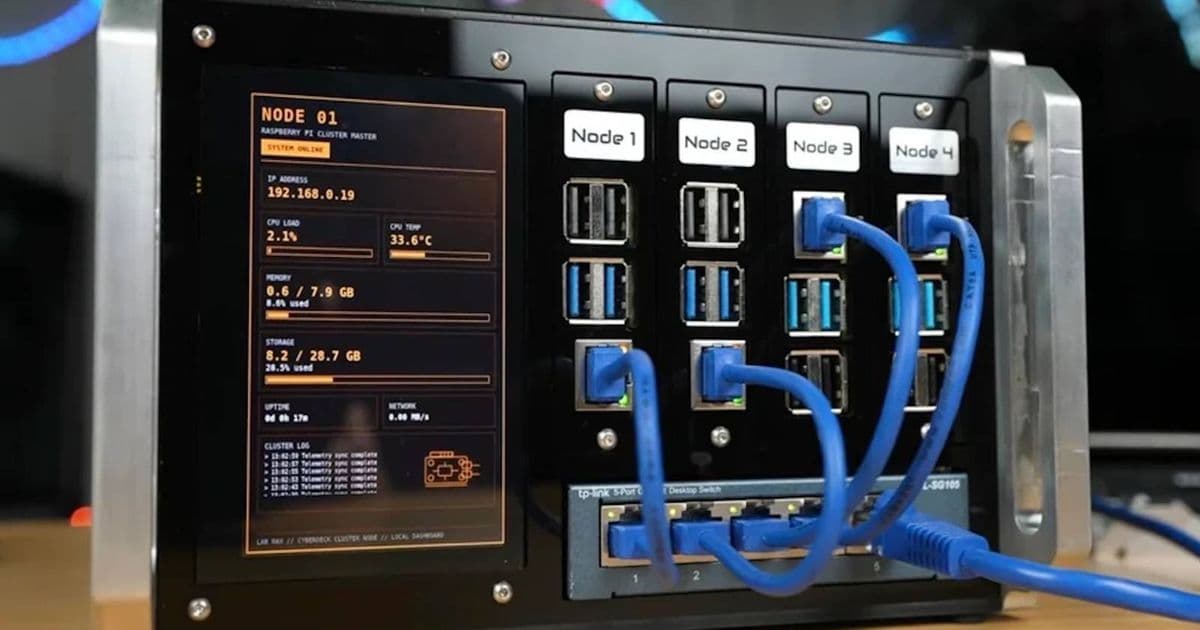
Michael Klements packed two Raspberry Pi 5 boards, two Raspberry Pi 4 boards, a switch, a touchscreen and shared power into a serviceable cluster chassis.
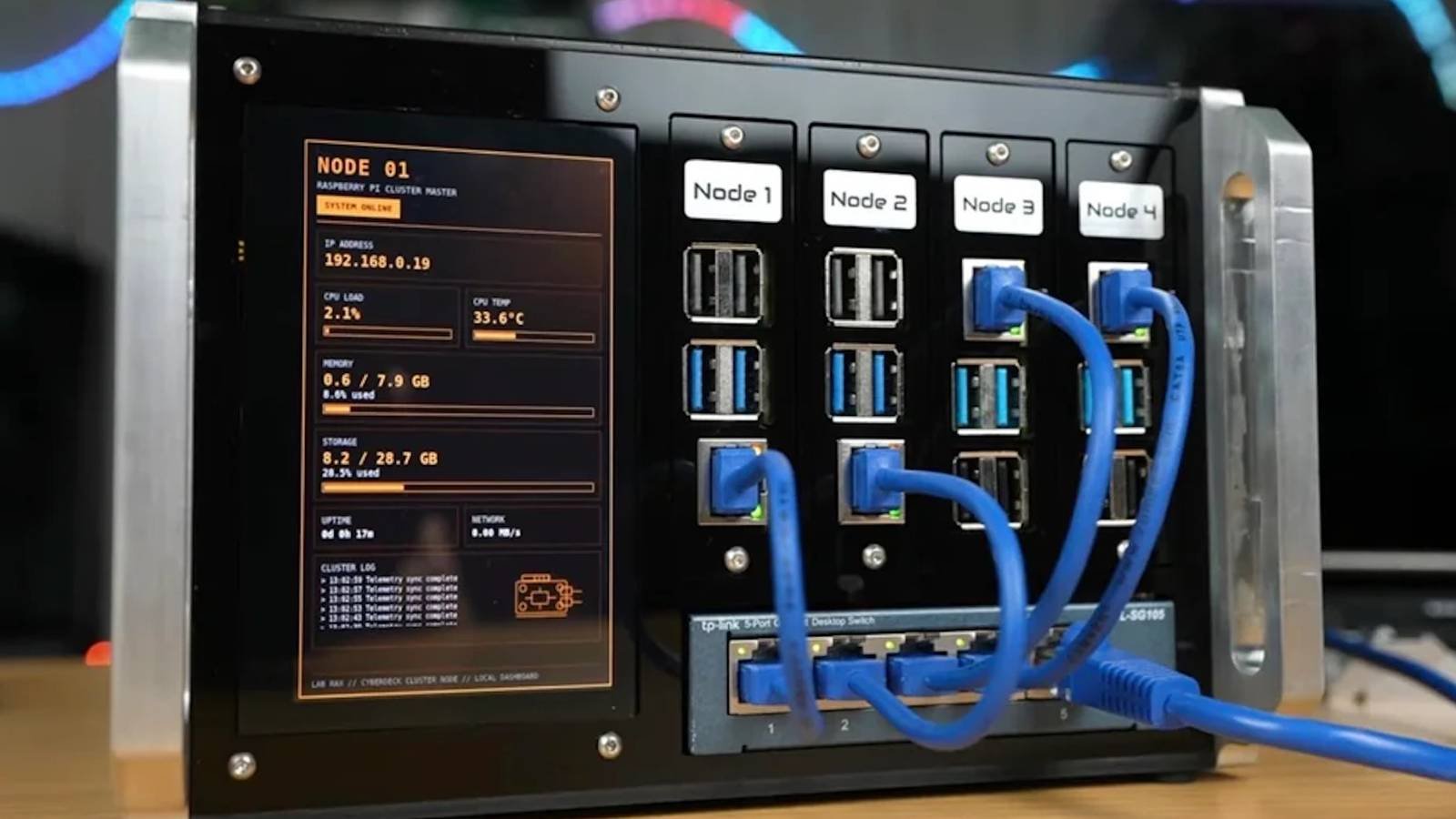
Michael Klements showed a four-node Raspberry Pi cluster Wednesday that combines two Raspberry Pi 5 boards, two Raspberry Pi 4 boards, a network switch, a touchscreen dashboard and one power system in a compact enclosure.
The build targets the part of homelab work that standard Pi stacks handle poorly: service access. Klements mounted each board on a removable sled, so you can pull one node, swap storage, check cooling or upgrade a board without taking apart the chassis.
Tinted acrylic panels keep the hardware visible, and a CNC-cut frame gives the cluster a finished look. The display shows live system stats, which helps when you run multiple nodes headless and want a quick read on load, temperature and network activity.
Klements said Kubernetes gives the cluster its most obvious job. A mixed Pi 5 and Pi 4 fleet can run lightweight Linux services, test distributed workloads, host local tools or teach cluster basics without a rack, a noisy server or a large power budget.
Developers who try this kind of build need to treat the hardware mix with care. The Pi 5 brings more CPU headroom and faster I/O than the Pi 4, so schedulers can place heavier work on the newer boards. The Pi 4 nodes still make sense for control-plane tasks, DNS, monitoring, small databases or background services.
The software choice matters more than the enclosure. Standard Kubernetes works, but many Pi cluster builders choose k3s because it trims the setup for edge and homelab systems. Container images must support ARM64, and storage should avoid workloads that punish microSD cards. USB SSDs give the cluster a better base for databases, logs and package caches.
A practical setup would start with Raspberry Pi OS or Ubuntu Server on each node, SSH access, static DHCP leases and one shared container registry cache. From there, you can add k3s, Prometheus, Grafana, Pi-hole, Home Assistant add-ons or a small Git runner. Android and iOS developers could also use the cluster for backend test services, API mocks and CI helpers, though mobile SDK builds still belong on macOS, Windows or Linux machines that match each platform's toolchain.
The cluster also shows why Raspberry Pi boards still draw builders to physical computing projects. Cloud instances can run the same containers with less setup, but they do not teach cabling, power limits, heat, board replacement or network design. A portable cluster puts those constraints on your desk.
Klements plans to release the design through Makerables, according to the original post. That release should matter to builders who want the chassis more than the discovery work. A published kit or file set could turn the project from a one-off showpiece into a repeatable homelab platform.
Comments
Please log in or register to join the discussion