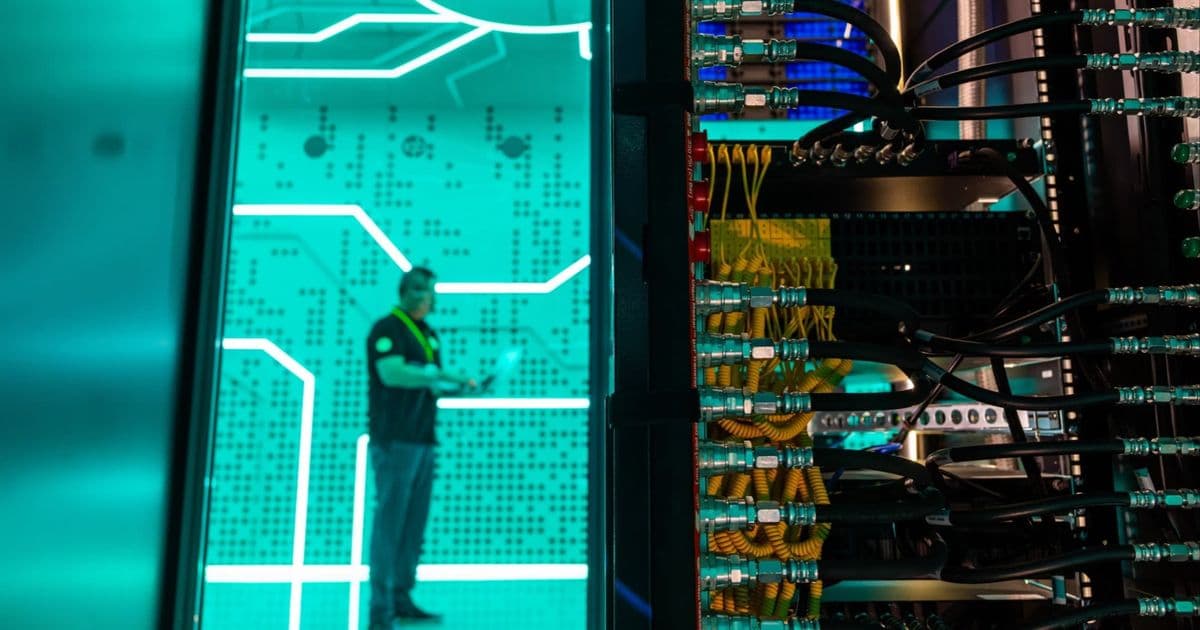
Investors keep funding AI infrastructure, but tenants tied to China or Russia now change the cost and timing of data center deals.
Investors committed $58 billion to 42 data center transactions in 2026, the Financial Times reported, citing Dealogic. The same point in 2025 brought $34 billion across 34 deals.
Developers are building close to 850 data centers worth about $7 trillion, according to the FT’s summary of Oxford Economics data. The United States leads with 228 projects. China follows with 98.
The claim looks simple: AI and cloud demand keep pulling capital into data centers. The better reading looks messier. Investors want exposure to compute capacity, power contracts and long leases, but they now test tenants for political risk as closely as they test uptime and grid access.
Data centers used to look like specialized real estate. AI changed that. A modern AI site gives cloud providers the power density, cooling and network fabric that large model training and inference require. OpenAI’s GPT family, Anthropic’s Claude family and Google’s Gemini family all push demand for clusters that can run GPUs or custom accelerators at scale. Model benchmarks such as MMLU, GPQA, SWE-bench and MMMU do not improve because a landlord signs a lease. They improve when labs train or serve models with more compute, better data and stronger systems work. Data centers supply one part of that chain.
The deal activity shows capital chasing that chain. Singapore-based DayOne plans to invest €1.2 billion in a data center in Lahti, Finland, and to work with Hyperco at another site in Kouvola, according to the FT. Green Mountain secured a €371 million financing package in Norway in 2025. Those Nordic projects offer cold climates, lower-carbon power mixes and access to European customers that want regional infrastructure.
The new part sits in the underwriting process. Lenders and asset managers now ask who occupies the racks. A building that hosts a cloud workload for an enterprise customer presents one risk profile. A site that serves a platform tied to a rival state presents another.
ByteDance and TikTok create one pressure point. Western investors have raised concerns about Chinese links, data access and political intervention. ByteDance has also rejected some U.S. investors on political grounds, according to the FT. The tension cuts both ways: capital wants infrastructure returns, and companies want backers that regulators and customers can accept.
Telegram creates another test case. The FT reported that Switch Datacenters in the Netherlands has sought financing for a data center near Amsterdam while some potential lenders questioned Telegram’s tenancy. Telegram disputed allegations about Russian links and pointed to its conflicts with Russian authorities. ESR Group has discussed a potential deal with Switch, according to the FT, and Switch can replace the tenant in the next few years.
That tenant question matters because AI infrastructure has become a strategic asset. Governments care about where data sits, who can access it and which companies receive compute. Cloud capacity now supports defense work, cyber operations, chip supply chains and consumer AI services. Investors can no longer treat each lease as a standard credit check.
Practical use cases still drive the money. Enterprises need more capacity for AI coding tools, customer support agents, search, fraud detection and internal analytics. Cloud providers need regions that satisfy data residency rules. Model developers need large clusters for training runs and smaller distributed capacity for inference. Each use case pushes developers toward sites with stable power, fiber routes and room for expansion.
The limits look concrete. Power access can delay projects even when capital arrives. Local officials and residents in the United States and Europe have challenged data center plans over electricity use, water demand and noise. Grid operators can connect only so much load before they need new generation or transmission. A financing agreement does not build a substation.
The AI demand story also gives investors little room for sloppy assumptions. A tenant with a long lease can still create regulatory risk. A site with good cooling can still face grid limits. A model provider with strong benchmark results can still cut spending if inference margins disappoint.
Data center financing has moved into a phase where investors underwrite compute demand and geopolitics in the same memo. The money still flows because AI and cloud customers need capacity. The friction now comes from a sharper question: which tenants can use that capacity without turning the building into a political problem?
Comments
Please log in or register to join the discussion