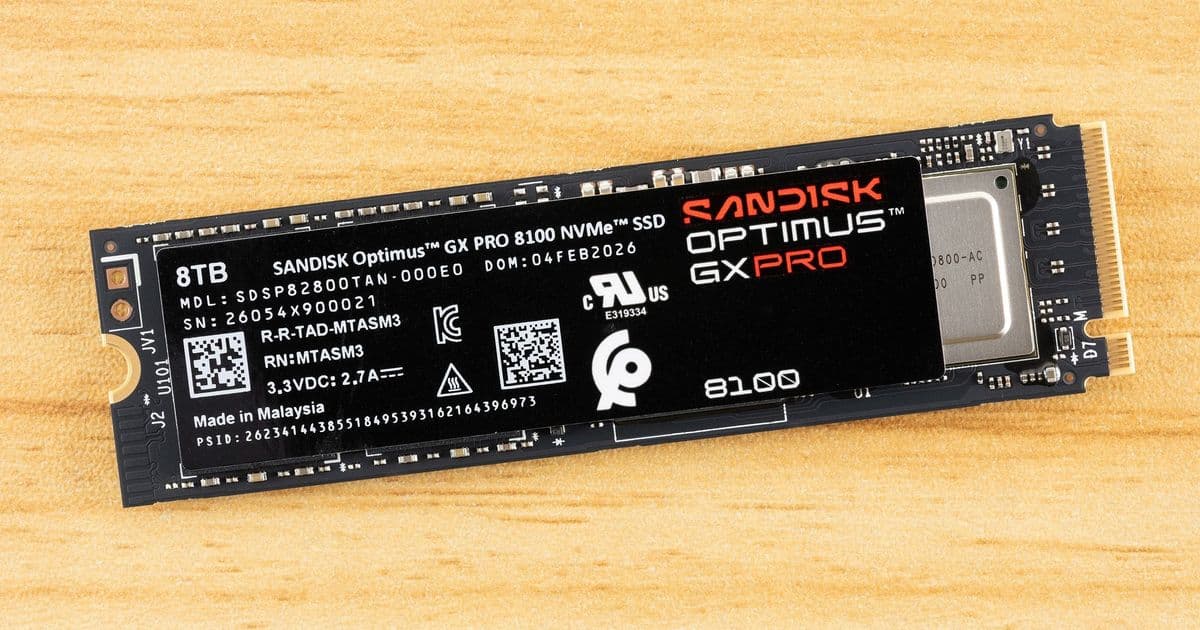
SanDisk’s 8TB Optimus GX Pro 8100 brings WD Black SN8100-class hardware to a higher-capacity PCIe 5.0 drive, with elite read latency, strong efficiency and a price that limits its audience.
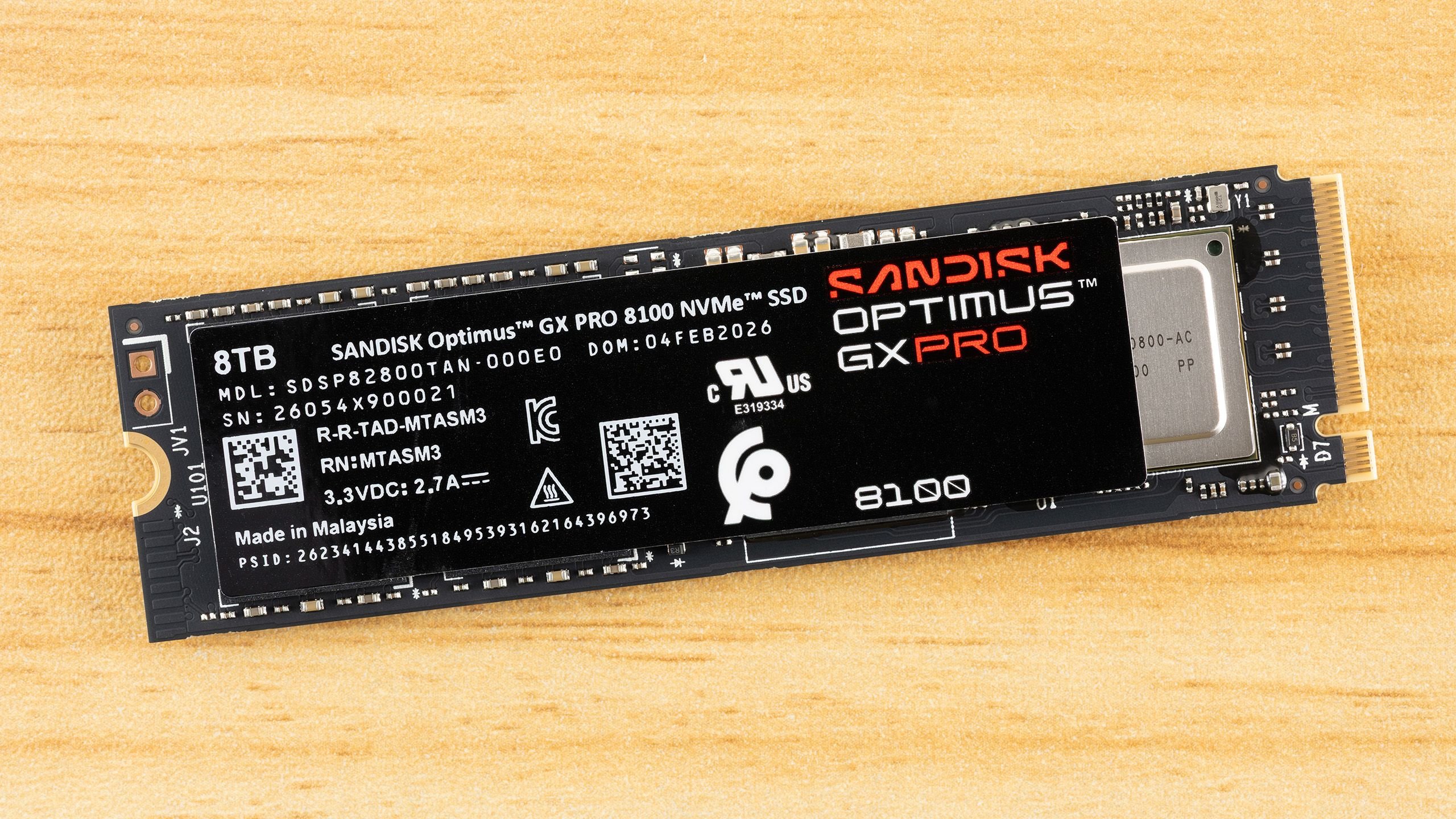
SanDisk has put an 8TB PCIe 5.0 SSD into the high-end consumer market with the Optimus GX Pro 8100, a drive that shares its core design with the WD Black SN8100 but adds the capacity tier many workstation and gaming users want.
The company sells the Optimus GX Pro 8100 in 1TB, 2TB, 4TB and 8TB versions. The 8TB model costs $2,799.99 without a heatsink, compared with $1,799.99 for the 8TB WD Black SN8100. That gap matters because SanDisk and WD use the same controller class, NAND family and performance target across the two lines.
SanDisk rates the drive for up to 14,900 MB/s sequential reads and up to 14,000 MB/s sequential writes. The 8TB model carries a 13,200 MB/s write rating, while random performance reaches up to 2.2 million read IOPS and 2.4 million write IOPS. Those numbers place it near the top of the PCIe 5.0 consumer SSD field.
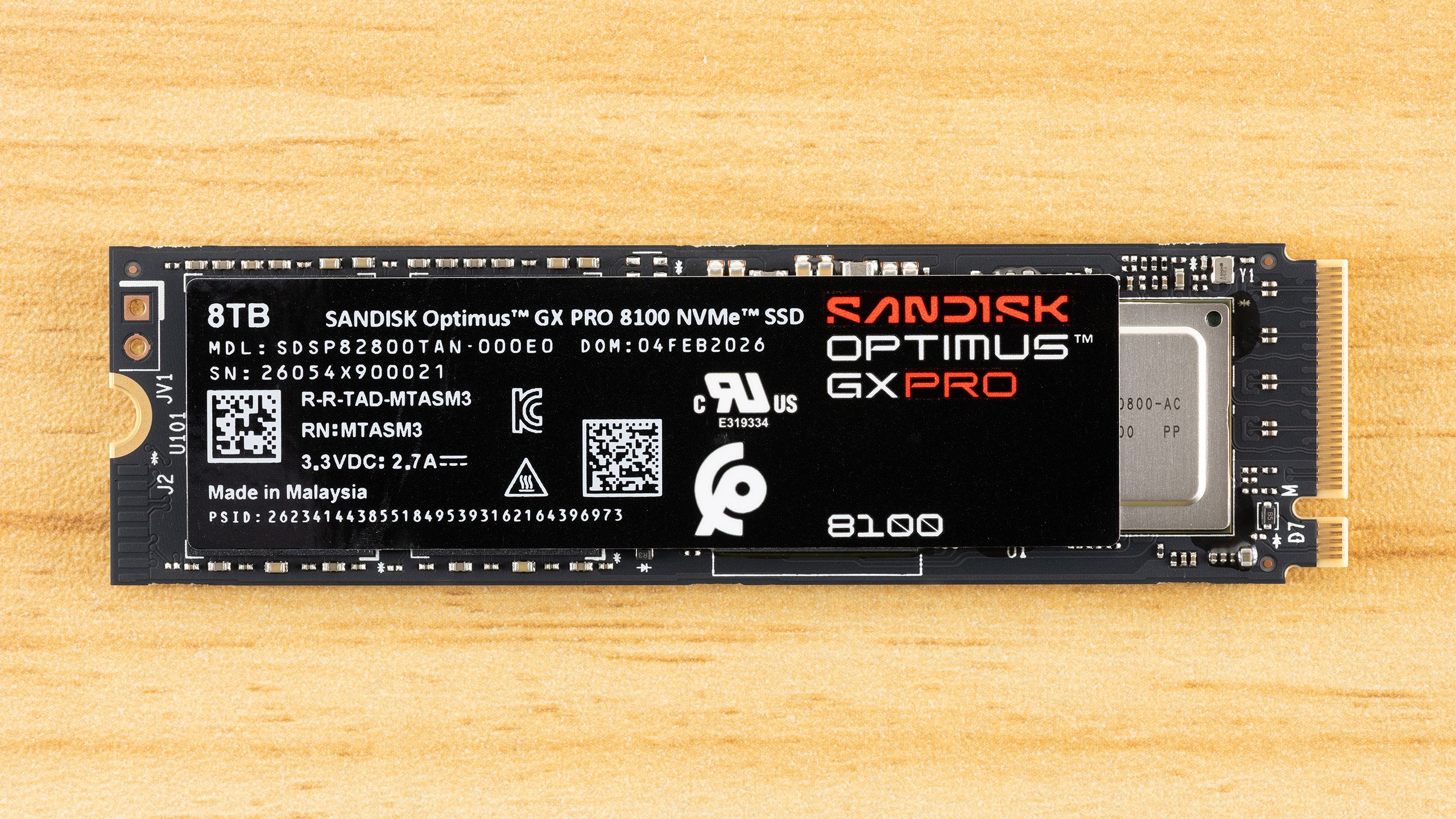
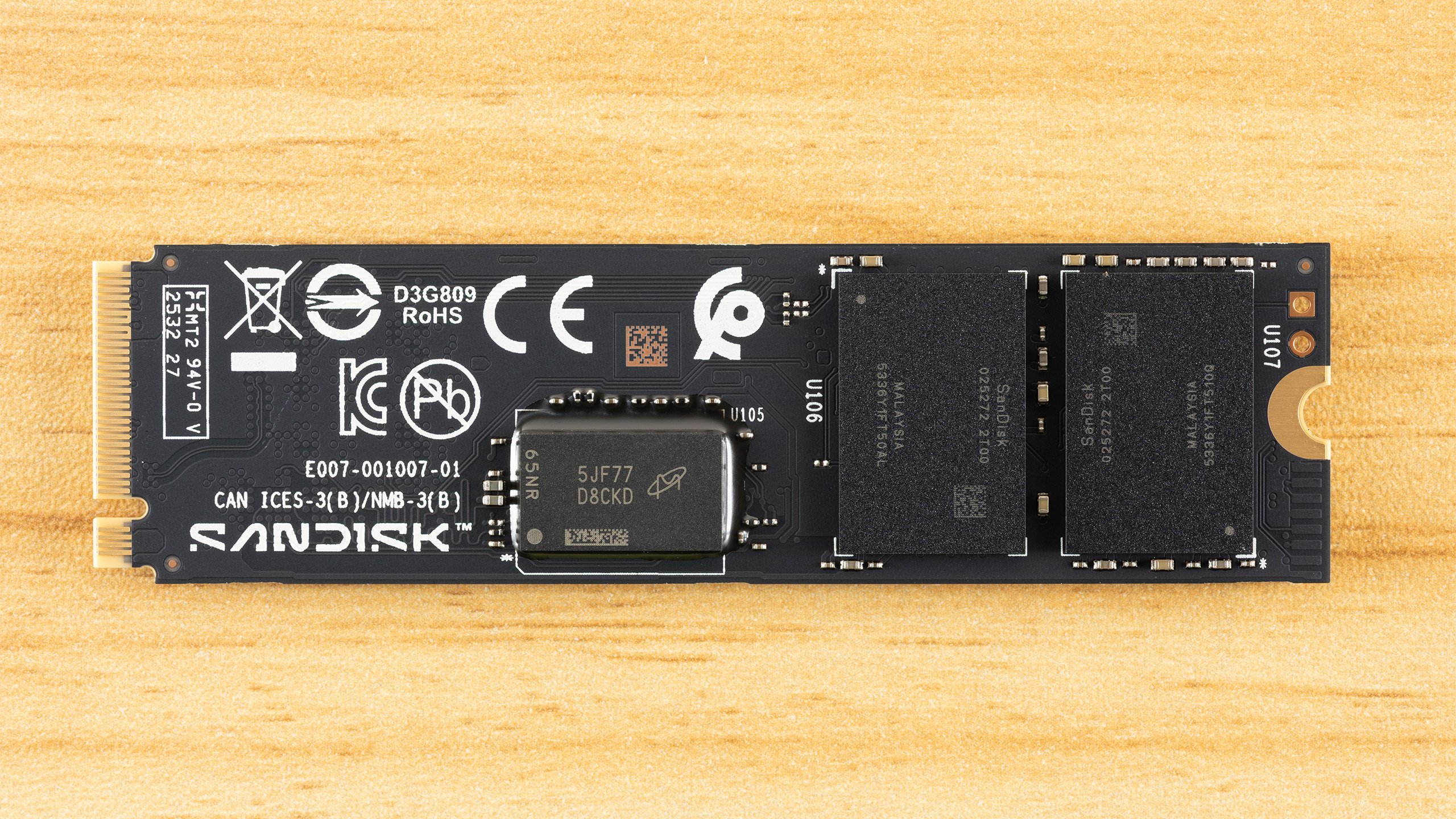
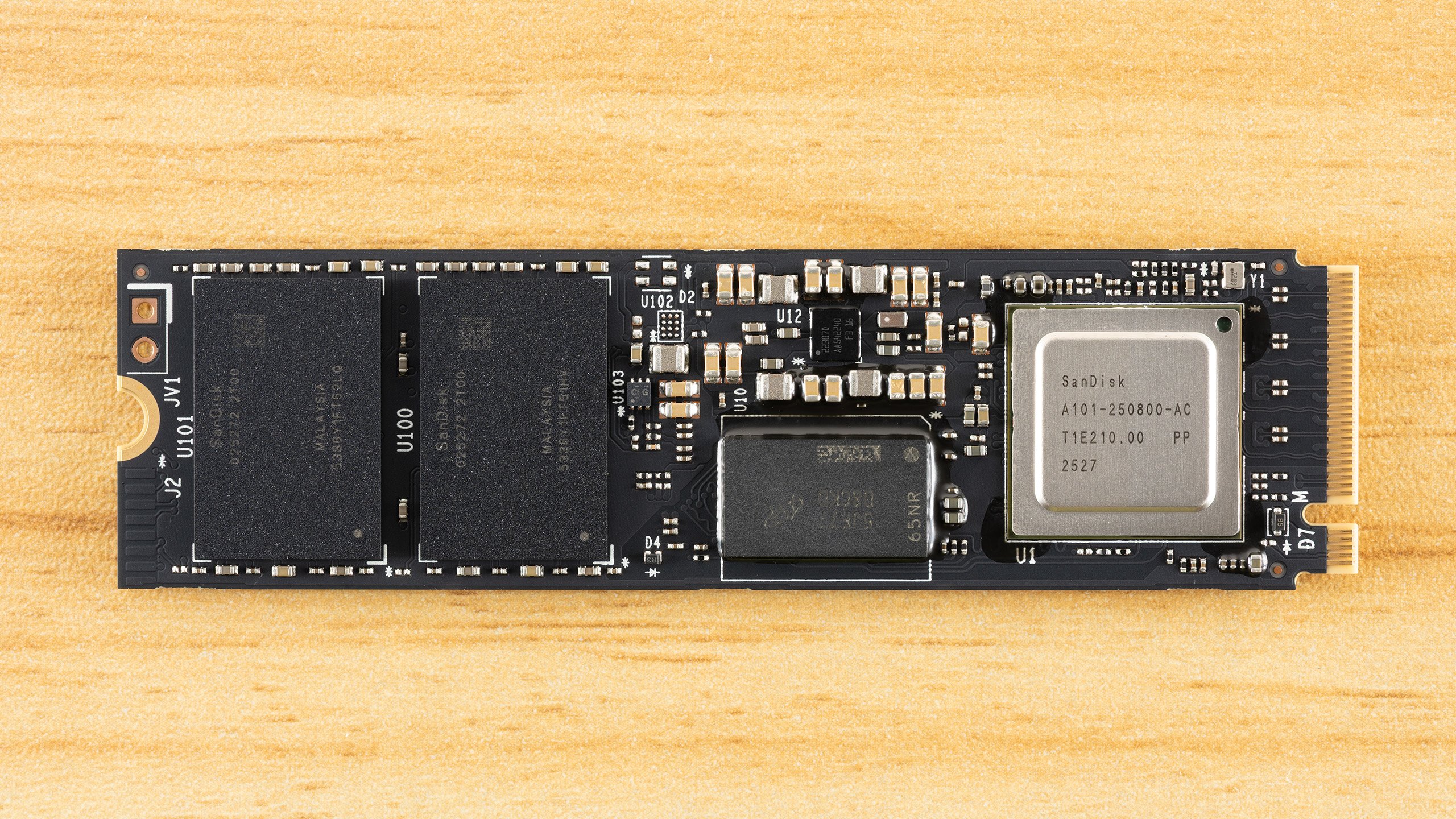
The hardware explains the result. SanDisk uses Silicon Motion’s SM2508 controller, Kioxia 218-layer BiCS8 TLC NAND and DDR4 DRAM. The 8TB model carries 8GB of DRAM, which keeps the common 1GB-per-1TB mapping ratio for high-end drives.
Engineers built the 8TB model as a double-sided M.2 2280 drive. The controller and DRAM occupy space on one side, and SanDisk needs four NAND packages to reach 8TB with 1Tb TLC dies. Users who need a single-sided SSD for a thin laptop or tight motherboard slot should stay at 4TB.
Power gives the Optimus GX Pro 8100 one of its stronger arguments. SanDisk lists average read and write draw around 7W for high-capacity models, far below early PCIe 5.0 flagships that pushed past 11W under load. The drive’s 3.3V and 2.7A label points to a power ceiling near 9W, with SMART data showing an 8.9W active rating and a 9.5W peak.
That efficiency comes from the SM2508 controller and newer NAND. Early PCIe 5.0 drives used Phison’s E26 controller and often needed large heatsinks or active cooling. SanDisk’s design reaches higher bandwidth without the same thermal burden, though users should still pair an 8TB PCIe 5.0 drive with a board heatsink or the vendor heatsink.
Latency separates this family from many fast SSDs. The Optimus GX Pro 8100 follows the WD Black SN8100’s pattern with strong random read latency, a metric that affects system feel more than peak sequential bandwidth in many desktop tasks. Game loading, project indexing and small-file work depend on how fast the controller fetches scattered data, not only on how high a benchmark bar climbs.
SanDisk also includes TCG Opal 2.02 support for hardware encryption. The company backs the drive with a five-year warranty and endurance of 600TB written per 1TB of capacity. That gives the 8TB model a 4,800TB written rating.
Software support comes through SanDisk Dashboard and Acronis True Image for SanDisk. Dashboard gives users firmware updates, health checks and drive settings. Acronis handles cloning, backup and recovery, which helps buyers move an existing Windows installation onto the new SSD.
The market context makes the price hard to ignore. Samsung’s 8TB 9100 Pro and Kingston’s Fury Renegade G5 sit in the same performance class, but 8TB PCIe 5.0 SSD supply remains thin. Vendors have announced or previewed more 8TB options, including Phison E28-based designs, but buyers still face a short list at retail.
SanDisk also competes with itself. The WD Black SN8100 offers the same core platform at much lower prices in the figures Tom’s Hardware cited. Buyers who care about the controller, NAND and measured behavior should compare both labels before paying the Optimus premium.
SanDisk gives the Optimus GX Pro 8100 a clear role: maximum consumer SSD capacity with top-tier PCIe 5.0 speed and better efficiency than first-wave Gen 5 drives. Workstation users with large game libraries, media caches or local AI datasets can use that mix. Price-sensitive builders should choose the WD Black SN8100 or wait for 8TB PCIe 5.0 supply to improve.
Comments
Please log in or register to join the discussion