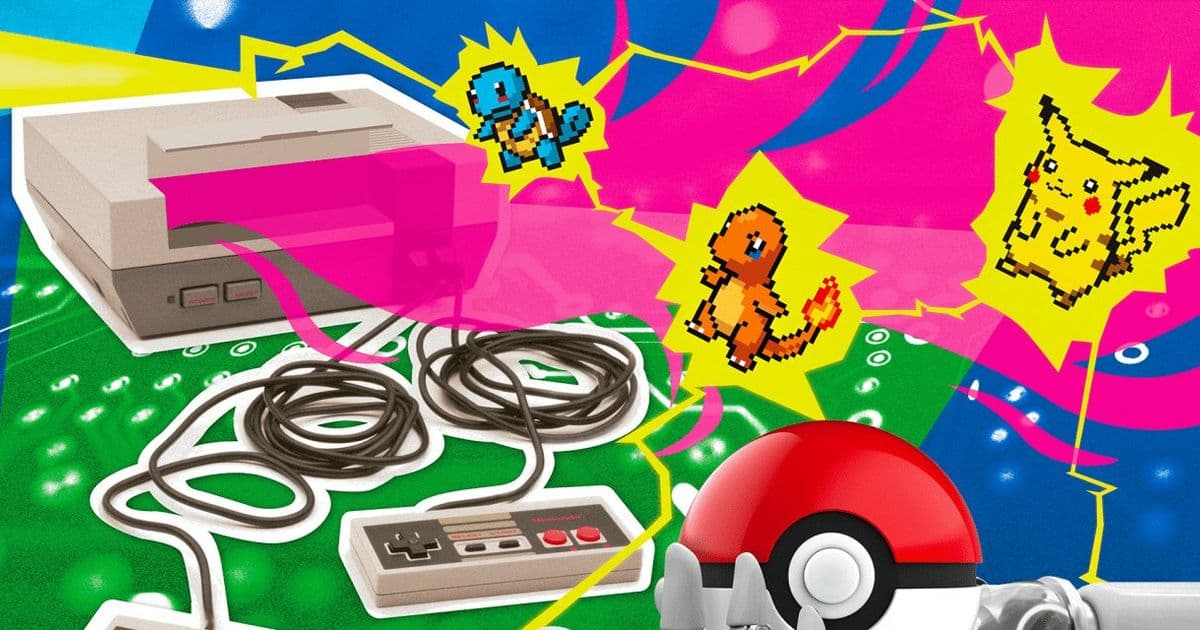
Anthropic, OpenAI, and Google are using Nintendo's 1996 Game Boy title Pokémon Blue as a testing ground for AI reasoning capabilities, streaming model gameplay on Twitch to evaluate decision-making in complex environments.
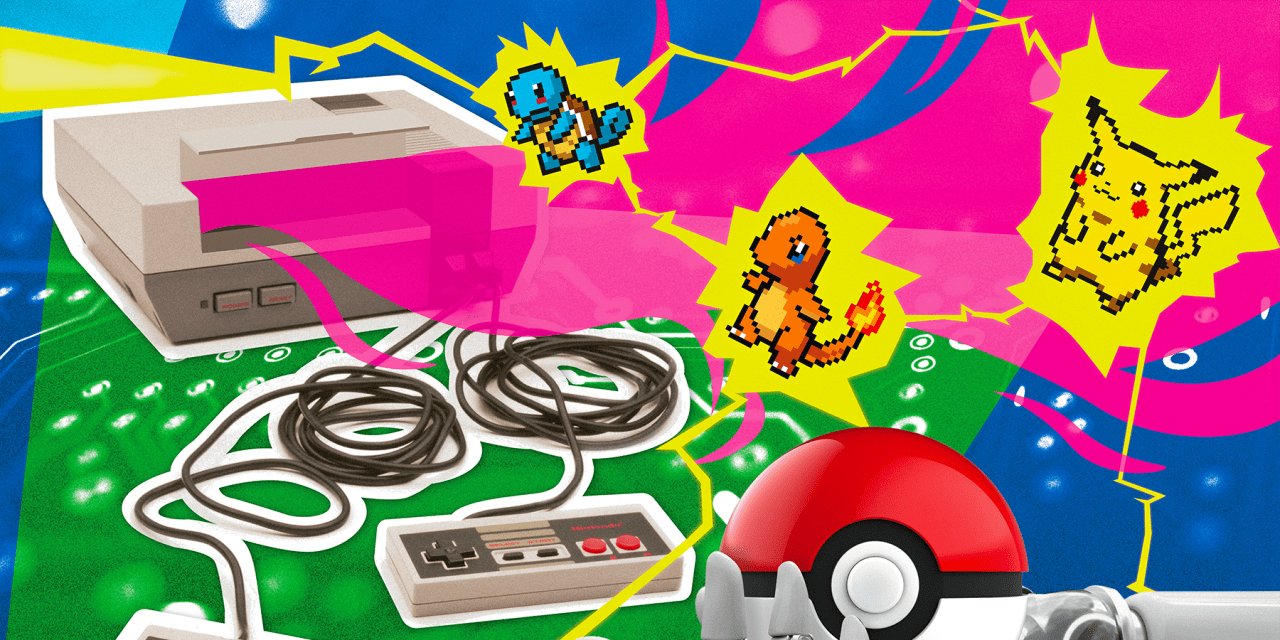
Major AI labs have adopted an unlikely testing methodology: having large language models play the original 1996 Game Boy title Pokémon Blue while streaming their gameplay on Twitch. This unconventional approach provides a public benchmark for evaluating how well models perform sequential decision-making, long-term planning, and problem-solving in a constrained environment.
Unlike traditional benchmarks that measure narrow capabilities like multiple-choice question answering or coding problems, Pokémon gameplay requires navigating interconnected systems: managing limited inventory space, balancing resource collection (Poké Balls, potions), handling random encounters, and executing multi-step strategies for gym battles. Models must maintain contextual awareness across hours-long gameplay sessions, remembering key objectives like obtaining HM moves to progress through roadblocks.
Researchers instrument the game using emulators that convert pixel output to text descriptions, then feed this state information to LLMs alongside gameplay history. The model outputs button-press sequences (Up, Down, A, B) which are executed in the emulator. Performance metrics include completion time, badge acquisition rate, and observable decision quality—like whether models efficiently grind experience points or repeatedly get lost in caves.
This approach reveals several reasoning challenges:
- Combinatorial complexity: The game's 151 Pokémon with type advantages create millions of possible battle states
- Partial observability: Critical information (like opponent Pokémon movesets) must be inferred through battle
- Delayed gratification: Optimal play requires sacrificing short-term gains (avoiding trainer battles) for long-term objectives
- Memory constraints: Models must recall location-specific mechanics like Cut trees or Surf routes
Current limitations are telling: Models often misinterpret text-based status screens, fail to optimize team composition, and struggle with maze navigation. When confronted with the game's infamous Safari Zone—where step limits and fleeing Pokémon create high-stakes tradeoffs—most models exhaust their steps without capturing rare Pokémon.
While video game benchmarks aren't new (from Atari to DOTA), Pokémon Blue offers uniquely quantifiable progression milestones in a constrained world. Unlike chess or Go with clear win conditions, Pokémon requires open-ended prioritization similar to real-world tasks like project management. However, critics note the game's deterministic engine limits transferability to stochastic environments, and the turn-based structure doesn't test real-time reaction capabilities.
The public Twitch streams (Anthropic's channel, OpenAI's experiments) serve dual purposes: They provide transparent performance records while crowdsourcing error analysis—viewers frequently spot suboptimal decisions missed by researchers. As labs refine techniques like chain-of-thought prompting specifically for gameplay, this benchmark may reveal whether improved reasoning strategies transfer to practical applications like supply chain optimization or clinical decision support systems.
Comments
Please log in or register to join the discussion