As AI capabilities accelerate, new data reveals the hidden costs of progress – from Microsoft's projected 250% water consumption surge to Anthropic's controversial training data practices. Meanwhile, developer tools like OpenAI's Prism and Moonshot's Kimi K2.5 promise productivity breakthroughs while raising new questions about AI's role in technical workflows.
The Environmental Calculus of AI Progress
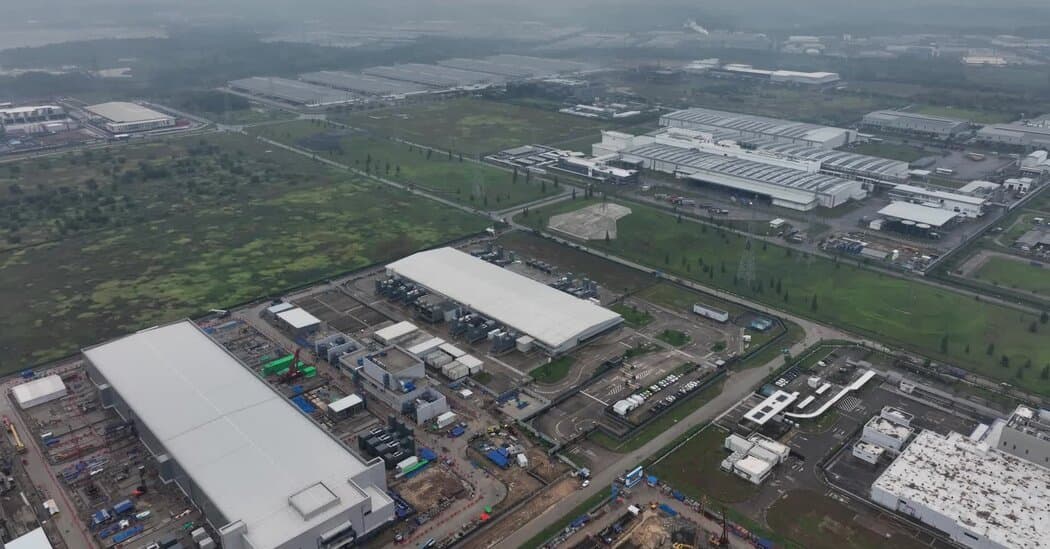
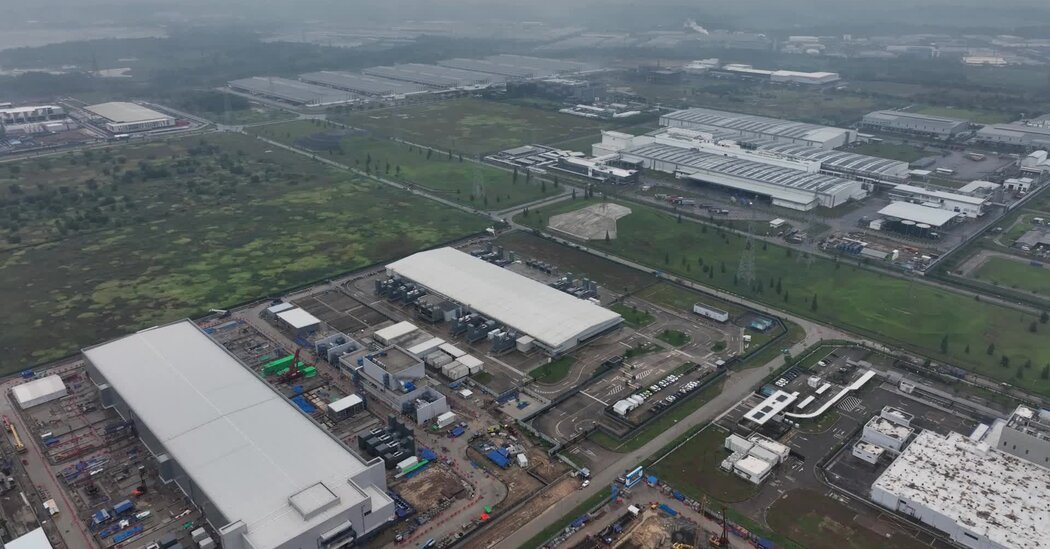
Internal Microsoft documents reveal the staggering resource demands of generative AI, with water consumption projected to reach 28 billion liters annually by 2030 - a 250% increase from 2024 levels. This trajectory directly correlates with the company's AI infrastructure expansion, particularly for training increasingly large models like those powering GitHub Copilot and Azure AI services.
While Microsoft maintains its commitment to becoming water positive by 2030, the projections highlight an uncomfortable truth: AI's computational intensity creates physical resource constraints that can't be solved through carbon offsets alone. Data center operators now face dual pressures - meeting exploding demand for AI processing while addressing the water stress affecting nearly 60% of Microsoft's data center regions.
Developer Tools Enter the AI Mainstream
OpenAI's launch of Prism, a free cloud-based LaTeX editor integrated with GPT-5.2, signals AI's formal entry into academic technical workflows. The tool assists with paper drafting, citation management, and mathematical notation - domains previously considered safe from automation. Early adopters report 30-50% time savings on manuscript preparation, though some express concern about over-reliance on AI for technical accuracy.
Simultaneously, Chinese startup Moonshot unveiled Kimi K2.5, an open-source multimodal model claiming superior performance in processing text, images, and video simultaneously. The model's ability to "self-direct an agent swarm with up to 100 sub-agents" suggests new paradigms for automating complex development workflows, though benchmark verification remains pending.
The Ethical Frontier of Training Data
Court filings reveal troubling details about Anthropic's alleged Project Panama, where the company reportedly used hydraulic cutting machines to destructively scan up to 2 million books for training data. This practice - described as "industrial-scale intellectual property harvesting" in legal documents - contradicts the company's public stance on ethical AI development. The revelation comes as Anthropic seeks $20 billion in new funding at a $350 billion valuation, exposing tensions between growth demands and ethical constraints.
The Developer Community's Divided Response
These developments have sparked vigorous debate:
- Infrastructure engineers question whether water consumption projections will trigger regulatory action under EPA guidelines
- Academic researchers debate whether tools like Prism lower barriers to publication or enable new forms of plagiarism
- Open-source advocates analyze whether Kimi K2.5's architecture represents meaningful innovation or incremental improvement
- AI ethicists argue destructive book scanning violates the Berne Convention principles
As the CTO of a major cloud provider (who requested anonymity) noted: "We're building the future with tools that threaten to undermine its foundation. The next three years will determine whether AI becomes a net positive for human knowledge or an extractive industry."
These converging trends suggest 2026 will be a pivotal year for establishing guardrails around AI's physical and intellectual resource consumption, even as capabilities continue their exponential growth.
Comments
Please log in or register to join the discussion