Zap Code transforms how kids learn coding by letting them describe apps in plain English and watch AI generate working HTML, CSS, and JavaScript games and applications.
When a 10-year-old describes wanting to build a space invader game where they're a pizza slice shooting pepperoni at alien burgers, most coding platforms would respond with a blank stare. Zap Code takes that whimsical idea and delivers a working game in seconds, complete with HTML, CSS, and JavaScript that kids can actually learn from.
From Imagination to Working Code in Seconds
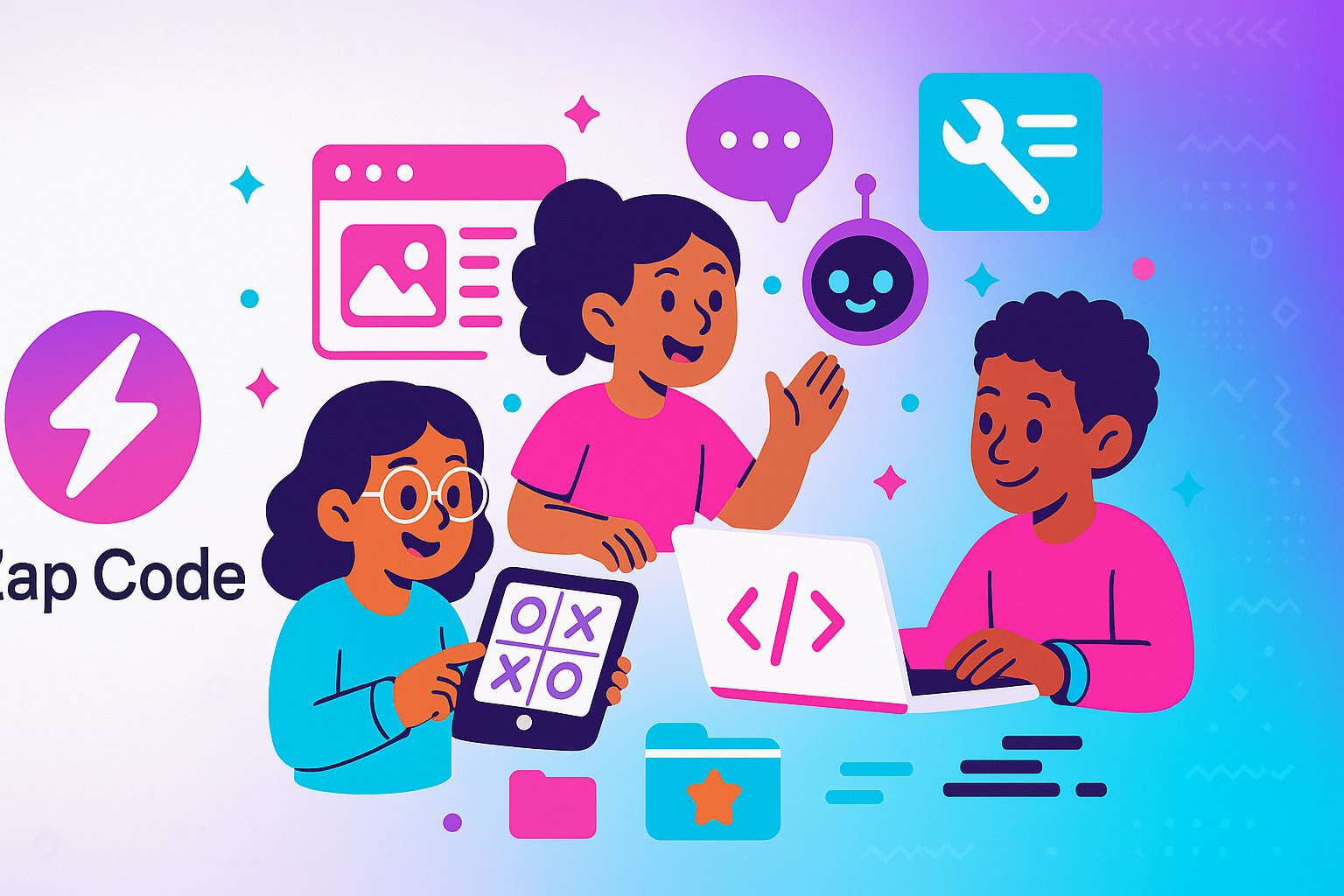
The platform operates on a simple premise: kids describe what they want to build in plain English, and AI handles the rest. Type "Make a space invader game where I'm a pizza slice shooting pepperoni at alien burgers" and watch as the system generates real, functional code. No setup, no downloads, no complicated installation processes - just immediate results.
This approach solves a fundamental problem in coding education: the gap between imagination and execution. Traditional coding requires learning syntax, understanding frameworks, and debugging countless errors before seeing any results. Zap Code collapses that timeline from days or weeks to seconds.
The live preview feature shows kids their creation running immediately. Want to make a calculator app? Describe it, see it work, then start tweaking. The system generates actual web applications using the same technologies that power every website on the internet.
Three Learning Paths That Grow With Skills
What makes Zap Code particularly effective is its adaptive learning system. The platform offers three distinct modes that cater to different comfort levels and age groups:
Visual Mode - Perfect for beginners who want to change colors, layouts, and basic functionality through intuitive controls. Kids can make their pizza shooter blue instead of red or add sound effects without touching code.
Peek Mode - For curious minds who want to understand how things work. This mode shows the generated HTML, CSS, and JavaScript alongside the visual interface, letting kids see the connection between code and output.
Edit Mode - For those ready to dive deeper, this mode provides direct access to the source code. Kids can modify existing functions, add new features, or completely rebuild parts of their application.
This progression means an 8-year-old can start with visual tweaks while a 15-year-old can jump straight into editing real JavaScript functions. The platform adapts rather than forcing a one-size-fits-all approach.
Building a Community Around Creation
Every project created in Zap Code can be published to a shared gallery where other kids can play, view the source code, and remix existing projects. This creates a positive feedback loop: kids see what others have built, learn techniques by examining working code, and build upon each other's ideas.
A student who builds a quiz game can share it with friends who then play it daily. Another might remix a drawing tool to add new brush types or export functionality. The gallery transforms coding from a solitary activity into a collaborative creative process.
Real-World Results That Matter
Parents report seeing their children create working applications within minutes of signing up. One parent noted their 10-year-old built a functional calculator app in just five minutes, then spent hours exploring the underlying HTML code independently.
Students appreciate the authenticity compared to block-based coding platforms. A 13-year-old user explained that Zap Code is "way better than block coding" because they can actually see and learn from real code. Their quiz game became popular among friends, providing motivation to create more.
Safety features address parental concerns. The platform includes a dashboard where parents can monitor what their children are building and track time spent on the platform. All shared projects undergo moderation, and the service maintains a strict no-ads, no-tracking, no-data-selling policy.
The Technology Behind the Magic
Zap Code generates production-ready HTML, CSS, and JavaScript - not simplified pseudo-code or visual blocks that only work within a specific environment. These are the same languages used by professional developers worldwide.
This matters because the skills kids develop are immediately transferable. Learning to structure HTML documents, style them with CSS, and add interactivity with JavaScript provides a foundation that applies to any web development career. Unlike proprietary block-based systems, these skills work everywhere.
What Kids Can Actually Build
The platform supports an impressive range of project types:
- Web games like platformers, shooters, and puzzles
- Interactive stories with branching narratives
- Educational tools like quizzes and flashcards
- Utility apps including calculators, timers, and to-do lists
- Creative tools for drawing, music, and animation
- Social apps for sharing and collaboration
If a child can describe it, Zap Code can likely build it. The only limit is imagination.
Getting Started Is Free
Zap Code offers free access to get started. New users can sign up, describe their first project, and see it come to life in under a minute without any payment information required. This low barrier to entry lets kids and parents experience the platform's capabilities before committing.
The combination of immediate results, progressive learning paths, community features, and genuine coding education creates a platform that bridges the gap between play and programming. Kids aren't just consuming technology - they're creating it, one pizza-shooting space invader at a time.
Ready to see what your child can build? Zap Code transforms ideas into working applications faster than most adults can install a traditional coding environment. The future of coding education might just sound like: "Make me a game where..."
Comments
Please log in or register to join the discussion