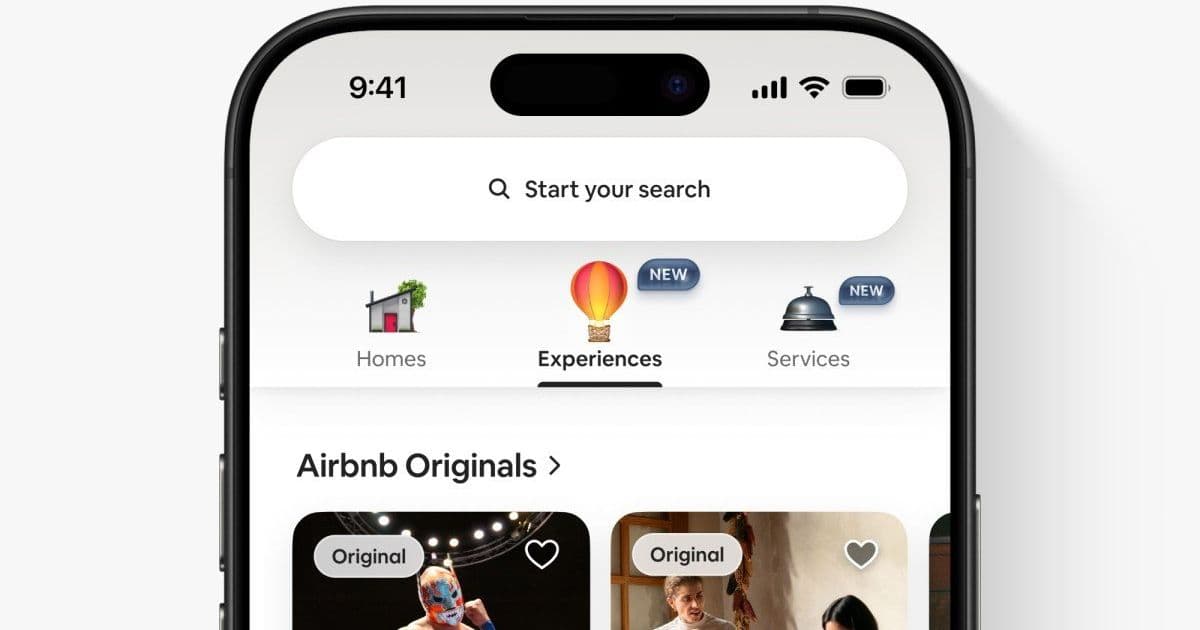
Airbnb's custom AI agent now resolves a third of North American customer support cases, with global expansion planned. While showcasing automation's potential in travel tech, the move raises questions about scalability, human-AI collaboration, and cultural adaptation.
The travel industry's customer service landscape is undergoing seismic transformation, with Airbnb emerging as a notable case study. The company recently disclosed that its internally developed AI agent now resolves approximately 33% of customer support issues in North America, positioning it for imminent global deployment. This milestone represents more than operational efficiency—it signals how quickly AI is reshaping hospitality tech stacks.
Unlike off-the-shelf solutions, Airbnb's custom-built system integrates deeply with their booking ecosystem, handling routine inquiries like reservation modifications, cancellation policies, and payment issues. The technology operates through Airbnb's Help Center, where it triages requests before escalating complex cases to human agents. Early metrics suggest response times have decreased by 40% for AI-handled queries, though the company hasn't disclosed resolution satisfaction rates.
Adoption signals point toward significant cost efficiency: automating a third of support volume translates to substantial savings for a platform handling millions of bookings. Yet community sentiment reveals apprehension. Hospitality industry forums highlight concerns about AI's ability to navigate culturally sensitive disputes or nuanced host-guest conflicts. As one host community moderator noted: "A guest's 'minor cleanliness issue' could range from a stray hair to bed bugs—context matters."
Counter-perspectives emerge from technical observers who question global scalability. While North America's relatively standardized regulations simplify AI training, expanding to Airbnb's global markets introduces language nuances, varying tenant laws, and payment systems. The European Union's upcoming AI Act classifications could necessitate architectural changes before rollout. Meanwhile, customer support unions cite anxiety about job displacement, despite Airbnb's assurance that AI augments rather than replaces human teams.
Industry analysts observe parallels with Amazon's customer service automation, but note travel's higher emotional stakes. When luggage goes missing or reservations evaporate, algorithmic responses risk amplifying frustration. This reality underscores why Airbnb maintains human oversight layers—a hybrid approach also adopted by competitors like Booking.com.
The timing coincides with broader travel industry automation. Airlines deploy similar systems for rebooking, while hotel chains automate concierge services. Yet Airbnb's 33% benchmark sets a new expectation for peer platforms. As the company prepares its global rollout, the hospitality sector watches whether this AI agent can maintain precision across languages and legal frameworks while preserving the human touch that defines travel experiences.
Technical details remain guarded, but Airbnb's engineering blog previously referenced transformer architectures fine-tuned on anonymized support transcripts. The true test will be whether their models can navigate the unpredictable terrain of international travel crises—where a typhoon cancellation in Manila requires different handling than a blizzard cancellation in Montreal.
Comments
Please log in or register to join the discussion