
At the 2026 Advanced Degree Ceremony, Pritzker‑prize architect Alejandro Aravena urged the School of Architecture and Planning’s new graduates to use their skills for the public good, highlighting the importance of empathy, community engagement, and honest practice in a world facing social and environmental tipping points.
Alejandro Aravena Calls MIT SA+P Graduates to Lead with Kindness and Truth

The MIT School of Architecture and Planning (SA+P) held its Advanced Degree Ceremony on May 29, 2026 in Kresge Auditorium. 205 graduates from architecture, urban studies, media arts, and real‑estate programs gathered to hear Dean Hashim Sarkis, who described the class as “big‑hearted,” and to receive a custom toolbox presented by student Oliver Moldow and faculty member Skylar Tibbits.
A Speaker Who Bridges Design and Social Impact
Chilean architect Alejandro Aravena, founder of ELEMENTAL and 2016 Pritzker Prize laureate, delivered the commencement address. Aravena’s career has been defined by projects that fuse rigorous design with participatory processes— from social‑housing prototypes in Chile’s most vulnerable neighborhoods to post‑earthquake reconstruction plans that involve local residents at every stage. His work is documented on the ELEMENTAL website and in the recent monograph Housing for the Many (MIT Press, 2024).
Technical Approach: Design as a Negotiation Tool
Aravena emphasized that architecture is not merely the creation of form but a negotiation platform. He outlined three technical strategies that his firm employs:
- Incremental, user‑driven prototyping – Instead of delivering a finished building, ELEMENTAL releases a minimal viable unit that residents can adapt. Sensors embedded in the structure collect data on usage patterns, informing subsequent phases.
- Cross‑disciplinary data integration – Urban planners, engineers, and sociologists co‑author a shared GIS model. The model links housing density, flood risk, and socioeconomic indicators, allowing designers to test trade‑offs before construction.
- Open‑source construction kits – The custom toolbox presented at the ceremony contains modular components (prefabricated wall panels, low‑cost insulation, and a set of digital fabrication files). By releasing the design files under a Creative Commons license, ELEMENTAL enables other firms to replicate the system in different contexts.
These methods illustrate how technical rigor can serve a broader ethical agenda.
Stories that Illustrate the Stakes
Aravena shared two vivid vignettes that underline the urgency of his message:
- The “law of the jungle” in a Chilean slum upgrade – Social workers from the Ministry of Housing were threatened by organized crime while trying to oversee a retrofit. The episode reminded Aravena that design interventions can provoke powerful resistance when they challenge entrenched power structures.
- A hospital for survivors of sexual violence in Colombia – The project forced the team to confront trauma‑informed design, integrating private consultation rooms, sound‑absorbing materials, and secure circulation paths. The experience highlighted how built environments can either exacerbate or alleviate human suffering.
Both cases demonstrate that architects must anticipate political, cultural, and psychological dimensions that extend far beyond structural calculations.
From Pre‑frontal Cortex to Public Policy
Aravena invoked neuroscience, noting that humans possess the largest pre‑frontal cortex of any species—a region linked to empathy and long‑term planning. He warned that societies are allowing short‑term self‑interest to dominate, effectively “turning backwards.” His call to action was simple: use the analytical tools honed at MIT to build “more even playgrounds” where predators find fewer opportunities.
Real‑World Applicability for the Class of 2026
The graduates left the ceremony with concrete pathways to apply Aravena’s counsel:
- Community‑led design studios – MIT’s Media Lab and the Center for Real Estate are launching a joint incubator that pairs students with NGOs in Latin America. Early‑stage projects will receive seed funding from the newly announced Class of 2026 Scholarship fund.
- Policy‑focused research tracks – The Urban Studies and Planning department is expanding its “Design for Resilience” track, offering courses on climate‑risk modeling, participatory budgeting, and regulatory frameworks.
- Open‑source construction libraries – Building on the toolbox presented by Tibbits, a GitHub repository (MIT‑Toolbox‑SA+P) will host parametric models, BIM families, and construction manuals that graduates can adapt for local contexts.
By embedding these resources into their post‑graduation work, the class can translate the ethical imperatives of the speech into measurable outcomes— lower construction costs for low‑income housing, reduced carbon footprints, and increased community agency.
Limitations and Challenges
Aravena acknowledged that good intentions alone do not guarantee success. He cited three persistent constraints:
- Funding volatility – Social projects often rely on short‑term grants, making long‑term maintenance uncertain.
- Regulatory inertia – Zoning codes and building codes can impede innovative prototypes, requiring sustained advocacy.
- Cultural resistance – Introducing new construction methods can clash with local building traditions, necessitating careful co‑design.
Addressing these issues will require interdisciplinary collaboration, policy engagement, and a willingness to iterate beyond the initial design.
Closing Thought
“Let’s bring back kindness, let’s honor the truth, and let’s make the pre‑frontal cortex great again,” Aravena concluded, urging the graduates to view their technical expertise as a conduit for societal well‑being.
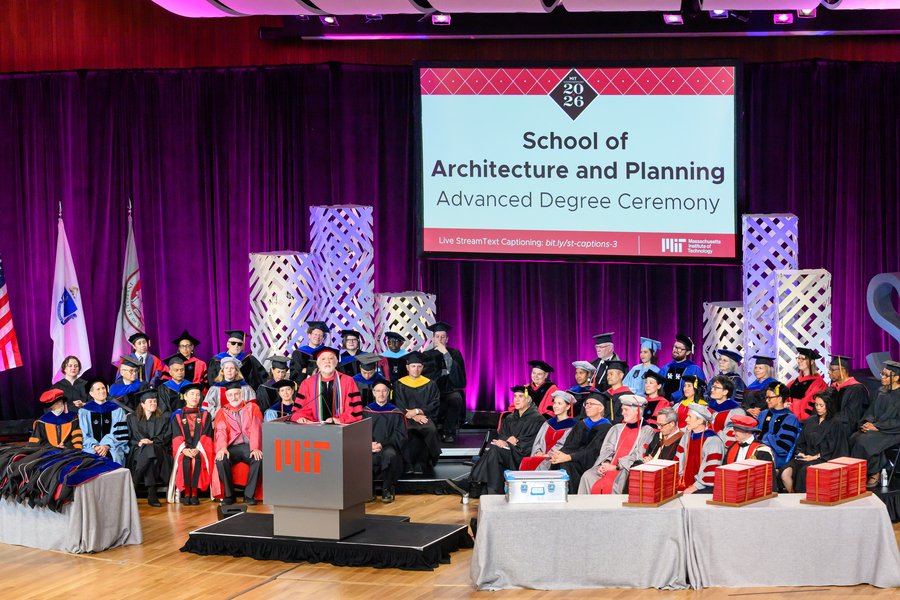
The ceremony underscored a growing belief at MIT that architecture and planning are as much about moral responsibility as they are about structural performance. The Class of 2026 now carries both the tools and the ethical compass to shape a more humane built environment.
Comments
Please log in or register to join the discussion