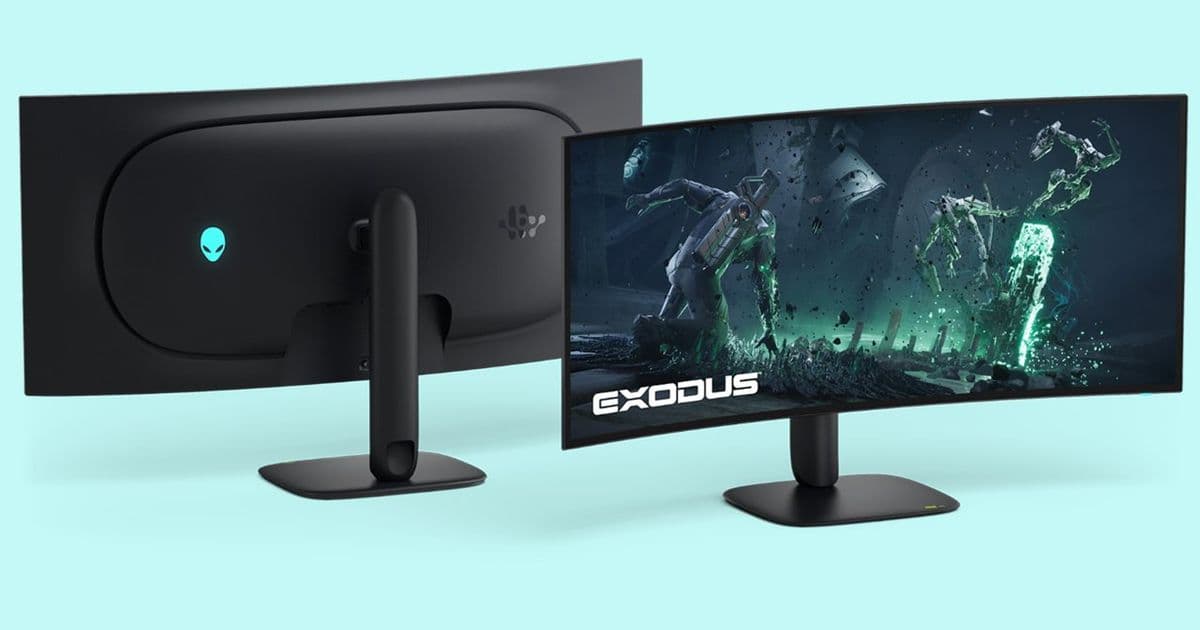
Dell’s Alienware brand launches four new OLED gaming displays, including the world’s first 39‑inch RGB‑Stripe Tandem panel and a 34‑inch QD‑OLED with a 5‑stack Penta‑Tandem architecture, promising higher brightness, longer lifespan, and sharper text rendering for high‑refresh‑rate esports.
Announcement
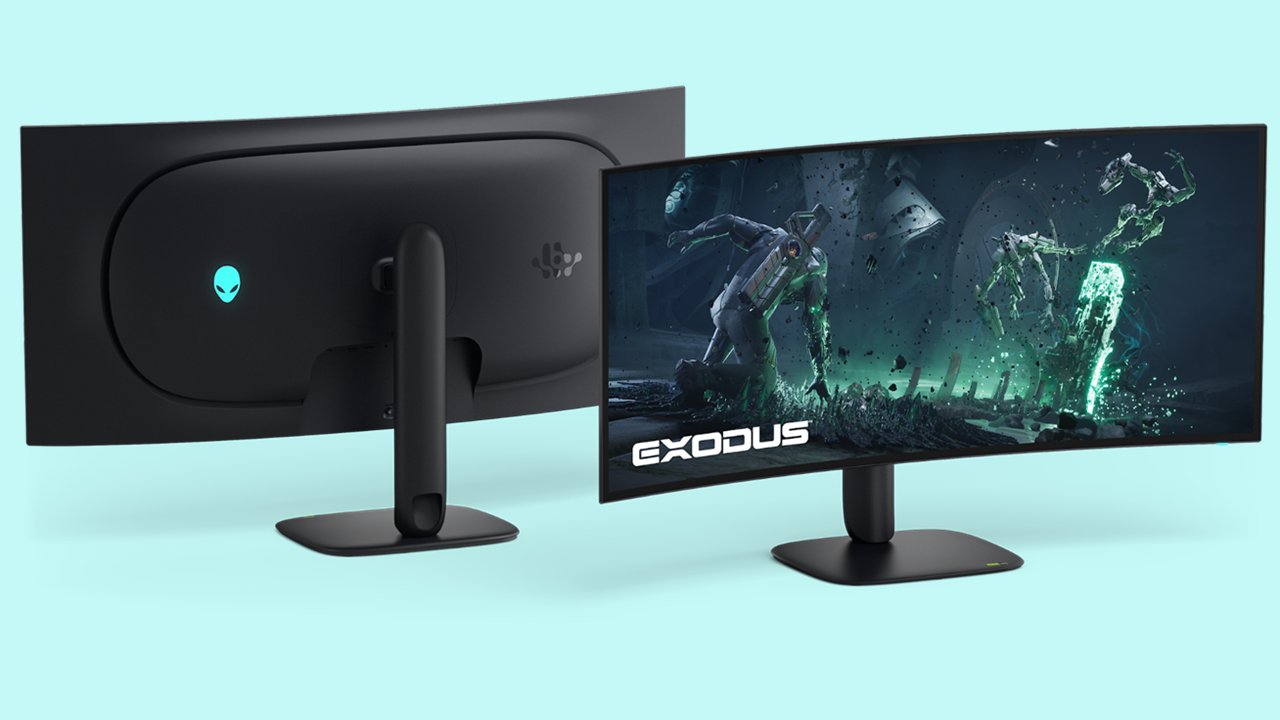
Dell’s Alienware line expands with four OLED gaming monitors: the 39‑inch AW3926QW, the 34‑inch AW3426DW, and two VA‑based models, the AW3226DM and AW3426DWM. The flagship units introduce two novel panel architectures—RGB‑Stripe Tandem and Penta‑Tandem—that aim to push brightness, color volume, and text clarity beyond what legacy white‑OLED (WOLED) and earlier QD‑OLED panels could deliver.
Technical specifications
AW3926QW – 39‑inch RGB‑Stripe Tandem OLED
- Panel source: LG‑manufactured OLED with a 4‑stack light source (2 blue, 1 red, 1 green) behind an RGB‑stripe subpixel layout.
- Resolution: 5120 × 2160 (5K) at 165 Hz; dual‑resolution mode 2560 × 1080 enables 330 Hz.
- Brightness & contrast: Peak 1 750 000 : 1 contrast ratio, 1 300 nits peak, 300 nits typical; polarizer layer reduces ambient reflections.
- Color gamut: 99 % DCI‑P3 coverage.
- Response: 0.03 ms gray‑to‑gray, 1.75 million:1 contrast.
- Variable refresh zones: eSports modes carve out 24.5‑inch (1520 × 855) or 27‑inch (1680 × 945) windows at 330 Hz, leaving unused area black.
- Adaptive sync: AMD FreeSync Premium Pro + NVIDIA G‑Sync.
- Connectivity: 2 × HDMI 2.1, 1 × DisplayPort 2.1, 1 × USB‑C (DP 2.1 Alt Mode, 90 W PD), USB‑A hub (2 × 5 Gbps), USB‑C hub (5 Gbps).
- AI‑driven brightness algorithm: learns usage patterns to modulate backlight and extend panel life.
AW3426DW – 34‑inch Penta‑Tandem QD‑OLED
- Panel source: Samsung QD‑OLED with a 5‑stack “Penta‑Tandem” blue‑emitting architecture (up from 4‑stack).
- Resolution: 3440 × 1400, 1800R curvature.
- Brightness: 1 300 nits peak, 300 nits typical; 1.3× luminous efficiency vs. prior QD‑OLED.
- Refresh rate: 280 Hz native across HDMI 2.1 and DisplayPort 1.4.
- Subpixel layout: V‑Stripe RGB arrangement reduces fringing, improves text sharpness.
- HDR: VESA DisplayHDR True Black 500, Dolby Vision support.
- Adaptive sync: FreeSync Premium Pro + G‑Sync.
- Connectivity: 2 × HDMI 2.1, 1 × DisplayPort 1.4, USB‑A hub (5 Gbps), USB‑C hub (5 Gbps, 15 W charging).
AW3226DM & AW3426DWM – Mainstream VA models
| Model | Size | Resolution | Refresh | Contrast | HDR | Ports |
|---|---|---|---|---|---|---|
| AW3226DM | 32" | 2560 × 1440 (16:9) | 240 Hz | 3 000 : 1 | VESA HDR 400 | 2 × HDMI 2.1, 1 × DP 1.4, USB‑A/C hub |
| AW3426DWM | 34" | 3440 × 1440 (21:9) | 240 Hz | 3 000 : 1 | VESA HDR 400 | Same as above |
- Both panels use 1500R curvature, 1 ms GtG response, and 240 Hz refresh, targeting gamers who do not need OLED’s premium cost.
Market implications
- First‑to‑market advantage – The 39‑inch RGB‑Stripe Tandem panel is the first OLED monitor to combine a wide‑gamut RGB‑stripe layout with a dual‑resolution, ultra‑high‑refresh mode. By offering 330 Hz at 1080p while still supporting 5K at 165 Hz, Alienware positions the AW3926QW as a niche but compelling choice for competitive players who toggle between ultra‑wide productivity and frame‑rate‑critical esports titles.
- Supply chain considerations – Both flagship panels rely on external foundries (LG for the RGB‑Stripe, Samsung for the Penta‑Tandem). Current OLED fab capacity is constrained by high demand from smartphones and TV manufacturers. Dell’s ability to secure sufficient wafer volume for a premium monitor line suggests a strong partnership and may signal a shift of OLED capacity toward high‑margin PC peripherals.
- Performance vs. cost trade‑off – OLED’s inherent contrast and color depth remain unmatched by VA panels, but the price gap is still significant. Dell’s pricing strategy (not yet disclosed for the OLED models) will determine whether the performance gains—up to 1 300 nits peak brightness and 0.03 ms response—justify the premium for mainstream gamers. The VA models, priced at $299.99 and $399.99, provide a clear entry point for budget‑conscious buyers.
- Longevity claims – The Penta‑Tandem architecture promises a 2× increase in panel lifespan, addressing a historic concern with QD‑OLED burn‑in. If real‑world data confirms these claims, OEMs may accelerate OLED adoption across mid‑range gaming displays, reducing reliance on traditional LCD/VA panels.
- Ecosystem impact – Support for both FreeSync Premium Pro and G‑Sync ensures compatibility across AMD and NVIDIA ecosystems, reducing fragmentation. The inclusion of DisplayPort 2.1 on the 39‑inch model future‑proofs the monitor for upcoming GPUs that can drive 8K or multi‑stream high‑refresh configurations.
Outlook
Alienware’s rollout demonstrates a clear strategy: leverage cutting‑edge OLED architectures for flagship, high‑price products while maintaining a parallel VA line for volume sales. The success of the RGB‑Stripe and Penta‑Tandem panels will hinge on supply stability and whether the advertised brightness and longevity improvements translate into measurable field performance. If Dell can deliver on those metrics, the monitors could set a new benchmark for ultra‑wide, high‑refresh gaming displays and pressure competitors to adopt similar multi‑stack OLED technologies.
Comments
Please log in or register to join the discussion