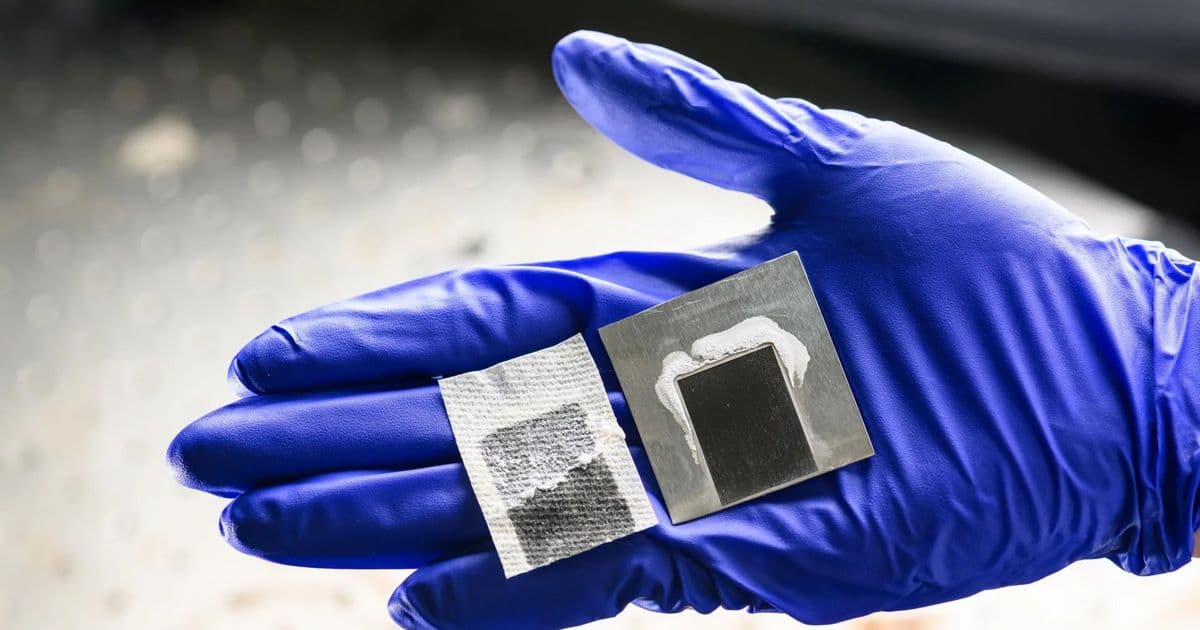
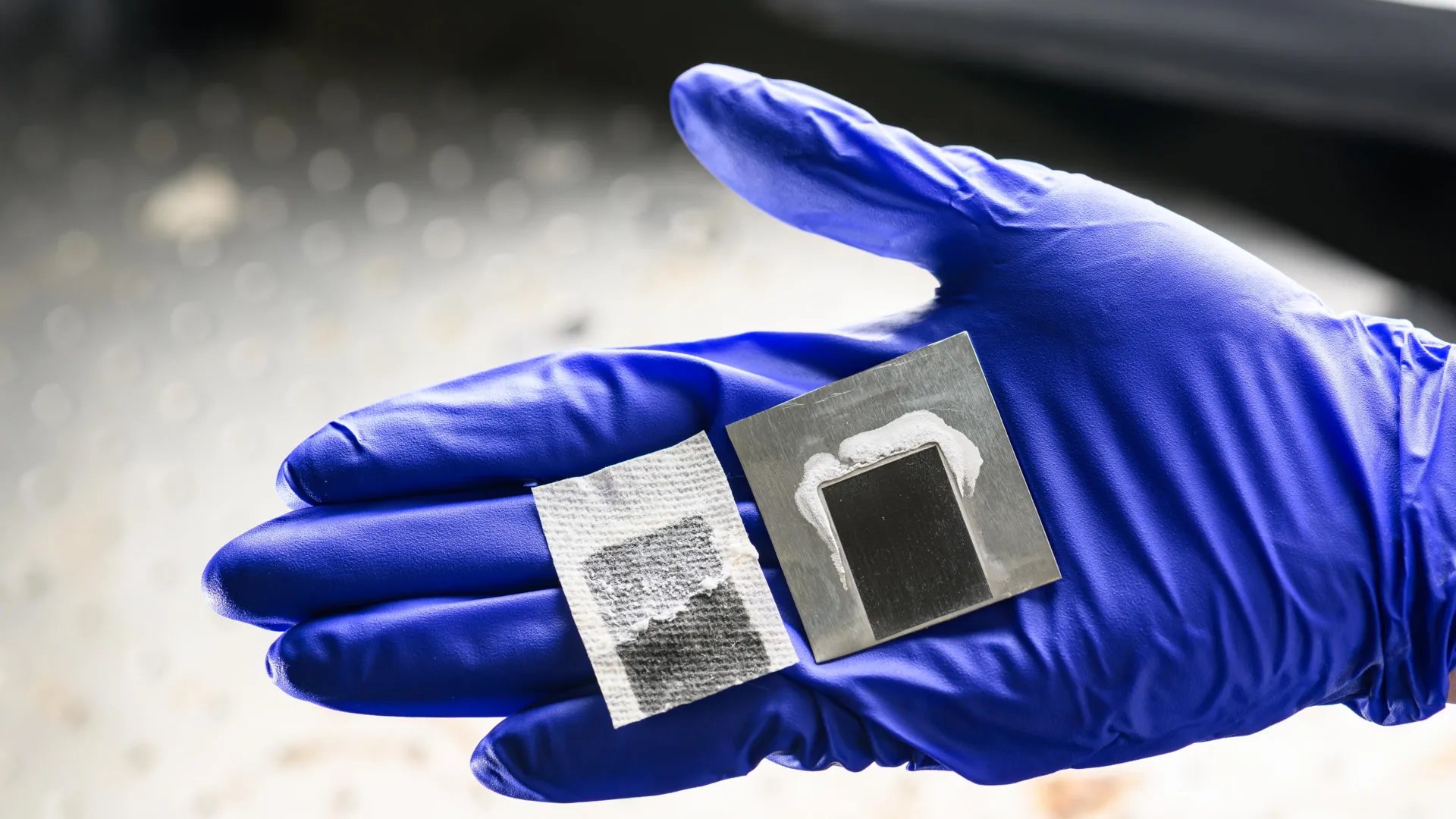
University of Rochester researchers demonstrated a laser‑textured metal panel that uses sunlight to evaporate seawater, continuously wipes salt crystals away, and collects the salts as solid minerals—including lithium—rather than discharging brine.
What the press release claims
The University of Rochester team says they have built a solar‑driven desalination device that turns seawater into drinking water without producing liquid brine. The device uses black metal panels etched with femtosecond lasers. The laser pattern makes the surface both highly absorptive and superwicking: a thin water film spreads across the panel, evaporates under sunlight, and the dissolved salts are pushed into separate “passive” zones where they solidify. Tests with water from the Pacific, Atlantic and Indian oceans reportedly yielded a continuous fresh‑water stream while depositing nearly all salts as solids that could be harvested for lithium and other valuable minerals.
What is actually new
1. Laser‑induced superwicking surface
Superwicking surfaces have been explored for solar‑thermal evaporation before, but the Rochester work combines two tricks that are rarely paired:
- Near‑perfect solar absorption – the black metal absorbs >95 % of the solar spectrum, eliminating the need for additional selective coatings.
- Microscale groove architecture – femtosecond laser pulses create a hierarchy of grooves (≈10 µm wide, sub‑micron depth) that guide liquid flow and, crucially, generate a capillary‑driven outward transport of dissolved ions.
The authors cite the coffee‑ring effect as the physical basis: as water evaporates, capillary flow carries solutes toward the edge of the active zone, where they encounter the passive region and crystallize. Prior solar‑thermal designs either allowed salts to accumulate on the heating surface (causing fouling) or required periodic flushing with fresh water.
2. Integrated mineral recovery
Most solar‑thermal desalination papers stop at water production and treat the residual salt as waste. Here the researchers embed hydrogen‑titanate nanoparticles in the grooves. These particles have a high affinity for Li⁺ over Na⁺, Mg²⁺ or Ca²⁺, enabling selective lithium capture during the crystallization step. In a separate experiment with Great Salt Lake brine, they reported ~50 % lithium recovery in solid form, a figure comparable to some ion‑exchange processes but achieved without chemicals or electricity.
3. Demonstrated on real ocean water
Many laboratory studies use synthetic NaCl solutions, which underestimate scaling problems. The Rochester team processed three authentic seawater samples, each containing the full suite of marine ions (Mg²⁺, Ca²⁺, K⁺, sulfate, trace metals). Over several hours of continuous operation the evaporation rate remained stable (~1.2 kg m⁻² h⁻¹ under 1 sun), and visual inspection showed no clogging of the active area.
Limitations and open questions
| Aspect | Current status | Practical considerations |
|---|---|---|
| Scale | Proof‑of‑concept panels of ~10 cm². | Scaling the laser‑texturing to square‑meter modules will require high‑throughput femtosecond systems; cost per square meter is not yet disclosed. |
| Energy balance | Measured solar‑to‑water efficiency ≈ 30 % (thermal to latent heat). | Comparable to other solar‑thermal evaporators, but still lower than reverse‑osmosis powered by grid electricity in regions with cheap power. |
| Salt collection logistics | Salts accumulate in passive zones as solid crusts. | Periodic mechanical scraping or a rolling collector would be needed; the energy and labor cost of that step has not been quantified. |
| Lithium selectivity | 50 % recovery from hypersaline lake brine; lower yields expected from typical seawater (Li ≈ 0.17 ppm). | To obtain economically relevant lithium quantities, large‑area panels would be required, or the process would need to be coupled with pre‑concentration steps. |
| Durability | Tests ran for <48 h under laboratory illumination. | Long‑term exposure to UV, salt spray, and thermal cycling could degrade the nanostructure; protective overcoats might reduce absorption. |
| Environmental impact | No liquid brine discharge; solid salts can be harvested. | Solid waste still needs handling; if the recovered salts are not commercially useful, disposal pathways must be defined. |
How this fits into the broader desalination picture
Traditional reverse‑osmosis (RO) plants achieve >45 % water recovery but consume 3–5 kWh m⁻³ of electricity and generate 0.5–1 m³ of brine per cubic meter of product water. Solar‑thermal approaches like this one trade electricity for sunlight, which is abundant in many water‑scarce regions. The key advantage here is the self‑cleaning property that could reduce maintenance cycles, a major cost driver for RO. However, the modest evaporation rate and the need for large collector areas mean that the technology is currently more suited to off‑grid, low‑throughput applications—e.g., community water kiosks, emergency relief, or niche industrial processes that also need mineral extraction.
Outlook
The concept of turning a waste stream into a resource is compelling, and the Rochester work provides a concrete engineering route to achieve it. The next milestones should include:
- Pilot‑scale modules (≥1 m²) operating under real solar conditions for months to assess fouling, structural stability, and salt‑harvest logistics.
- Life‑cycle analysis comparing total energy input, material use, and carbon footprint against RO and conventional thermal distillation.
- Economic modelling of mineral revenue (especially lithium) versus the capital cost of laser‑textured panels.
If those studies show a favorable balance, the technology could complement existing desalination infrastructure, offering a low‑energy, brine‑free option for specific contexts. Until then, the claim of “no brine” remains accurate for the laboratory prototype, but the practical challenges of scaling, durability, and mineral market integration still need to be solved.
References
- L. Tang, S. C. Singh, R. Wei, T. Xu, C. Guo, Additive‑free and brine‑discharge‑free solar‑thermal desalination with simultaneous complete mineral mining from ocean water, Light: Science & Applications, 2026. DOI: 10.1038/s41377-026-02315-4
- J. Adam Fenster (photographer), University of Rochester press release, 31 May 2026.
Further reading
- Review of solar‑thermal desalination technologies: https://doi.org/10.1016/j.desal.2023.115987
- Lithium extraction from seawater: https://doi.org/10.1039/D0EE00123A
Comments
Please log in or register to join the discussion