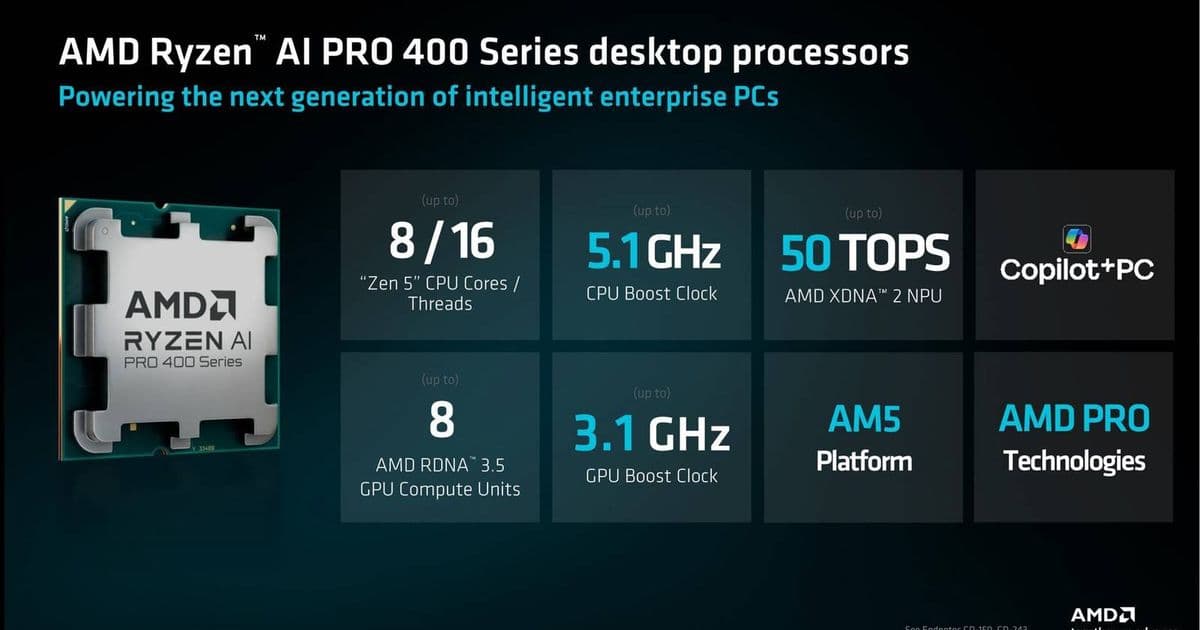
AMD expands its Ryzen desktop processor family with a new AI-focused CPU, targeting enhanced machine learning performance for creators and developers.
AMD has expanded its Ryzen desktop processor lineup with a new AI-focused CPU, marking the company's continued push into specialized hardware for machine learning and artificial intelligence workloads. The addition comes as desktop computing increasingly incorporates AI acceleration capabilities directly into mainstream processors.
AI Integration in Desktop CPUs
The new processor represents AMD's strategy to integrate dedicated AI processing capabilities into its Ryzen desktop family. This approach mirrors similar moves by competitors who are embedding neural processing units (NPUs) and AI accelerators directly into their mainstream CPU designs. For developers and content creators, this means improved performance for AI-assisted applications without requiring separate accelerator cards.
Target Audience and Use Cases
AMD positions this AI-focused CPU for creators, developers, and power users who regularly work with machine learning workflows, AI-enhanced creative tools, and productivity applications that leverage local AI processing. The processor aims to provide a balance between traditional CPU performance and specialized AI acceleration, making advanced AI capabilities more accessible to desktop users.
Market Context
The announcement reflects broader industry trends where AI processing is becoming a standard feature rather than a specialized add-on. As software increasingly incorporates AI features, having dedicated hardware for these tasks improves both performance and efficiency. This move by AMD suggests the company sees sustained demand for AI-capable desktop processors across various user segments.
Technical Considerations
While specific technical details weren't provided in the initial announcement, AI-focused CPUs typically include enhanced tensor processing capabilities, improved memory bandwidth for AI workloads, and software optimizations for popular machine learning frameworks. Users can expect better performance in applications like video editing with AI effects, 3D rendering with AI denoising, and productivity tools with AI-powered features.
Availability and Compatibility
The new processor is expected to be available through standard retail channels, with compatibility across existing AMD motherboard platforms where possible. This approach allows users to upgrade without requiring complete system overhauls, though specific socket and chipset requirements will determine upgrade paths for existing systems.
Developer Impact
For developers, this expansion means more options for building and testing AI applications on desktop hardware. The increased availability of AI-capable CPUs at various price points could accelerate the adoption of AI features in desktop software, as developers can target a broader range of hardware configurations.
Looking Ahead
AMD's move signals that AI acceleration is becoming a standard expectation in desktop processors rather than a premium feature. As AI capabilities continue to evolve, we can expect further refinements in how these processors handle various AI workloads, potentially including specialized instructions and improved power efficiency for sustained AI processing tasks.
The integration of AI capabilities into mainstream desktop CPUs represents a significant shift in how we think about processor requirements for everyday computing tasks, suggesting that AI acceleration will be a standard consideration in future CPU purchases.
Comments
Please log in or register to join the discussion