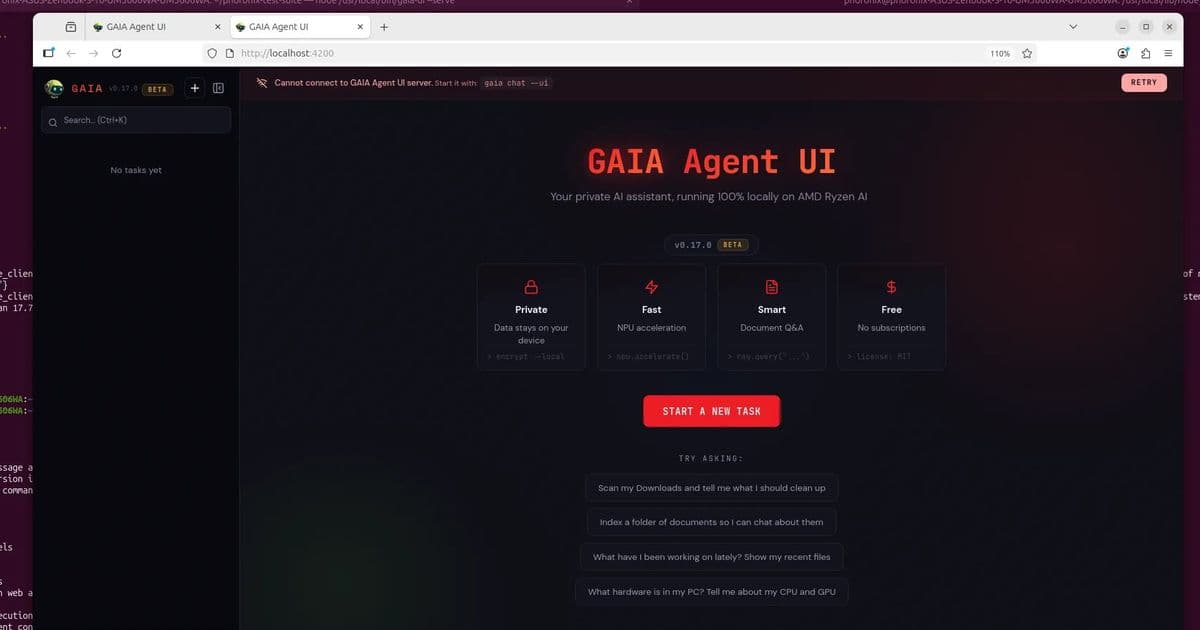
AMD's GAIA framework gets a major upgrade with Agent UI, a local web app for AI agents that runs entirely offline on Ryzen AI hardware with enhanced privacy controls.
AMD has unveiled GAIA 0.17, a significant update to its GAIA AI agent framework that introduces Agent UI—a privacy-first web application for running local AI agents on Ryzen AI hardware. The new release marks a substantial step forward in AMD's vision for local AI processing, enabling users to analyze documents, generate code, search files, and execute commands without any cloud connectivity.
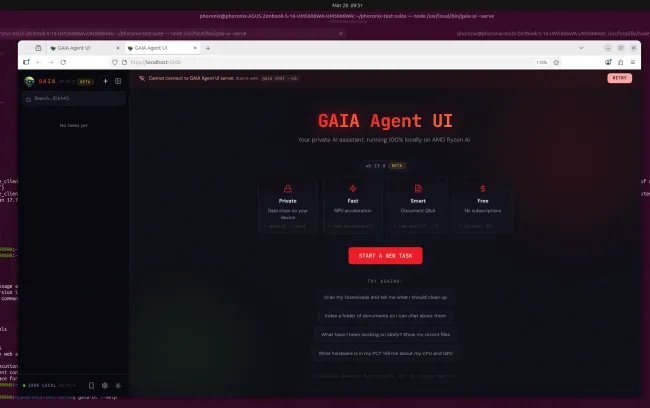
Privacy-First Local Processing
The standout feature of GAIA 0.17 is the Agent UI, which AMD positions as a complete privacy solution for AI interactions. Unlike cloud-based AI services that require data transmission to remote servers, Agent UI processes everything locally on your Ryzen AI hardware. This approach addresses growing concerns about data privacy and security, particularly for sensitive documents, proprietary code, or personal information.
Technical Architecture
The Agent UI is built with modern web technologies, featuring a React/TypeScript front-end wrapped in an Electron shell. This combination provides a responsive, cross-platform interface while maintaining the performance benefits of native desktop applications. The local-only architecture means no internet connection is required once the application is installed, making it suitable for air-gapped environments or users with limited connectivity.
Core Capabilities
AMD highlights several key features that make Agent UI practical for real-world use:
Document Analysis: The system supports 53+ file formats including PDFs and Word documents, with page-level citations for responses. This makes it particularly useful for research, legal document review, or technical documentation analysis.
Safe Tool Execution: A notable security feature is the tool execution guardrails system. Before any shell command, file write, or MCP (Model Context Protocol) tool operation executes, users must explicitly approve the action. This prevents unauthorized system modifications while maintaining the agent's utility.
File System Navigation: Agents can search, browse, and explore directories across projects, making it easier to locate specific content or understand project structures without manual searching.
Cross-Device Access: Through built-in ngrok tunneling, users can access their local GAIA instance from mobile devices, enabling AI assistance on the go while keeping all processing local.
Transparent Reasoning: The interface shows real-time streaming with block rendering, allowing users to watch the agent's reasoning process unfold. This transparency helps build trust and understanding of how the AI arrives at conclusions.
Session Management: Users can create, switch between, and persist sessions with full history, making it easy to work on multiple projects or tasks simultaneously.
Performance Monitoring: Hover tooltips display token counts, latency, and throughput metrics for each response, giving users insight into the system's performance and resource usage.
Hardware Integration and Ecosystem
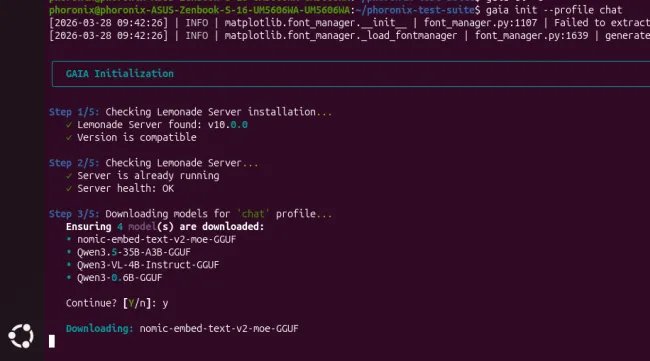
GAIA 0.17 includes improved Ryzen AI and Radeon hardware detection, ensuring better compatibility across AMD's hardware lineup. The release pairs with Lemonade SDK 10.0 and FastFlowLM 0.9.35, which together enable efficient LLM execution on Ryzen AI NPUs under Linux. This represents a significant milestone for AMD's AI hardware strategy, as it finally makes Ryzen AI NPUs practical for running large language models on Linux systems.
Security and Control
The tool execution guardrails represent a thoughtful approach to balancing capability with security. By requiring explicit approval for potentially dangerous operations, AMD has created a system that can be both powerful and safe. This is particularly important for users who want AI assistance but are concerned about automated system modifications or data exfiltration.
Availability
GAIA 0.17 is available now through AMD's GitHub repository, where users can find downloads and detailed documentation. The open-source nature of the project allows for community contributions and transparency in the development process.
The Bigger Picture
This release positions AMD as a serious contender in the local AI processing space, competing with initiatives from Intel, NVIDIA, and various open-source projects. By focusing on privacy, local processing, and practical use cases, AMD is targeting users who prioritize data sovereignty and offline functionality.
For developers, researchers, and privacy-conscious users, GAIA 0.17 offers a compelling alternative to cloud-based AI services. The combination of local processing, transparent reasoning, and robust security controls makes it suitable for sensitive applications where data privacy is paramount.
The timing is notable, as concerns about AI data privacy continue to grow. AMD's approach—keeping everything local while maintaining high functionality—addresses these concerns directly, potentially appealing to enterprise users, government agencies, and individuals handling sensitive information.
As AI continues to evolve, frameworks like GAIA that prioritize privacy and local processing may become increasingly important. AMD's investment in this technology suggests they see local AI as a key differentiator for their hardware platforms moving forward.
Comments
Please log in or register to join the discussion