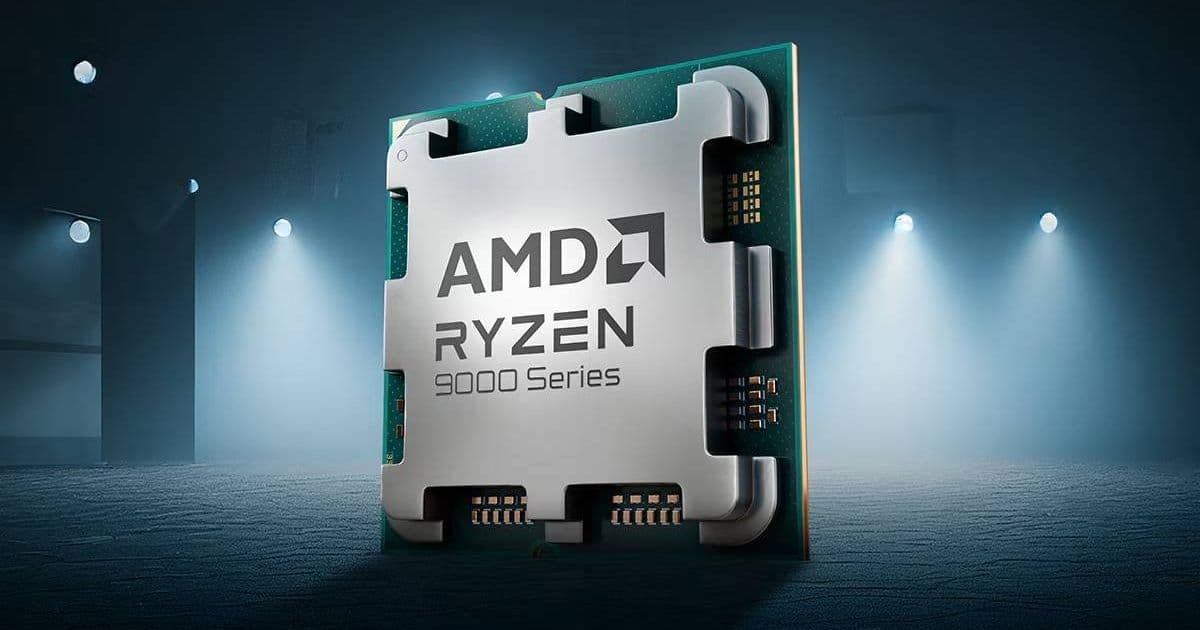
AMD has officially confirmed the pricing and release date for its latest 3D V-Cache CPU, the Ryzen 7 9850X3D, launching in February 2026. While a desktop CPU, its implications for mobile development are significant, especially for developers building high-performance cross-platform games and applications that target both iOS and Android.
AMD has finally put rumors to rest, confirming the official pricing and release date for the highly anticipated Ryzen 7 9850X3D. The chip will be available for purchase on February 28, 2026, with a suggested retail price of $499 USD. This places it as a premium offering in AMD's Zen 5 lineup, positioned as the definitive choice for gaming and single-threaded workloads where cache performance is critical.
For mobile developers, this announcement is more than just a desktop hardware update. The performance characteristics of the 9850X3D directly influence the tools and platforms used to create the next generation of mobile games and applications. Understanding this CPU's capabilities is essential for developers working with cross-platform engines like Unity and Unreal Engine, especially when optimizing for high-end Android devices and informing iOS development strategies.
The 9850X3D: A Technical Breakdown
The Ryzen 7 9850X3D is built on AMD's new Zen 5 architecture, featuring 8 cores and 16 threads. Its defining feature is the second-generation 3D V-Cache technology, which stacks an additional 64MB of L3 cache directly on top of the compute die, bringing the total L3 cache to a massive 128MB. This cache is not just larger; it's also faster, with improved bandwidth and latency compared to the previous generation.
For developers, this has a direct impact on game engine performance. Engines like Unity and Unreal Engine are heavily reliant on CPU cache for managing scene graphs, physics calculations, and AI routines. A larger, faster cache reduces memory latency, allowing the CPU to access frequently used data more quickly. This translates to higher and more stable frame rates in complex scenes, which is particularly beneficial for developers testing and building high-fidelity mobile games on their development machines.
The chip also boasts a base clock of 4.2 GHz and a boost clock of up to 5.5 GHz, with a TDP of 170W. While the power draw is substantial, it's a trade-off for the performance on offer. For developers, this means a capable workstation for compiling large codebases (like a complex Android app with native C++ components) and running resource-intensive simulations or builds.
Why This Matters for Mobile Development
While you won't be running this CPU in a smartphone, its influence is felt in two key areas: development hardware and cross-platform performance targets.
Development Machine Performance: Mobile developers, especially those in indie studios or smaller teams, often use a single machine for development, testing, and light content creation. A CPU like the 9850X3D can significantly reduce iteration times. Compiling an Android APK or an iOS app (using a Mac for iOS builds) can be CPU-intensive. The high single-threaded performance and massive cache of this CPU can shave seconds off each compile, which adds up over a full workday. For developers using Unity or Unreal Engine on Windows for Android development, this CPU provides a robust platform for handling large projects and complex scenes without bottlenecking.
Setting Performance Benchmarks: As mobile hardware continues to advance, the performance ceiling for mobile games and applications rises. High-end Android devices are now shipping with powerful SoCs capable of console-quality graphics. Developers need a reference point to understand what's possible. A development PC equipped with a CPU like the 9850X3D allows developers to stress-test their engines and assets, pushing graphical fidelity and simulation complexity beyond current mobile hardware limits. This forward-looking approach ensures that when the next generation of mobile chips arrives, the software is ready to take full advantage of it. It also helps in creating scalable graphics settings, ensuring games run well on both high-end and mid-range devices.
Cross-Platform Considerations and Tooling
The announcement of the 9850X3D also highlights the importance of understanding the entire development ecosystem. While iOS development is tied to Apple's hardware (and its ARM-based M-series chips), Android development is more heterogeneous. Many developers use Windows-based PCs for Android work, and the CPU choice directly affects that experience.
For teams using cloud-based build services or CI/CD pipelines (like GitHub Actions, GitLab CI, or dedicated mobile CI/CD platforms), the underlying server hardware matters. While cloud providers use a mix of CPUs, the performance trends seen in desktop CPUs like the 9850X3D often trickle down to server-grade processors over time. Understanding these trends helps in planning for future build times and infrastructure costs.
Furthermore, the 3D V-Cache technology is a concept that could influence mobile SoC design in the future. While mobile chips prioritize power efficiency, the principle of optimizing cache hierarchy for specific workloads (like gaming or AI) is universal. Mobile developers who understand these architectural concepts are better equipped to write efficient code and make informed decisions about engine selection and optimization strategies.
Pricing and Market Position
At $499, the Ryzen 7 9850X3D is a premium product. It's priced above the standard Ryzen 7 9800X3D (which is expected to be cheaper) and competes directly with Intel's high-end desktop offerings. For mobile development studios, the question is one of return on investment. A $500 CPU is a significant investment, but if it reduces build times by 20% and improves the developer experience, it can pay for itself in productivity gains.
For individual developers or small teams, the decision is more nuanced. If your primary work is mobile app development (not games), a more modest CPU might suffice. However, for game developers working with 3D engines, the 9850X3D represents a tangible performance uplift that can directly impact project timelines and creative potential.
The Bottom Line for Developers
The confirmation of the Ryzen 7 9850X3D's price and release date is a milestone for the PC hardware market, but its relevance to mobile development is clear. It represents the ongoing push for higher performance in development workstations, which directly benefits mobile developers by accelerating workflows and enabling more ambitious projects.
As the February 28 release date approaches, developers should evaluate their current hardware. If your development machine is more than three years old, an upgrade to a platform like the 9850X3D could provide a significant productivity boost. For those building the next generation of mobile games, understanding the capabilities of modern desktop CPUs is essential for setting realistic performance targets and ensuring your software is ready for the hardware of tomorrow.
For more technical details, you can visit the official AMD product page and check the Zen 5 architecture whitepaper for in-depth information on the new processor design.
Comments
Please log in or register to join the discussion