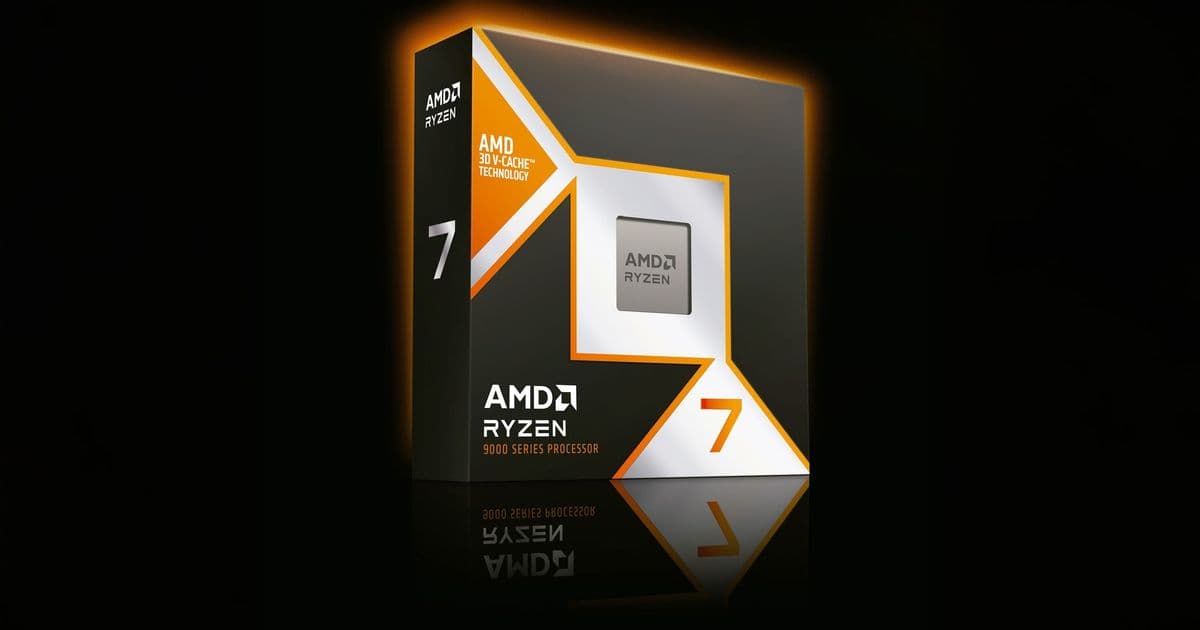
AMD's upcoming Ryzen 7 9850X3D, a higher-binned variant of the 9800X3D, will launch at $499 on January 29 with a 400 MHz boost clock advantage, targeting Intel's Core Ultra 9 285K with claims of up to 27% gaming performance lead while maintaining compatibility with budget DDR5 memory.
AMD's next-generation gaming processor, the Ryzen 7 9850X3D, is set to retail for $499 when it officially launches on January 29, positioning itself as a premium variant of the already formidable Ryzen 7 9800X3D. The chip represents a calculated refinement of AMD's 3D V-Cache architecture, offering a 400 MHz higher boost clock that the company claims will deliver up to a 7% performance improvement in gaming workloads.
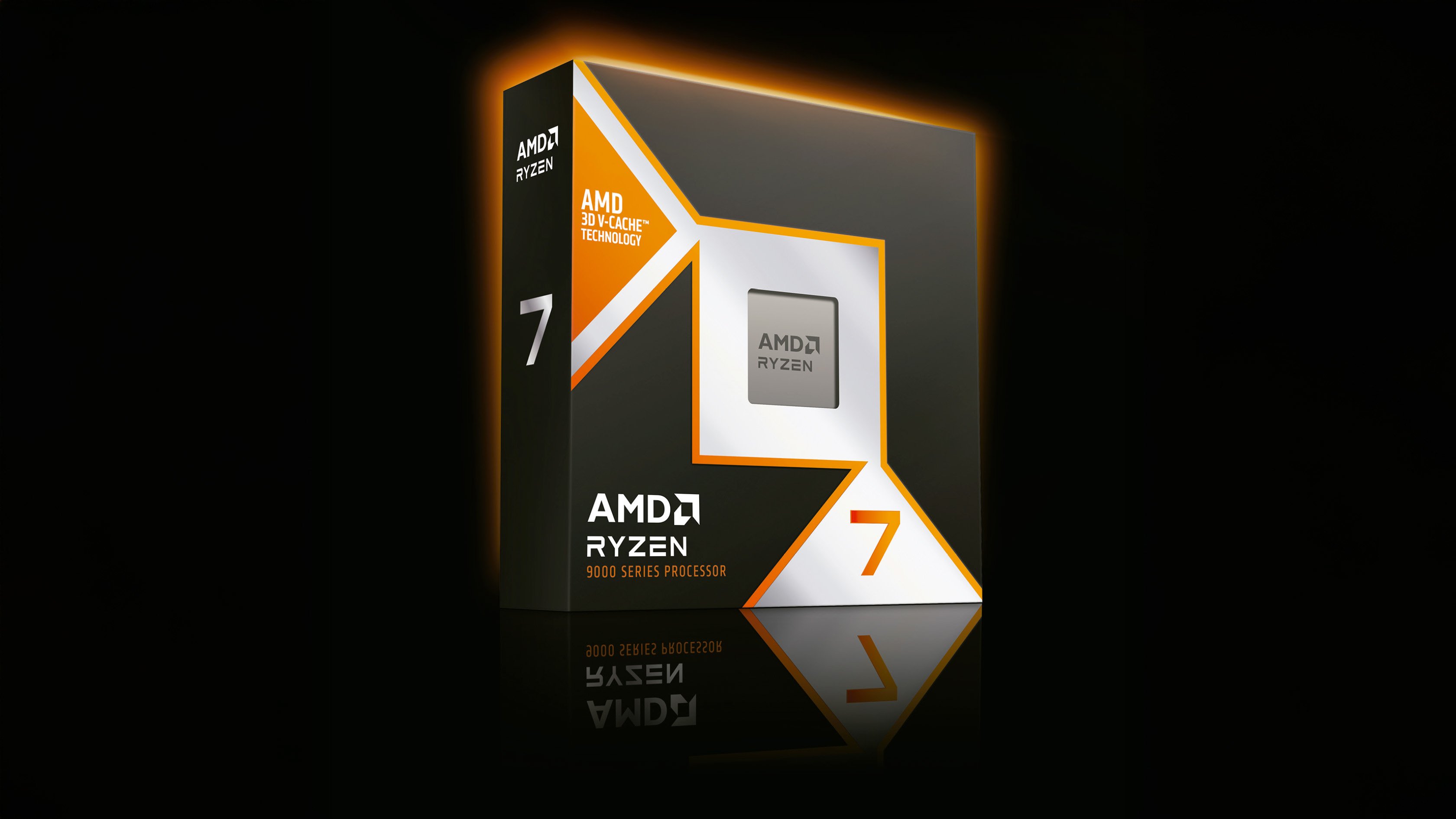
The Ryzen 7 9850X3D follows a familiar pattern in semiconductor manufacturing: taking a successful design and creating a higher-binned version for enthusiasts willing to pay a premium for marginal gains. While the 9800X3D already established itself as arguably the fastest gaming processor available, the 9850X3D aims to extend that lead with its Zen 5 X3D architecture. The core configuration remains identical—8 cores and 16 threads—but the boost clock jumps from 5.2 GHz to 5.6 GHz, a 7.7% increase that should translate to measurable gaming improvements.
AMD's internal testing suggests the performance uplift is most pronounced in CPU-bound gaming scenarios. The company claims the Ryzen 7 9850X3D outperforms Intel's flagship Core Ultra 9 285K by up to 27% in gaming benchmarks, a significant margin that highlights the continued effectiveness of AMD's 3D V-Cache technology. This gap persists despite Intel's Arrow Lake architecture offering competitive specifications, including 24 cores (8 performance + 16 efficiency) and a 5.7 GHz boost clock on the Core Ultra 9 285K.
The memory subsystem represents one of the most interesting aspects of the 9850X3D's design. AMD's second-generation 3D V-Cache technology appears to decouple gaming performance from memory speed more effectively than previous generations. According to AMD's internal tests across more than 30 games, the framerate difference between DDR5-4800 and DDR5-6000 memory is less than 1%. This finding has practical implications for system builders facing the current DRAM shortage, where DDR5 prices have risen sharply.
For prospective buyers, this means the most affordable DDR5 memory kits—such as a Crucial DDR5-4800 C40 32GB (2x16) kit priced at approximately $252—will deliver gaming performance nearly identical to premium DDR5-6000 kits costing significantly more. This characteristic makes the 9850X3D particularly attractive for existing AM5 platform owners who can upgrade their CPU without replacing their current memory, as well as first-time builders seeking to maximize gaming performance while controlling costs.
The 9850X3D maintains the same 120W TDP and 162W PPT (Package Power Tracking) as the 9800X3D, with a 104MB total cache (8MB L2 + 96MB L3). This efficiency profile contrasts sharply with the Core Ultra 9 285K, which has a 125W base TDP and 250W maximum power draw, potentially offering better performance per watt in gaming scenarios.
Early availability of the Ryzen 7 9850X3D on Amazon allows enthusiasts to secure their purchase ahead of the official launch, with deliveries expected in early February. However, prospective buyers should note that independent benchmarks and real-world testing will be crucial for validating AMD's performance claims. The 400 MHz boost advantage, while substantial, may not always translate to linear performance gains due to architectural limitations and game engine dependencies.
The introduction of the 9850X3D also signals AMD's confidence in the 3D V-Cache technology's longevity. By creating a higher-binned variant rather than a completely new design, AMD can leverage existing manufacturing processes while catering to the enthusiast market segment. This approach allows for more efficient use of silicon wafer yields, where chips that meet higher frequency targets can be allocated to the premium 9850X3D SKU.
For the broader CPU market, the 9850X3D's $499 price point positions it between the $479 9800X3D and Intel's $599 Core Ultra 9 285K, creating a clear value proposition for gamers prioritizing frame rates over core count. The chip's compatibility with existing AM5 motherboards further enhances its appeal, requiring only a BIOS update rather than a platform overhaul.
As the January 29 launch approaches, the semiconductor industry will be watching closely to see if AMD's claims hold up under independent scrutiny. The 9850X3D represents not just a product launch, but a strategic move to maintain AMD's gaming performance leadership while addressing practical concerns about memory costs and platform compatibility.
Comments
Please log in or register to join the discussion