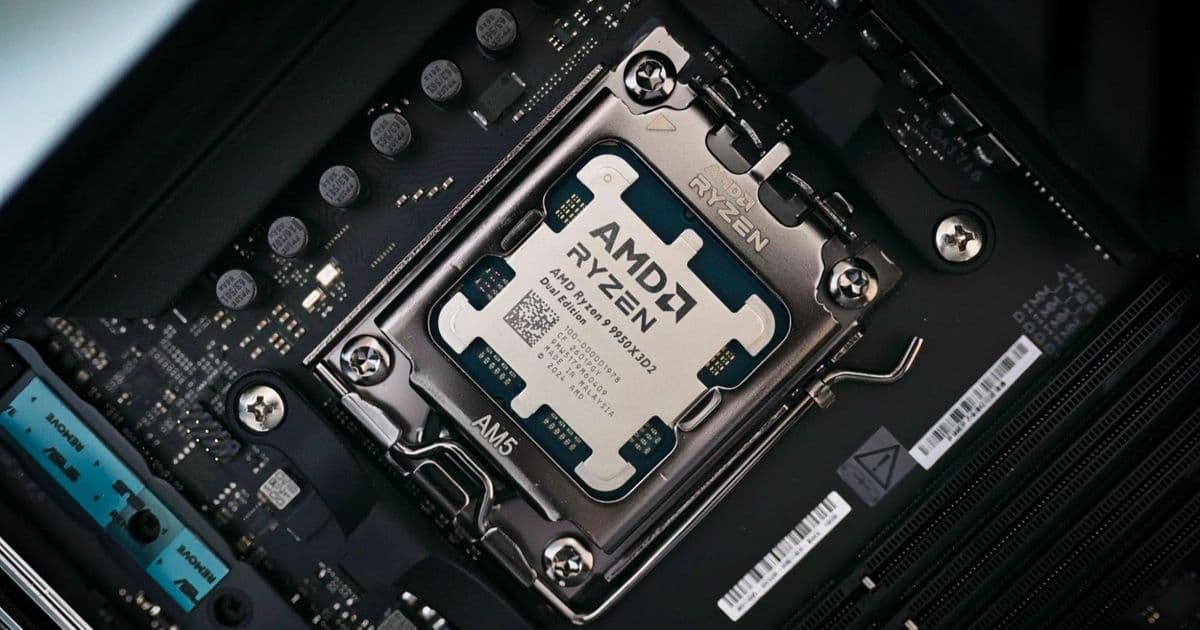
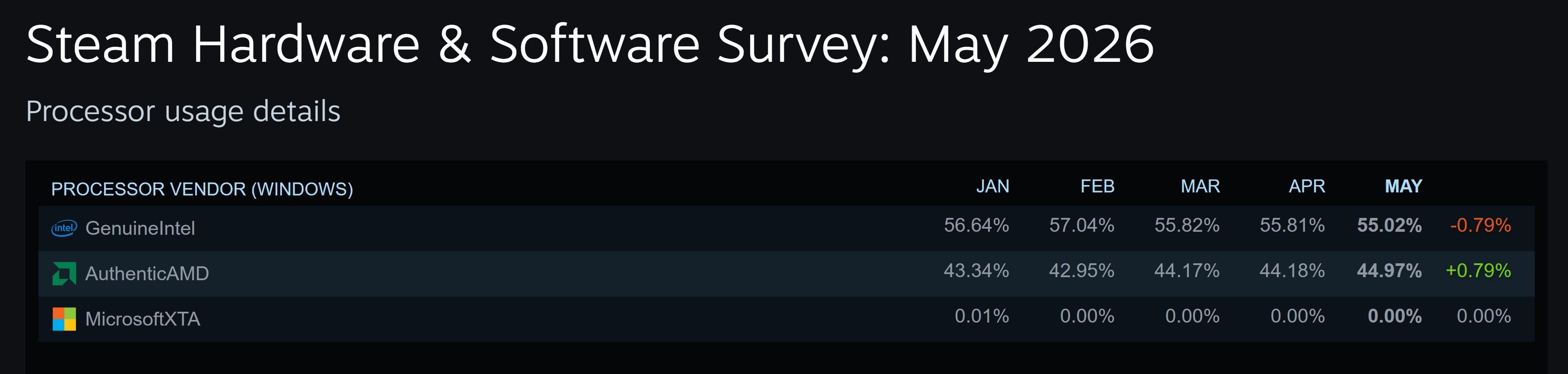
The May 2026 Steam Hardware Survey shows AMD at 44.97 % of Windows gaming PCs, up 1.6 % year‑to‑date, while Intel slips to 55.02 %. The shift reflects the impact of Zen 4‑based 3D V‑Cache chips, tighter fab capacity at TSMC, and Intel’s delayed transition to its new Intel 4 node.
AMD’s Steam Share Nears 45 % on Windows Gaming PCs – What the Numbers Reveal About CPU Competition and Supply Chains
Valve’s May 2026 Steam Hardware Survey provides a snapshot of the hardware that powers PC gaming. Across all platforms AMD accounts for 46.06 % of CPU usage, and on Windows‑only rigs the figure sits at 44.97 % – effectively a 45 % market share. Intel’s share correspondingly falls to 55.02 %. Compared with April, AMD gained 0.79 percentage points, while Intel lost the same amount. Since January the gap has widened from 13.30 % to 10.05 % in Intel’s favor.
Technical backdrop – why the shift is happening now
1. 3D V‑Cache and Zen 4‑based CPUs
- Ryzen 7 5800X3D (Zen 3) introduced 64 MiB of stacked L3 cache, delivering up to 15 % higher average frame rates in titles such as Cyberpunk 2077 and Microsoft Flight Simulator.
- Ryzen 9 7950X3D (Zen 4) expands the cache to 128 MiB, pushing single‑thread performance past 6.2 GHz boost in benchmark suites while keeping power draw under 140 W.
- The 7950X3D and its 10‑year anniversary sibling 5800X3D have become the default recommendation for high‑refresh‑rate 1080p and 1440p builds, a factor reflected in the Steam data.
2. Intel’s node transition bottlenecks
- Intel’s 12‑nm “Intel 4” (formerly 7 nm) node entered volume production in Q2 2025, but early‑stage yields hovered around 70 %, limiting the number of high‑performance desktop dies shipped.
- The upcoming Meteor Lake (Intel 4) desktop SKU, slated for Q4 2026, promises 10 % higher IPC, yet supply constraints mean most builders still receive 13th‑gen “Raptor Lake” parts.
- As a result, the average clock speed of Intel’s mainstream chips in the survey sits at 3.9 GHz, versus 4.2 GHz for AMD’s top‑end models.
3. Fab capacity and the TSMC‑Samsung dynamic
- AMD’s 7‑nm and 5‑nm CPUs are fabricated at TSMC, which allocated an additional 1.2 million wafers per month to AMD in early 2026 to meet the surge in gaming demand.
- Samsung’s 4‑nm process, used for Intel’s “Intel 4”, is operating at 85 % capacity due to a backlog of automotive contracts, further tightening the supply of Intel desktop dies.
Market implications – what the share numbers mean for builders and OEMs
- OEM inventory shifts – Major system integrators such as Dell and HP have increased AMD‑based configurations in their Q3 catalogues by 12 % year‑over‑year, citing the higher cache density and better price‑to‑performance ratio.
- Pricing pressure – The average MSRP for a Ryzen 7 5800X3D‑based gaming rig is now $1,150, roughly $150 below a comparable Intel i7‑13700K build, nudging price‑sensitive gamers toward AMD.
- Server crossover – AMD’s EPYC line holds 46 % of the x86 server market, a parallel trend that reinforces confidence in the company’s supply chain resilience and may encourage more data‑center operators to standardize on a single vendor for both compute and AI workloads.
- Future‑proofing considerations – With Intel’s next‑gen “Meteor Lake” expected to arrive late 2026, builders who prioritize upgrade paths may still favor AMD’s AM5 socket, which now supports up to four generations of CPUs without a motherboard change.
Supply‑chain outlook – risks and opportunities
- TSMC’s capacity expansion is slated to finish in Q1 2027, potentially adding 2 million additional wafers per month. If AMD can secure a larger share of this pool, its gaming‑CPU lead could climb another 2‑3 percentage points by early 2028.
- Geopolitical factors – Ongoing semiconductor export controls on Chinese fabs could limit Samsung’s ability to shift capacity toward the consumer market, indirectly benefitting AMD’s TSMC‑based supply chain.
- Component shortages – While DRAM pricing has stabilized around $6.50 per GB, the ongoing demand for high‑capacity DDR5‑6000 modules may still constrain high‑end gaming builds, a factor that could blunt AMD’s momentum if supply tightens.
Bottom line
The May 2026 Steam survey shows AMD closing in on the 45 % mark for Windows gaming PCs, a milestone driven by the performance advantage of 3D V‑Cache, stronger fab capacity at TSMC, and Intel’s constrained rollout of its new node. For system builders, the data suggests a shift toward AMD‑centric configurations, while Intel’s upcoming “Meteor Lake” chips will be the key variable that could either restore its lead or cement AMD’s gains.
For the full Steam hardware breakdown, see the official Valve report.
Comments
Please log in or register to join the discussion