New polling reveals significant public skepticism about the Trump administration's military actions against Iran, with majorities expressing concern about escalation and questioning the strikes' effectiveness.
Americans remain deeply divided and largely skeptical about the Trump administration's recent military strikes against Iran, according to new polling data that reveals significant public concern about the potential for escalation and the effectiveness of the attacks.
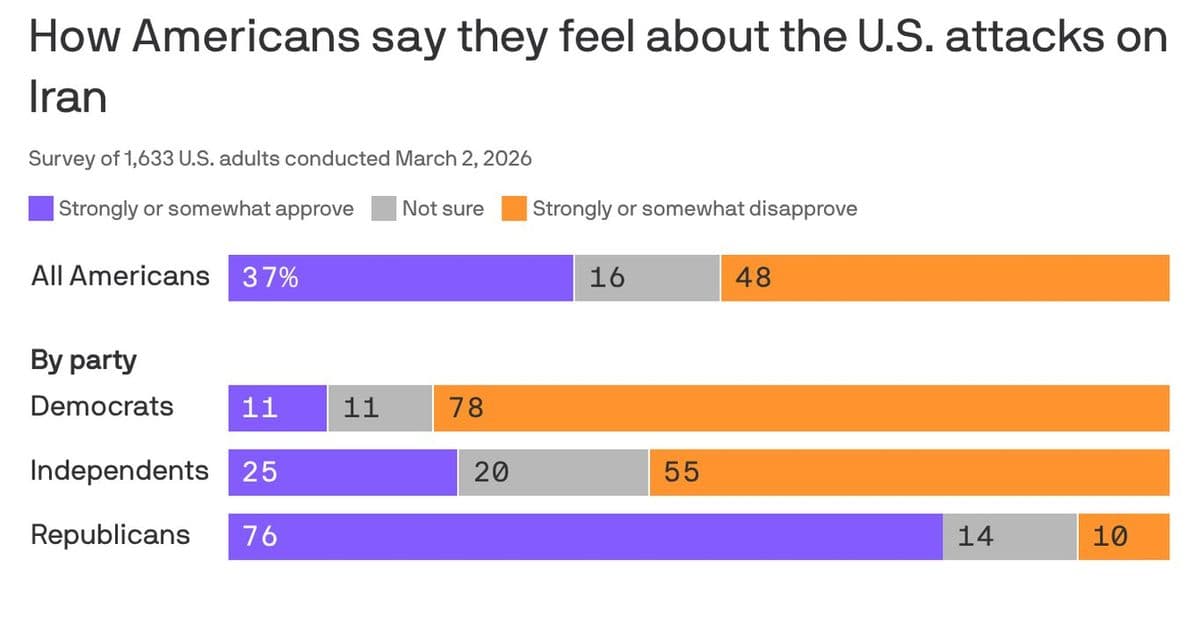
Public Opinion Split on Military Action A Washington Post-ABC News poll conducted March 2-4 found that 45% of Americans approve of the Trump administration's decision to launch airstrikes against Iranian-backed militias in Iraq and Syria, while 48% disapprove. The margin of error was plus or minus 4 percentage points.
More tellingly, when asked about the potential for these strikes to lead to a wider conflict, 62% of respondents expressed concern that the attacks could escalate into a broader war in the Middle East. Only 36% said they were not concerned about escalation.
The skepticism cuts across party lines, though Republicans remain more supportive. Among Democrats, 72% disapprove of the strikes, while 71% of Republicans approve. Independent voters are nearly evenly split, with 45% approving and 49% disapproving.
Economic Concerns Dominate Public Priorities While foreign policy remains a significant issue, polling from Gallup shows that Americans continue to rank economic concerns as their top priority. In a February survey, 38% of respondents identified economic issues as the most important problem facing the country, compared to just 3% who named foreign policy or international issues.
This economic focus may be influencing public skepticism about military action. With inflation remaining elevated and many Americans still recovering from pandemic-related economic disruptions, there appears to be limited appetite for military adventures that could further destabilize global markets or increase energy prices.
Historical Context Matters Public opinion on military action against Iran isn't occurring in a vacuum. Polling from the Pew Research Center shows that American attitudes toward military intervention have shifted significantly since the Iraq War. In 2002, 71% of Americans supported using military force to prevent Iran from developing nuclear weapons. By 2019, that number had dropped to 47%.
The skepticism appears rooted in the perceived failures of recent military interventions. A 2023 survey found that 62% of Americans believe the Iraq War was "not worth fighting," and similar majorities express regret about the Afghanistan conflict.
Regional Variations in Support Support for the Iran strikes varies significantly by region, according to polling data. States with large military installations and defense industries, such as Virginia, North Carolina, and Georgia, show higher levels of support for military action. Conversely, states with strong isolationist traditions or significant anti-war movements, including Oregon, Vermont, and parts of California, show lower levels of support.
Urban areas tend to be more skeptical of military action than rural areas, with cities that experienced significant anti-war protests during the Iraq War showing the highest levels of opposition to the Iran strikes.
International Reactions Mirror Domestic Skepticism International polling conducted by the European Council on Foreign Relations found that European allies are similarly skeptical of U.S. military action against Iran. Only 28% of Europeans surveyed supported military strikes, while 62% preferred diplomatic solutions.
This international skepticism could complicate the Trump administration's efforts to build a coalition against Iran, as European allies have historically been crucial partners in Middle East policy.
What This Means for U.S. Policy The polling data suggests that the Trump administration faces significant challenges in maintaining public support for military action against Iran. While the initial strikes may have been popular with the Republican base, broader public support appears fragile, particularly if the conflict escalates or economic costs increase.
Political analysts note that public opinion on military action can shift rapidly based on developments on the ground. The Gulf War in 1991 saw support for military action rise from 50% to 90% after the initial air campaign began. However, the prolonged conflicts in Iraq and Afghanistan saw support steadily erode over years of combat.
For now, the polling indicates that Americans remain cautious about military action against Iran, preferring diplomatic solutions and expressing concern about the potential for escalation. This public sentiment could constrain the administration's options and influence the trajectory of U.S.-Iran relations in the coming months.
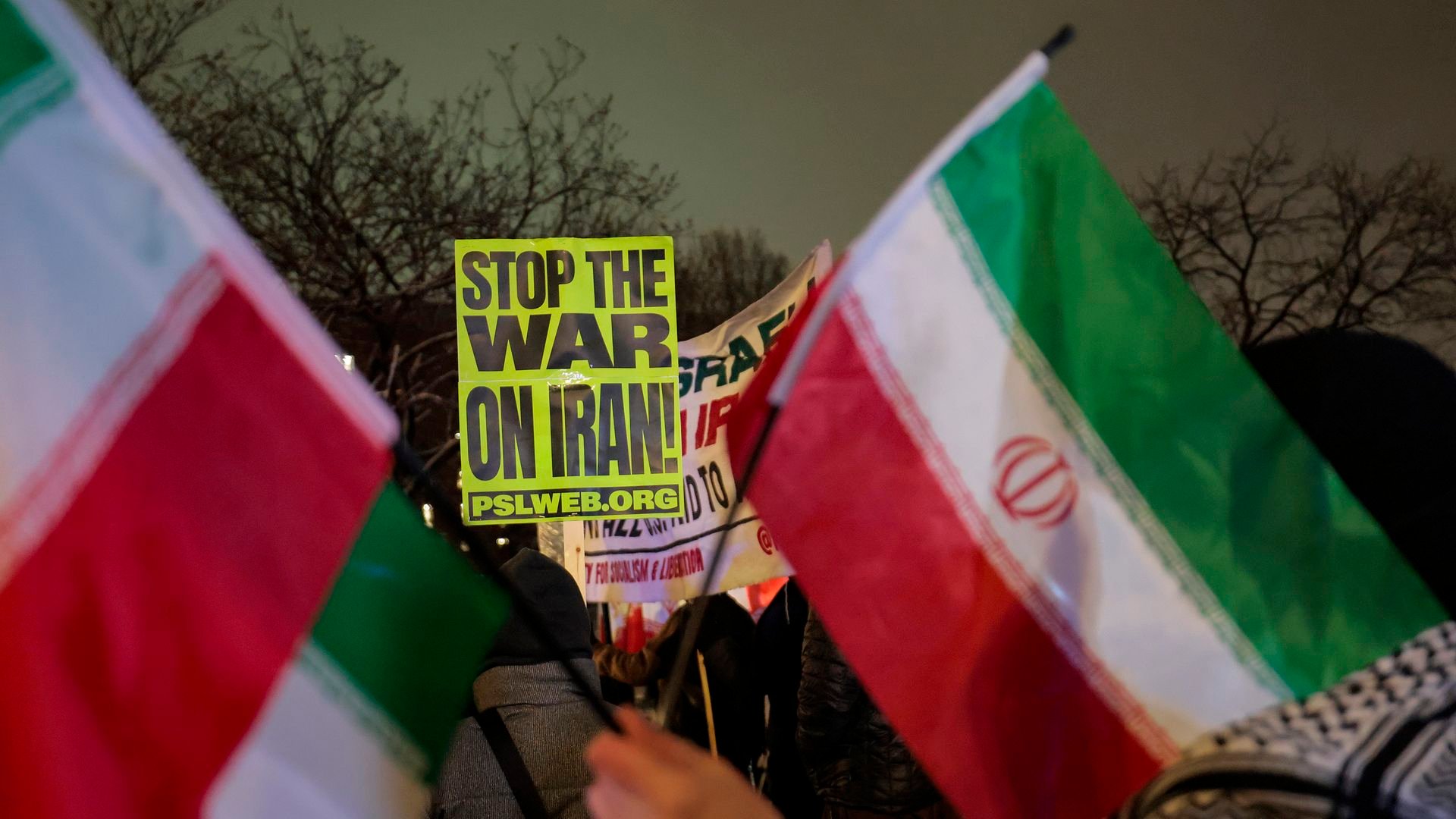
The skepticism revealed in these polls represents a significant challenge for the Trump administration as it navigates one of the most complex foreign policy situations in recent history. With public opinion divided and economic concerns dominating the national conversation, the path forward on Iran policy remains uncertain.
Comments
Please log in or register to join the discussion