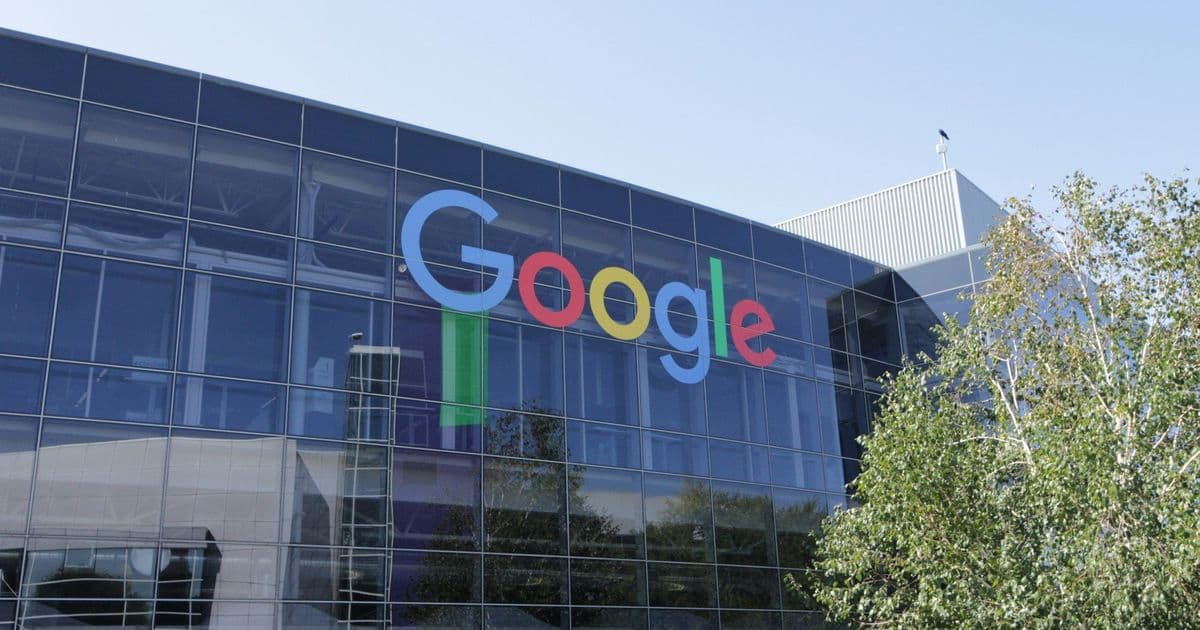
René Mayrhofer, the academic who led Android Platform Security since 2017, is leaving Google over its defense contracts and abandoned climate goals. His public exit fits a pattern of senior technical staff treating ethics as a resignation-level concern, and it reopens an argument the industry never settled.
René Mayrhofer did not leave Google quietly. The Director of Android Platform Security, a tenured professor who spent nearly a decade defending the security architecture used by billions of phones, published a public resignation letter that reads less like a career announcement and more like a moral accounting. The headline grievances: Google signing deals with what he pointedly calls the "US Ministry of War," and the company quietly walking back its carbon-neutral commitments to feed AI's energy appetite.

The specifics matter, but so does the shape of the thing. This is the latest entry in a now-familiar genre: the senior technical leader who publishes their exit, names the decisions they object to, and frames departure as the only ethically available option. It happened with the 2018 Project Maven walkouts. It happened with the Timnit Gebru and Margaret Mitchell departures from Google's AI ethics team. It happened across the industry when employees protested cloud contracts with various governments. Mayrhofer is unusual mostly because of where he sat, on the defensive side, building AOSP security mitigations rather than the AI products under dispute.
What he is actually objecting to
Mayrhofer's letter draws a direct line back to the 2018 AI principles that Sundar Pichai published in the wake of the Maven protests. Those principles explicitly committed Google to not pursuing "weapons or other technologies whose principal purpose or implementation is to cause or directly facilitate injury to people," and technologies for surveillance "violating internationally accepted norms."
In early 2025, Google revised those principles, removing the explicit carve-outs around weapons and surveillance. Mayrhofer's argument is that the revision was not a wording cleanup but a directional change, made at the top without internal debate. He says he sat in the management chain and heard about none of it through internal channels. For someone whose team's stated motto was to build systems secure enough that "we ourselves can't break them," including against a potentially malicious sub-part of Google itself, the contradiction was apparently unworkable.
He is careful about his own line. He describes himself as a pacifist who will not work for militaries engaged in offensive warfare, while allowing that strictly defensive action is "somewhat different." And as a European academic, he frames the current US government as personally hostile, arguing that "any lawful purpose" language in a defense contract plausibly extends to mass surveillance of EU citizens. That is a concrete, jurisdictional concern, not just a values statement.
The community reaction splits along predictable lines
The response across Hacker News, Mastodon, and security circles has clustered into a few recognizable camps, and they are worth laying out because they map the broader disagreement.
The first camp reads this as principled and overdue. Mayrhofer's track record gives the letter weight that a junior engineer's would lack. The achievements he lists, making full-disk encryption the default on even the cheapest Android 10 devices, shipping end-to-end encrypted backups, pushing ARM Memory Tagging Extension adoption, are real and verifiable contributions to user safety. When someone with that resume says the culture has changed, supporters argue, you should take the data point seriously.
The second camp is more skeptical, and their argument is not easily dismissed. Google has had defense and intelligence contracts in various forms for years. JEDI, the various cloud bids, Project Nimbus. The skeptics ask why the line gets drawn now, and whether a public letter is partly a personal reputation move, a way to exit on terms that read well to an academic audience the author is returning to. That is a cynical read, but the genre invites it.
The third camp sidesteps the morality entirely and treats the resignation as a governance signal. If a director-level security leader is learning about company direction from press reports rather than internal channels, that says something about how decisions now flow at Google, regardless of whether you agree with his conclusions. This is the reading I find hardest to wave away. The complaint is not only "Google made a choice I dislike," it is "Google made a structural choice and stopped explaining itself internally."

The counter-argument Google would make
It is worth steelmanning the other side, because the resignation letter does not. Google's defenders, internal and external, would point out that the original AI principles were always going to be tested against commercial and geopolitical reality. The 2018 version was written in a specific moment of employee activism, and the company has since argued that democracies need their technology firms engaged in national security rather than ceding that ground to less scrupulous competitors. The revised principles emphasize working alongside governments that share "freedom, equality, and respect for human rights."
Whether you buy that framing depends heavily on whether you trust the current application of "lawful purpose," which is exactly the hinge Mayrhofer refuses to grant. The disagreement is not really about whether AI should touch defense at all. It is about whether the present US government can be trusted to apply legal constraints in good faith. That is a political judgment dressed in engineering clothes, and reasonable technologists land on opposite sides of it.
There is also a practical counterpoint about consequences. Mayrhofer worked on the defensive side. His encryption and platform-hardening work protects users, including users in adversarial jurisdictions, regardless of what Google's cloud division sells to whom. An argument can be made that staying inside and continuing that work does more concrete good than leaving on principle. He acknowledges the pull of this, listing everything he will miss, the blameless post-mortems, the engineering-first decision-making, the people still trying to do right. But he concludes the transitive association is itself the problem: he cannot, "explicitly or implicitly, directly or transitively," support the direction.
The pattern underneath
Step back from Google specifically and a longer trend is visible. The 2010s ran on an implicit bargain: the most talented engineers would work at large platform companies in exchange for scale, resources, and a sense that the mission was broadly benign. "Don't Be Evil" was load-bearing, not decorative. That bargain has been fraying for years, and AI's collision with defense budgets and energy demand is accelerating the fray.
The energy angle deserves more attention than it usually gets in these stories. Mayrhofer's secondary grievance, the quiet abandonment of carbon-neutral targets, is not unique to Google. Microsoft and others have reported emissions increases tied directly to AI datacenter buildout, with sustainability commitments getting softened in the process. The compute arms race is forcing a reckoning between climate pledges made in a cheaper era and the physical cost of training and serving frontier models. Watching a security director cite carbon goals in a resignation letter is a small signal that these trade-offs are becoming personnel-retention problems, not just PR ones.
Mayrhofer says he will keep working on end-to-end encrypted communication, privacy-preserving digital identity, embedded systems security, and supply chain security, with AOSP security remaining an intersection point. His notice period runs to August 31, 2026, and he says he is immediately disconnecting from any AI work that might fall under the defense deal.
The open question his departure leaves is the one the industry keeps declining to answer: when a company's stated values and its contracts diverge, where does responsibility actually sit? With management that signs the deals, with engineers who build the underlying systems, or with the individuals who decide they can no longer be transitively associated with either? Mayrhofer picked an answer for himself. The more interesting fact is how many of his former colleagues, by his own account still trying to do good from the inside, picked a different one and stayed.
Comments
Please log in or register to join the discussion