
Anthropic has released Claude Fable 5, a general-use version of its Mythos-class model, and made it available at no extra cost on Free, Pro, Max, Team, and Enterprise plans until June 23. After that date, access shifts to usage credits. A conservative safeguard layer reroutes a small slice of sensitive queries to Claude Opus 4.8 instead.
Anthropic has taken one of its most capable models out of the restricted lane and handed it to everyone. Claude Fable 5 is now available for general use, built as a sibling to the company's Mythos model but stripped of the heavy cyber security focus that kept Mythos locked away from ordinary accounts. The pitch is straightforward: most of the raw intelligence, far fewer of the reasons to gate it behind tight access controls.

For anyone who builds software for a living, the more interesting detail is not the model itself but how Anthropic is rolling it out, and what happens under the hood when you ask it something it would rather not answer.
What actually changed
Mythos was never meant for regular users. Its orientation toward security work made it powerful in ways that Anthropic clearly did not want sitting in front of an open sign-up form. Fable 5 is the company's answer to that tension. It keeps the intelligence ceiling high while removing the specialized security tuning, so the model can reach a broad audience without effectively shipping an offensive security toolkit to anyone with an email address.
That repositioning matters because it changes who gets to use a top-tier model day to day. Until now, the most capable tier was something you read about rather than something you opened in a chat window. Fable 5 moves that capability into the same plans most developers already pay for.
The pricing window is the catch
Here is the part worth circling on your calendar. Fable 5 is being offered at no additional cost on Free, Pro, Max, Team, and Enterprise plans, but only through June 23, 2026. After that date, using the model draws down usage credits.
If you maintain apps and rely on an AI assistant in your workflow, this is a short evaluation window rather than a permanent perk. Treat the next stretch as a free trial with a hard deadline. Run Fable 5 against the tasks you actually care about, whether that is reviewing diffs, drafting migration plans, or working through a gnarly bug, and decide before the cutover whether it earns a place in your credit budget. Waiting until June 24 to form an opinion means forming it on your own dime.
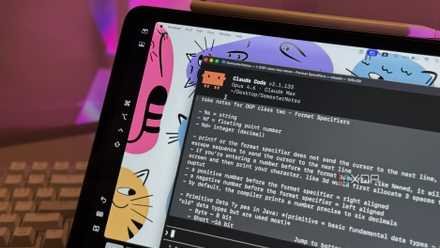
The Opus 4.8 reroute is the clever bit
The technical wrinkle that should interest developers most is how Anthropic handles the risk of a more capable model being pointed at malware development or other abuse. Rather than refusing outright, the company built a rerouting layer. When a query lands on certain sensitive topics, the response comes not from Fable 5 but from Claude Opus 4.8, described as the next-most-capable model.
In Anthropic's own words:
We've therefore launched the model with safeguards that mean queries on some topics will instead receive a response from our next-most-capable model, Claude Opus 4.8. To release the model both safely and quickly, we've tuned these safeguards conservatively, they'll sometimes catch harmless requests, though they trigger, on average, in less than 5% of sessions.
That design choice has real implications if you are building on top of these models or just leaning on them heavily. You are not always talking to the model you think you are talking to. On roughly one in twenty sessions, a request gets silently downshifted to Opus 4.8, and Anthropic admits the trigger is deliberately twitchy. The company chose to over-catch rather than under-catch, which means some perfectly ordinary questions will quietly route to the fallback model.
For most casual use, that is invisible. For anyone benchmarking outputs, building reproducible tooling, or trying to reason about why two near-identical prompts produced different answers, the reroute is a variable you now have to account for. If a response feels a notch off from what Fable 5 usually gives you, the safeguard layer may have stepped in. Rephrasing the request is a reasonable first move when you suspect that happened.

Why the safeguard approach is notable
Most vendors handle a sensitive prompt with a flat refusal. Anthropic's reroute keeps the user moving by answering through a slightly less capable but better-understood model. It is a graceful degradation pattern, the same instinct that leads good app developers to fall back to a cached response or a lower-resolution asset rather than throwing an error in the user's face.
The trade-off is honesty about capability. A conservative filter that misfires on 5% of sessions is a deliberate bias toward safety over precision, and Anthropic is upfront that harmless requests will get swept up. That transparency is welcome, but it does put the burden on the user to notice when it happens. There is no loud banner telling you the model changed underneath you.
For developers maintaining production apps across platforms, the lesson generalizes beyond Anthropic. As model providers layer in routing, fallback, and safety gating, the model you call is increasingly an abstraction over several models with different behavior. Pinning down exactly which one served a given response is getting harder, and that is worth keeping in mind any time consistency matters to your product.
The move is a sensible compromise between shipping fast and shipping safely. Whether Fable 5 stays in your toolkit past June 23 comes down to the same question every paid tool eventually faces: does it earn its credits once the free window closes? You have until then to find out.
Comments
Please log in or register to join the discussion