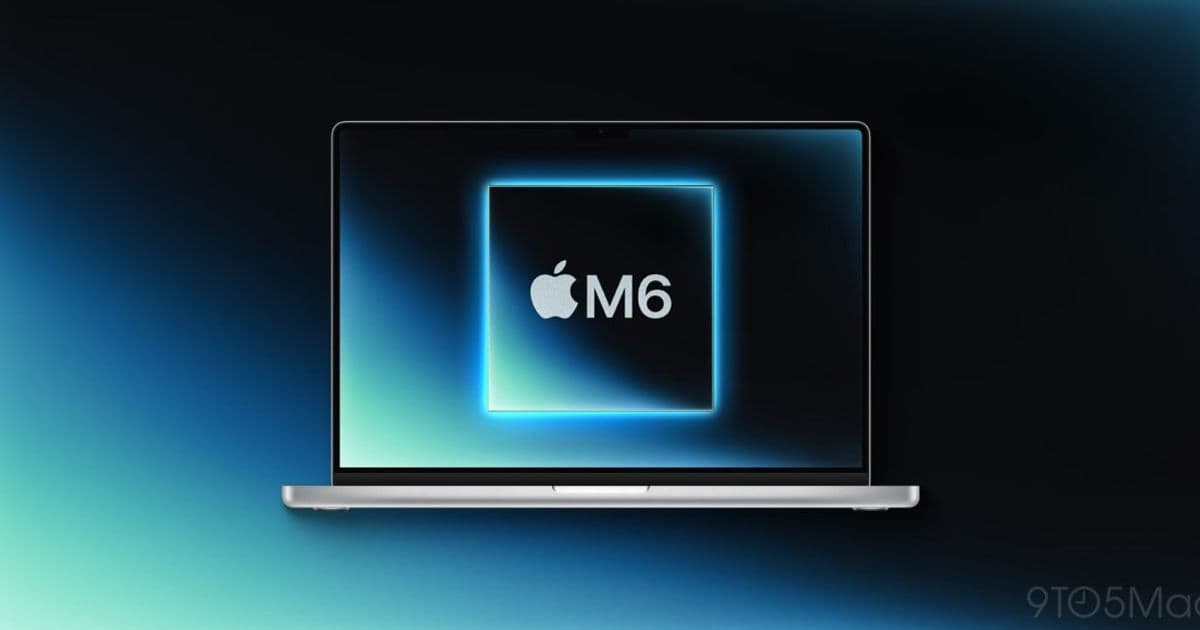
Bloomberg's Mark Gurman reveals new details about Apple's first touchscreen MacBook Pro, including Dynamic Island integration, adaptive touch-optimized interface, and OLED display, set to launch later this year.
Apple is preparing to launch its first touchscreen MacBook Pro, the M6 MacBook Pro, later this year with several innovative features that bridge the gap between iOS and macOS experiences. According to a new report from Bloomberg's Mark Gurman, the device will include Dynamic Island integration, an adaptive touch-optimized interface, and an OLED touchscreen display.
Dynamic Island Comes to Mac
The most intriguing detail is that Apple is bringing its Dynamic Island feature from iPhone to the MacBook Pro. However, instead of the pill-shaped notch found on current iPhones, the Mac version will use a smaller hole-punch cutout for the camera. Gurman reports that this hole-punch design is significantly smaller than the current Mac notch, and Apple will use software to make it blend seamlessly by adding a Dynamic Island UI around it.
This approach allows Apple to maintain a clean aesthetic while providing additional functionality through the Dynamic Island interface, which can display notifications, controls, and other contextual information around the camera cutout.
Adaptive Touch Interface
Rather than simply adding touch support to macOS, Apple is taking a more sophisticated approach. The report indicates that the Mac will gain a refreshed, dynamic user interface that can shift between being optimized for touch or point-and-click input. This means the operating system will intelligently adapt based on how you're interacting with it.
For instance, when users touch a button or control, the interface will bring up a new type of menu surrounding their finger that provides more relevant options for touch commands. The goal is to give users the controls that make the most sense based on whether they're touching or clicking. Additionally, the software will display the most appropriate set of controls based on users' prior interaction patterns.
One practical example mentioned is that if a person taps an item in the menu bar at the top of the screen, the set of controls will enlarge to be more easily selectable with a finger. This thoughtful approach suggests Apple is trying to make touch feel natural rather than forced on a traditional laptop form factor.
Touch Support Without Touch-First Philosophy
Despite adding touch capabilities, Apple is maintaining its stance that the Mac isn't becoming touch-first. Instead, touch will complement the primary input methods of keyboard and trackpad. This aligns with Apple's long-held position that touch on laptops can be ergonomically challenging and that the trackpad remains a more efficient input method for many tasks.
However, the addition of touch support does bring some familiar iOS and iPadOS features to the Mac, including fast scrolling and the ability to zoom in and out of images and PDFs. Even the emoji picker is getting a touch-optimized interface, showing how deeply Apple is integrating touch considerations throughout the operating system.
OLED Display and Release Timeline
The M6 MacBook Pro will feature an OLED touchscreen, marking a significant upgrade in display technology for Apple's laptop lineup. OLED panels offer better contrast ratios, deeper blacks, and more vibrant colors compared to traditional LCD displays.
While new MacBook Pros with the M5 Pro and M5 Max chips are expected to launch next week, Gurman says this new M6 model is still coming later this year—likely in October or November. This staggered release schedule suggests Apple is taking a measured approach to introducing these new technologies rather than rushing them to market.
Industry Implications
This development represents a significant shift in Apple's approach to the Mac platform. For years, Apple executives including Steve Jobs and more recently Craig Federighi have been critical of touch on laptops, often pointing to the "gorilla arm" effect and the ergonomic challenges of reaching up to a vertical screen.
By introducing touch support in a thoughtful, adaptive way rather than as a primary input method, Apple may be testing the waters for broader touch integration in the future while maintaining its design philosophy. The Dynamic Island addition also shows how Apple is increasingly blurring the lines between its product lines while still maintaining distinct user experiences for each device category.
For creative professionals and users who have long requested touch capabilities on MacBooks, this M6 model could represent a compelling upgrade option, especially when combined with the improved display technology and performance gains expected from the M6 chip.
The integration of these features suggests Apple is responding to market pressure from Windows laptops that have offered touch support for years, while still trying to differentiate its implementation through software intelligence and design refinement rather than simply adding touch as a checkbox feature.
Comments
Please log in or register to join the discussion