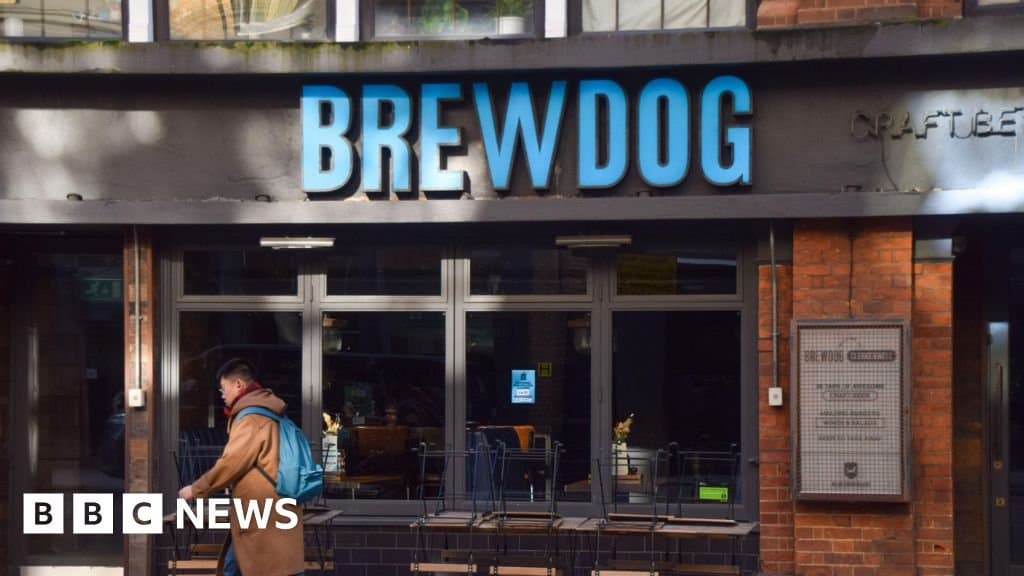
Brewdog, once a craft beer darling worth $1bn, has gone into administration with 484 job losses and 38 pub closures as US cannabis firm Tilray acquires key assets for £33m, leaving small investors facing total losses.
Craft beer pioneer Brewdog has collapsed into administration, with US beverage and cannabis company Tilray acquiring its UK brewing operations, brand, and 11 pubs for £33m while leaving hundreds of workers unemployed and small investors facing total losses.
The collapse of the Aberdeenshire-based brewer marks a dramatic fall from grace for a company once valued at £1bn that positioned itself as a rebellious challenger to the UK brewing industry. On Monday, 38 Brewdog bars across the UK closed with immediate effect, resulting in 484 redundancies, while administrators announced that 733 jobs had been preserved through the rescue deal.
Tilray's acquisition includes Brewdog's brewery in Ellon, Aberdeenshire, and The Hop Hub distribution centre in Motherwell, along with 11 strategically important pubs. The deal preserves the company's 18 franchise bars in the UK and internationally, which will continue to operate. However, the German arm of the business, including a brewery and bar in Berlin, will be liquidated.
The Human Cost
The administration's immediate impact was devastating for staff. Unite, the union representing thousands of hospitality workers, described Monday as a "devastating day" and pledged to pursue "legal and financial justice" for affected members. Sharon Graham, Unite's general secretary, accused management of treating workers "as disposable pawns."
Bryan Simpson, Unite's national lead for hospitality, criticised the conduct of senior management, particularly the way job losses were communicated. "For the CEO to tell workers that they were redundant with immediate effect, on a conference call with only 25 minutes notice, has echoes of P&O and is deplorable," he said.
The closed bars span major UK cities, including Basingstoke, Bath, Bournemouth, Bristol, Cambridge, Cardiff, Carlisle, Cheltenham, Exeter, London (multiple locations), Liverpool, Manchester, Milton Keynes, Newcastle, Norwich, Nottingham, Plymouth, Reading, Southampton, Aberdeen, Edinburgh, Glasgow, Inverurie, Perth, St Andrews, and Stirling.
Small Investors Face Wipeout
Perhaps most painful for the company's community of supporters is the fate of the Equity for Punks scheme. Around 200,000 people invested approximately £75m through this crowdfunding initiative, which offered shares, discounts, and perks. These small investors, who typically put in £500 for shares costing £20 to £30 each, now face losing their entire investment.
Administrators confirmed that no equity holders would receive any return from the deal. The structure of previous investment rounds sealed their fate - when US equity firm TSG Consumer Partners acquired a 22% stake in 2017, it received "preference shares" that put it first in line for any returns, potentially leaving nothing for ordinary shareholders.
One investor told the BBC they had put £12,000 into the company and believed they had lost it all. The collapse represents a cautionary tale about the risks of retail investment in private companies, particularly those with complex capital structures.
From Garage Startup to Global Brand
Brewdog was founded in 2007 by friends James Watt and Martin Dickie in Fraserburgh, Aberdeenshire, starting in what the company described as a garage. The brand quickly gained traction by positioning itself as a rebellious outsider challenging the "stuffy and corporate" UK brewing industry.
The company's growth was meteoric. By 2015, Brewdog had achieved a valuation of £1bn, with four breweries and about 100 pubs globally. Its Equity for Punks scheme, launched in 2009, became a model for craft beer crowdfunding, raising £75m before closing to new investors in 2021.
However, cracks began appearing in the company's foundation. In 2024, Brewdog faced backlash after announcing it would no longer hire new staff on the real living wage, instead paying the lower legal minimum wage. A BBC Scotland documentary highlighted allegations about the behaviour of former chief executive James Watt, prompting a complaint to broadcasting regulator Ofcom that was subsequently rejected.
Watt later stepped down as CEO, moving to a newly created position of "captain and co-founder." Martin Dickie left the company last year, citing personal reasons.
Financial Troubles Mount
Brewdog's financial difficulties became increasingly apparent in recent years. The company posted a £37m loss and announced job cuts across the business in October last year. Earlier in 2025, it announced the closure of 10 bars across the UK, including its flagship pub in Aberdeen.
Last month, the company halted production of gin and vodka brands at its distillery in Ellon, Aberdeenshire. When consultants AlixPartners were brought in after the firm failed to make a profit in recent years, administrators said there had been "significant interest" in the company but no offer emerged that would have preserved Brewdog in its entirety.
Tilray's Strategic Play
Tilray, founded in Canada but now headquartered in New York, already owns several US craft beer brands. The company described the deal as a "significant opportunity for growth in the UK and international markets."
The acquisition gives Tilray control of Brewdog's core UK assets while allowing the Canadian firm to cherry-pick the most valuable parts of the business. Negotiations are continuing for a potential deal on Brewdog's assets in the United States and Australia.
For Tilray, the deal represents an expansion of its beverage portfolio beyond its core cannabis business. The company has been diversifying into alcohol and wellness products as it seeks to establish itself as a major player in the global beverage market.
The End of an Era
Brewdog's collapse represents more than just a business failure; it marks the end of a particular vision of craft beer entrepreneurship. The company that once positioned itself as the anti-corporate alternative to mainstream brewing has ended up as a cautionary tale about rapid expansion, complex capital structures, and the challenges of maintaining a disruptive brand as it scales.
As the remaining pubs reopen and production resumes under Tilray's ownership, the question remains whether the Brewdog brand can survive this trauma. For the 484 workers who lost their jobs and the 200,000 small investors facing total losses, the dream of being part of a craft beer revolution has ended in disappointment.
The punk ethos that once defined Brewdog - rebellious, anti-establishment, and community-focused - has been replaced by the cold reality of corporate restructuring and financial failure. In the end, the rebel outsider fell flat like any old corporate failure, leaving behind a trail of broken dreams and lost investments.
Comments
Please log in or register to join the discussion