A new open-source chromium fork is challenging the privacy trade-offs of AI-powered browsers like Perplexity Comet and ChatGPT Atlas by running agents locally and keeping user data on-device.
The browser has been due for a fundamental rethink for years, but the current wave of AI-native browsers is creating a new set of problems. Tools like Perplexity Comet and ChatGPT Atlas promise to automate browsing, but they often do so by sending your data to their cloud servers. Now, an open-source project called BrowserOS is proposing a different path: an agentic browser that runs AI locally, keeping your browsing history and automation tasks on your own machine.
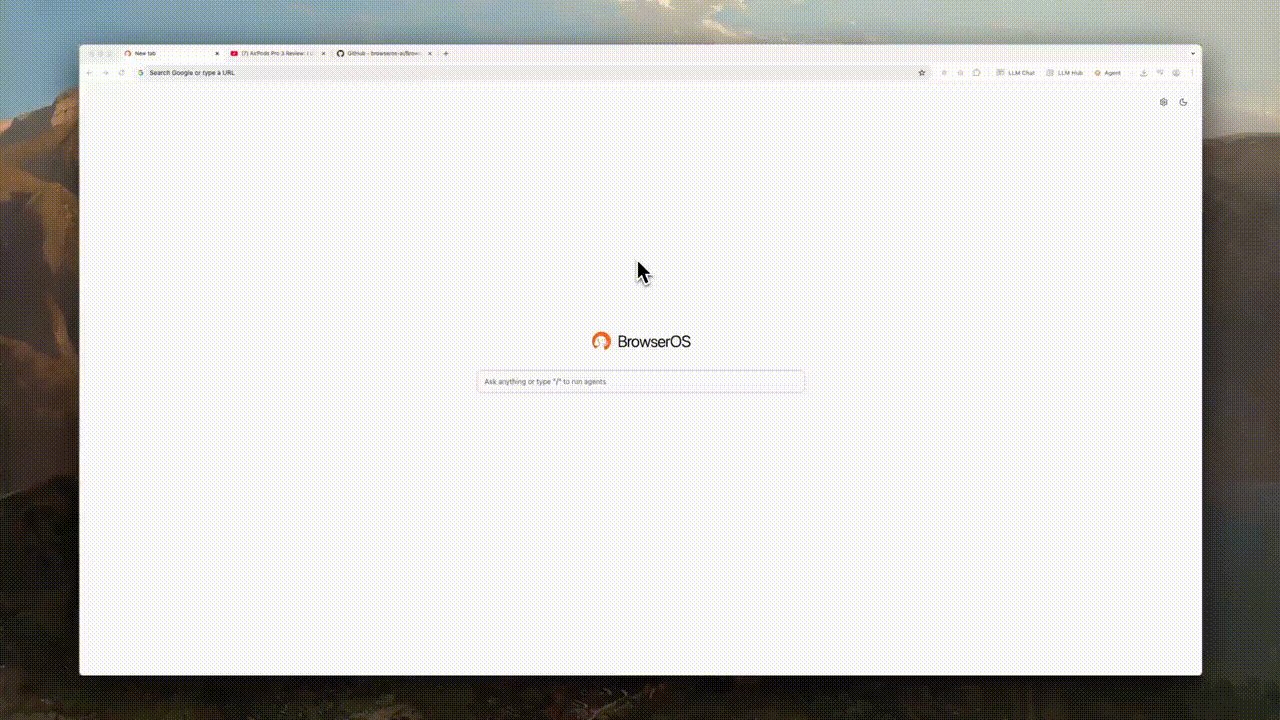
BrowserOS is a chromium fork that embeds AI agents directly into the browser interface. The pitch is straightforward: if you're already comfortable with Chrome, you should feel at home. It supports all your existing extensions and maintains the familiar tab-based workflow. The difference is the addition of an AI layer that can automate tasks—from scraping data to filling forms—without sending that information to a third-party server.
The project's core philosophy centers on privacy through local execution. Instead of requiring you to trust a company with your browsing data, BrowserOS lets you bring your own API keys or run models locally using Ollama or LMStudio. This approach mirrors the growing sentiment in the developer community that local-first AI is the only sustainable path for privacy-conscious users. As the project's README states: "Your browsing history stays on your computer."
How the Agentic Model Works
The technical architecture is where BrowserOS diverges from traditional browsers. Rather than treating AI as a separate chat interface, the agents operate within the browser's native environment. This means they can interact with the DOM directly, navigate between tabs, and perform multi-step workflows that span multiple sites.
The project demonstrates several concrete use cases:
- Data Extraction: An agent can scrape structured data from a webpage and format it for analysis, all without leaving the browser.
- Form Automation: Instead of manually filling repetitive forms, an agent can learn the pattern and handle it automatically.
- Research Workflows: The agent can navigate between multiple tabs, synthesize information, and present findings.
One particularly interesting feature is BrowserOS's ability to function as an MCP (Model Context Protocol) server. This allows developers to control the browser programmatically from within other AI tools like Claude Code or Gemini CLI. For example, you could write a script that uses Claude to plan a research task, then execute that plan by controlling BrowserOS through the MCP interface.
The Privacy-First Trade-off
The local execution model comes with clear trade-offs. Running large language models locally requires significant computational resources, and the performance won't match cloud-based alternatives like GPT-4. The project acknowledges this by supporting hybrid approaches—you can use cloud APIs for heavy tasks while keeping sensitive browsing data local.
This mirrors a broader pattern in the AI tooling space. We're seeing a split between cloud-native convenience and local-first privacy. Tools like Ollama have made local model deployment more accessible, but the hardware requirements remain substantial for most users. BrowserOS sits at this intersection, offering flexibility rather than forcing a single approach.

Community Sentiment and Adoption Signals
The project has gained traction in the developer community, with over 1,000 stars on GitHub in its first few weeks. This interest reflects growing skepticism about the data practices of major AI companies. When Perplexity launched Comet, discussions on Hacker News and Reddit frequently centered on privacy concerns. BrowserOS directly addresses these concerns by making the entire stack open source and verifiable.
However, adoption faces challenges. The browser market is notoriously difficult to disrupt. Chrome's dominance isn't just about features—it's about the entire ecosystem of extensions, sync services, and user habits. BrowserOS needs to prove that the privacy benefits outweigh the friction of switching from a mature browser.
The project's open-source nature helps with trust but doesn't solve the network effects problem. Users need compelling reasons to migrate, and for many, privacy alone isn't enough. The automation features need to be significantly better than what's available through existing browser automation tools like Selenium or Playwright.
Counter-Perspectives and Limitations
Critics might argue that local execution limits the sophistication of AI agents. Cloud-based models can leverage massive compute resources and continuous updates, while local models are constrained by hardware and require manual updates. BrowserOS's hybrid approach attempts to mitigate this, but it introduces complexity—users must manage multiple model providers and understand the trade-offs between local and cloud execution.
There's also the question of whether an agentic browser is the right abstraction. Some developers prefer keeping AI tools separate from their browser, using dedicated automation scripts or specialized tools. The integration of AI directly into the browser interface could feel intrusive or overwhelming for users who want clear separation between browsing and automation.
The project's AGPL-3.0 license is another consideration. While it ensures the software remains open source, it's more restrictive than permissive licenses like MIT or Apache. This could limit commercial adoption or integration with proprietary tools, though it aligns with the project's privacy-first ethos.
The Broader Pattern
BrowserOS represents a growing movement toward local-first, privacy-preserving AI tools. This pattern extends beyond browsers to development environments, note-taking apps, and productivity tools. The common thread is a reaction to the data collection practices of large tech companies and a belief that users should maintain control over their data.
For developers, the project offers an interesting case study in building on top of existing open-source infrastructure. BrowserOS builds on ungoogled-chromium patches for enhanced privacy and the Chromium project itself. This approach of standing on the shoulders of giants allows for rapid development while focusing on the unique value proposition of agentic automation.
The MCP server feature is particularly noteworthy. By making the browser controllable through standard protocols, BrowserOS becomes a component in a larger AI toolchain rather than a monolithic application. This modular approach could enable new workflows where multiple AI agents collaborate across different tools and interfaces.
Looking Ahead
BrowserOS is still early in its development. The project's roadmap includes better integration with local models, improved agent capabilities, and expanded platform support. Success will depend on whether the community values privacy and local execution enough to overcome the switching costs.
The project's GitHub repository shows active development, with recent commits focusing on improving the agent execution engine and adding new automation primitives. The Discord and Slack communities are growing, suggesting there's genuine interest in building this alternative to cloud-based AI browsers.
For now, BrowserOS offers a compelling vision of what AI-powered browsing could look like when privacy isn't an afterthought. Whether it becomes a mainstream tool or remains a niche project for privacy-conscious users will depend on execution, community adoption, and the broader market's response to the privacy vs. convenience debate.
The project is available for macOS, Windows, and Linux, with installation instructions and documentation on the GitHub repository. The team encourages contributions, bug reports, and feature suggestions through their GitHub issues and community channels.
Comments
Please log in or register to join the discussion