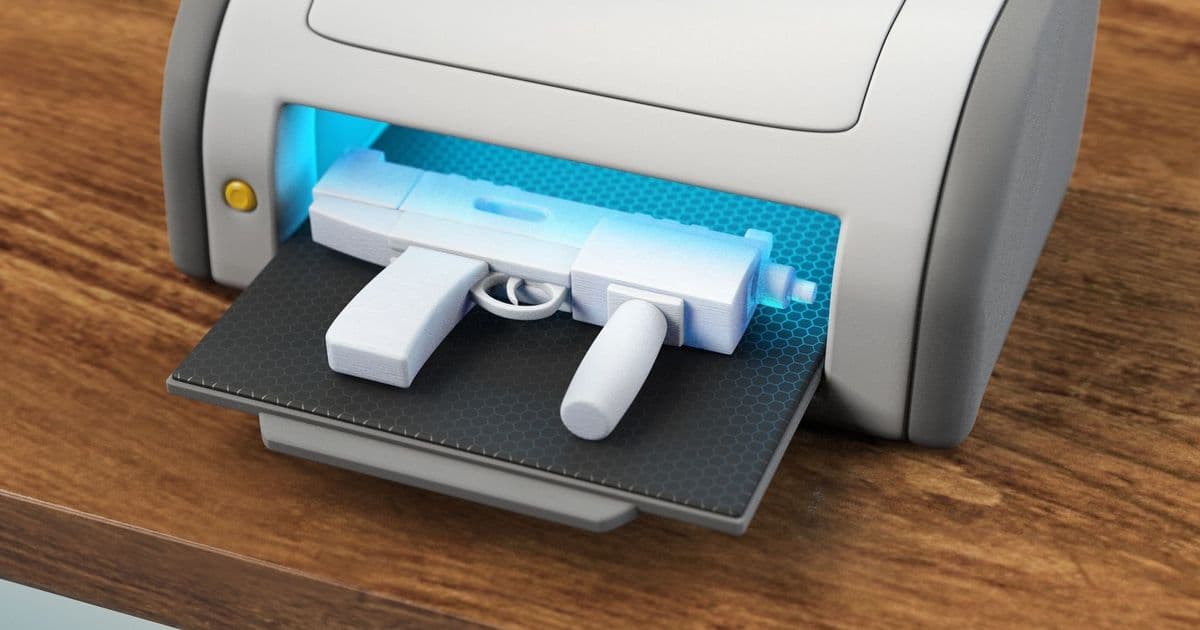
AB 2047 would require every 3D printer sold in California to ship with firmware that screens STL files for gun‑related geometry, and it criminalizes any attempt to bypass that block. The bill sets a 2028 compliance timetable, imposes up to $25,000 civil penalties, and raises serious technical and civil‑rights questions for the maker community.
California moves to embed firearm‑blocking software in every 3D printer
 Image credit: Getty Images
The California State Assembly approved AB 2047 – the California Firearm Printing Prevention Act on May 19, sending the measure to the Senate for a final vote. The bill is the most aggressive U.S. effort to force manufacturers to embed “censorware” in consumer‑grade additive‑manufacturing equipment.
What the legislation requires
| Requirement | Deadline | Penalty |
|---|---|---|
| Detection algorithm standards – California DOJ must publish performance benchmarks (false‑positive/false‑negative limits) | Jan 1 2028 | – |
| Manufacturer attestation – each model sold in the state must be sworn to meet the standards | July 1 2028 | Perjury charges for false statements |
| Compliance list – DOJ publishes approved printer models | Sep 1 2028 | – |
| Prohibited sales – non‑compliant printers may not be sold in California | Mar 1 2029 | Up to $25,000 civil fine per violation |
| Anti‑circumvention clause – disabling or bypassing the block is a misdemeanor | Effective upon enforcement | Up to $1,000 fine and possible jail time |
The bill also carves out exemptions for printers sold to licensed firearms manufacturers, law‑enforcement agencies, and professional prop‑making studios. No exemption is provided for printers located in schools, libraries, or community makerspaces.
Technical feasibility of the mandated block
Detection algorithms
The DOJ’s draft standards are expected to mirror the approach used in the U.S. Department of Homeland Security’s “Gun‑Ready STL” pilot, which relies on geometric pattern matching against a database of known firearm components. Two performance metrics will dominate the discussion:
- False‑positive rate (FPR) – the proportion of benign parts flagged as weapons. A 1 % FPR on a high‑volume maker space could result in thousands of unnecessary rejections per year.
- False‑negative rate (FNR) – the proportion of actual gun parts that slip through. Even a 0.1 % FNR could allow dozens of illicit firearms to be printed annually, given the rapid growth of home‑manufactured weapons.
Current open‑source scanners such as GunDetect report FPRs between 0.5 % and 2 % on a test set of 10 000 non‑weapon models, while achieving FNRs under 0.2 % on a curated gun‑part library. Those numbers are respectable for research prototypes but require GPU‑accelerated inference and a persistent internet connection to pull updated threat signatures.
On‑printer vs. cloud processing
Most consumer printers have a 32‑bit ARM Cortex‑A53 or similar CPU delivering roughly 1 GFLOP of compute. Running a convolutional neural network (CNN) with 2 M parameters would exceed that capability, forcing manufacturers to offload analysis to a cloud endpoint. Off‑loading raises two practical concerns:
- Latency – a 5 MB STL file could take 3–5 seconds to upload on a typical 10 Mbps home line, adding noticeable delay to the print workflow.
- Privacy – the file’s geometry is transmitted in clear text, potentially exposing proprietary designs or personal data to a state‑run service.
Firmware implications
The bill’s anti‑circumvention provision makes it a misdemeanor to flash third‑party firmware such as Marlin, Klipper, or RepRapFirmware. Those firmware families are maintained by a global community and are the default on the majority of hobbyist printers. By criminalizing their use, AB 2047 would effectively force users into a closed‑source, vendor‑signed firmware ecosystem similar to the ink‑jet cartridge lock‑in model.
Market impact and supply‑chain ripple effects
Manufacturer response timeline
- Q2 2027 – Major OEMs (Prusa, Creality, Anycubic) will begin internal R&D to integrate a detection module that meets the yet‑undefined DOJ standards.
- Q4 2027 – Early‑stage compliance testing with California’s pilot lab; likely to reveal hardware bottlenecks that could push some low‑cost models out of the market.
- Q1 2029 – First wave of compliant printers expected to ship with a “Firearm Block Module” (FBM) that is either a dedicated microcontroller or a firmware patch signed by the vendor.
Price pressure
Adding a dedicated detection chip (e.g., an NXP LPC55S6x with secure boot) costs roughly $2–$3 per unit at volume. For a $200 printer, that translates to a 1–2 % price increase. However, the compliance‑audit process and legal‑risk insurance could add $10–$15 per unit, pushing entry‑level models above the $250 threshold that many hobbyists consider the price ceiling.
Potential supply‑chain shifts
- Domestic sourcing – Companies may prefer U.S.‑based PCB assembly to retain tighter control over the FBM firmware signing process.
- Component shortages – The semiconductor shortage that began in 2020 is still affecting low‑cost MCUs. An additional demand spike for secure microcontrollers could exacerbate lead times.
- Export considerations – Printers destined for California must carry a compliance label; re‑routing to other states or countries may require a separate production line, increasing complexity for manufacturers with global supply chains.
Legal and civil‑rights dimensions
The Electronic Frontier Foundation (EFF) has filed an amicus brief arguing that the anti‑circumvention clause violates the Digital Millennium Copyright Act (DMCA) exemption for “non‑infringing uses of software.” Their analysis points out that the law would criminalize a legitimate activity—modifying firmware to improve print quality or add new features—without a clear public‑safety benefit.
Additionally, the American Civil Liberties Union (ACLU) has expressed concern that the bill could be used to target dissenting political speech, citing the precedent set by the “Print‑Your‑Own‑Weapon” case in United States v. Stevens (2010), where the Supreme Court struck down a federal statute that criminalized the depiction of violent conduct.
How the maker community is reacting
- Open‑source firmware maintainers have launched a GitHub issue tracker titled #California‑AB2047 that now hosts over 1,200 comments. The consensus is to develop a fallback “offline mode” that disables the block when the printer is not connected to the mandated cloud service, though that would directly conflict with the misdemeanor provision.
- Makerspaces in San Francisco and Los Angeles are drafting policy statements that any printer purchased after July 2028 must be registered with the venue’s compliance officer, effectively turning the community into a de‑facto enforcement body.
- Commercial vendors such as MatterHackers have begun offering “compliance kits” that bundle a certified FBM module with a warranty extension, signaling an early move toward a service‑based revenue model.
What comes next?
The bill now heads to the California Senate, where a simple majority is required for passage. If enacted, the state will join New York, Washington, and Colorado in restricting 3D‑printed firearms, but with a uniquely punitive stance on firmware modification.
Stakeholders should monitor three upcoming milestones:
- DOJ’s algorithm standard release (Jan 2028) – sets the technical bar.
- Manufacturer attestation deadline (July 2028) – determines which models survive the market.
- Senate floor vote (expected Q3 2028) – decides whether the anti‑circumvention clause survives legislative scrutiny.
For organizations that rely on 3D printing—educational institutions, product‑development firms, and hobbyist clubs—early engagement with legal counsel and supply‑chain partners will be essential to avoid costly fines and potential criminal exposure.
For further reading, see the full text of AB 2047 on the California Legislative Information site and the EFF’s analysis of the anti‑circumvention provision.
Comments
Please log in or register to join the discussion