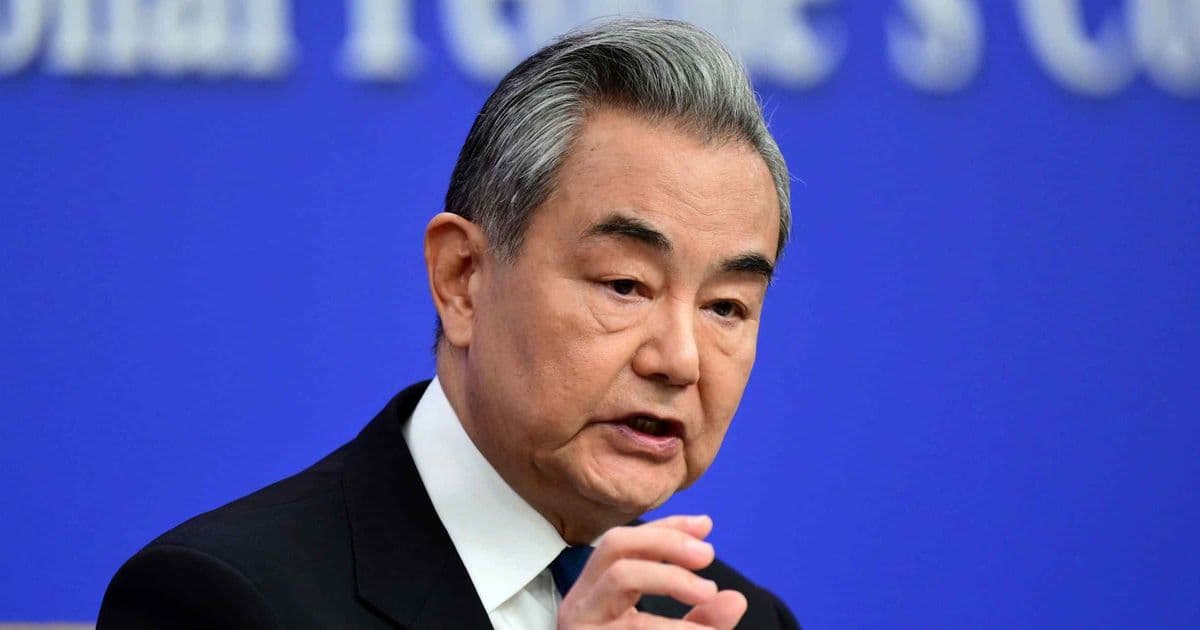
Chinese Foreign Minister Wang Yi outlines five principles for Middle East crisis while signaling preparations for Trump visit and rejecting 'G2' framework.
Chinese Foreign Minister Wang Yi has outlined five principles for addressing the Middle East crisis, describing the ongoing conflict as "a war that should not have happened in the first place," while simultaneously signaling preparations for a potential visit by former U.S. President Donald Trump.
During a press conference held on the sidelines of the National People's Congress in Beijing, Wang Yi presented China's diplomatic framework for navigating the escalating tensions in the region. The five principles emphasize sovereignty, territorial integrity, and the need for peaceful resolution through dialogue, though specific details of each principle were not disclosed in the initial reporting.
The timing of Wang's remarks is particularly significant as they come amid heightened geopolitical tensions following Iran's recent military actions and the broader implications for global energy markets. China, as one of the world's largest energy importers, has substantial economic interests at stake in the Middle East's stability.
Wang's comments also revealed China's diplomatic positioning ahead of what appears to be preparations for a high-profile visit by Donald Trump. While the former U.S. president's travel plans were not officially confirmed, Wang's statements suggested that Chinese officials are actively engaging with Trump's team or representatives. This development comes as both nations navigate complex trade relationships and strategic competition across multiple domains.
Notably, Wang Yi explicitly rejected the concept of a "G2" framework for U.S.-China relations, a term that has occasionally surfaced in discussions about potential cooperation between the world's two largest economies. By dismissing this idea, China appears to be signaling its unwillingness to accept a bilateral condominium arrangement that might limit its strategic autonomy or regional influence.
The foreign minister's remarks reflect China's delicate balancing act as it seeks to maintain its economic partnerships while asserting its diplomatic principles. Beijing's approach to the Iran conflict demonstrates its desire to position itself as a responsible global power capable of offering constructive solutions to international crises, while simultaneously protecting its core interests.
China's energy security concerns are particularly acute given the potential for Middle East instability to disrupt oil supplies and drive up global prices. The country's substantial investments in Iranian infrastructure and its role as a major trading partner for both Iran and other regional powers give it significant leverage in diplomatic negotiations.
The preparations for Trump's potential visit suggest that despite the current administration's more confrontational stance toward China, Beijing maintains channels for engagement with various American political figures. This approach aligns with China's long-standing strategy of cultivating relationships across the U.S. political spectrum to ensure stable bilateral ties regardless of electoral outcomes.
Wang Yi's press conference also touched on broader themes of China's foreign policy, including its commitment to multilateralism and opposition to what it characterizes as unilateral actions by other powers. These principles are likely to shape China's response to the Iran crisis and its broader engagement with Middle Eastern affairs.
The international community will be watching closely to see how China implements these five principles and whether they represent a genuine diplomatic initiative or primarily serve as a framework for justifying China's existing positions on the conflict. The effectiveness of this approach could have significant implications for regional stability and global energy markets.
As tensions in the Middle East continue to evolve, China's diplomatic strategy will need to navigate between its economic interests, its relationships with various regional powers, and its desire to be seen as a constructive international actor. The outcome of these calculations could influence not only the trajectory of the current crisis but also the broader geopolitical landscape in the years to come.
The juxtaposition of Wang's Middle East principles with the preparations for Trump's visit highlights the interconnected nature of China's foreign policy challenges. As Beijing seeks to advance its interests across multiple theaters simultaneously, its ability to maintain coherent strategies while managing diverse relationships will be crucial to its success on the global stage.
Comments
Please log in or register to join the discussion