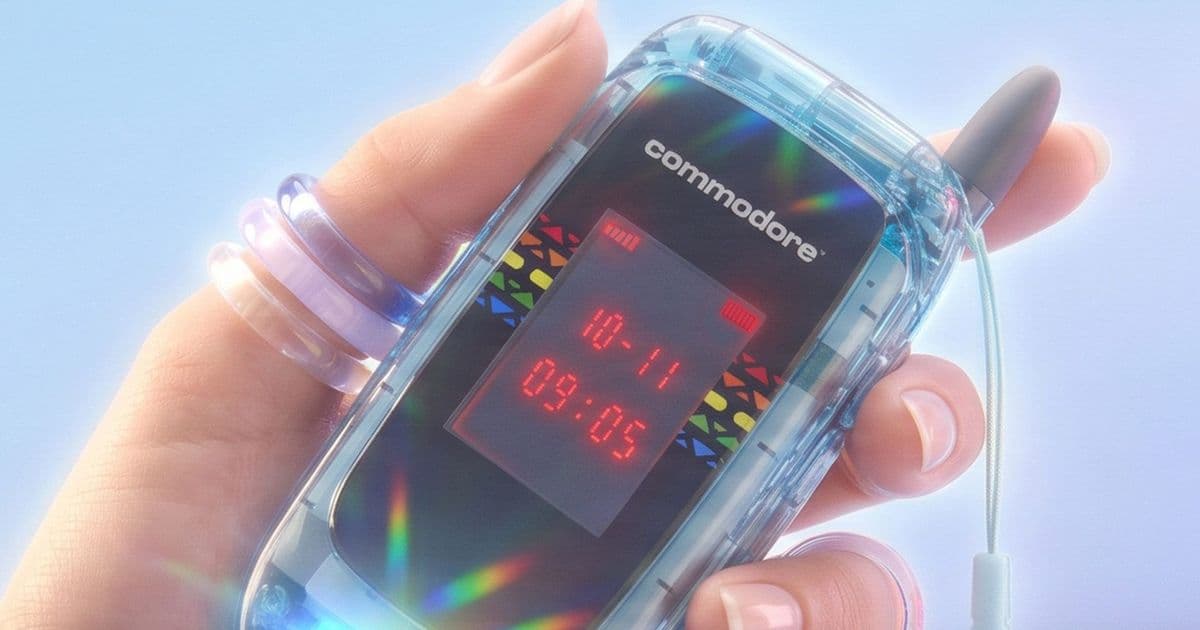
Commodore pairs Sailfish OS, a MediaTek Helio G81 chip and a 48MP Sony camera with hard app limits in a $499 flip phone aimed at buyers who want smart features without the full smartphone loop.
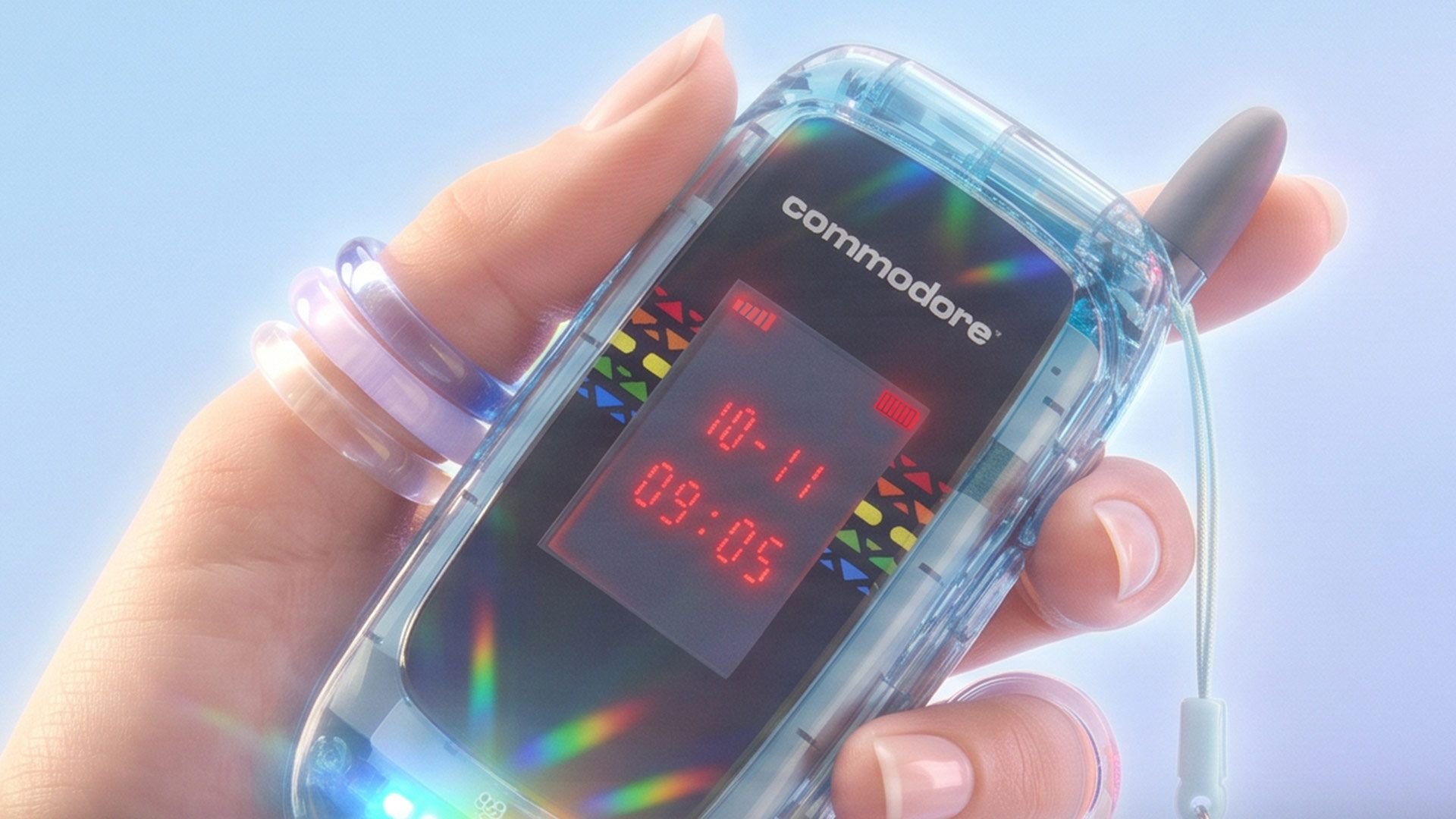
Commodore executives unveiled the Callback 8020 Tuesday, a Linux-based clamshell phone that starts at $499 and blocks browsers, social media, work apps and email by design. The company will open preorders June 30 at 10 a.m. CEST, with five retro colorways: ProtoPET White, SX Silver, BASIC Beige, Starlight Edition and Founders Edition.
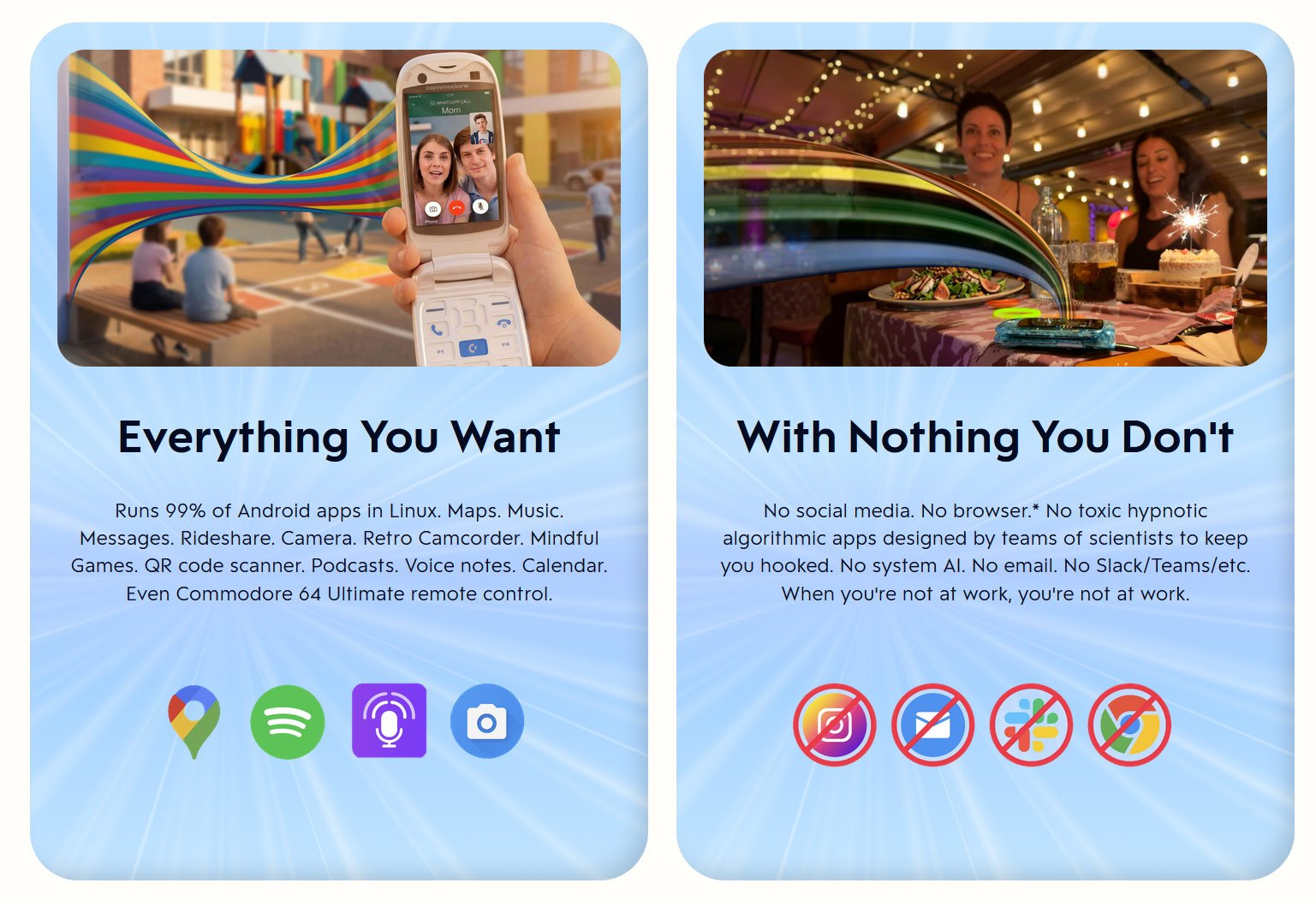
The pitch puts Commodore between two markets that have missed each other for years. Basic phones cut too much for buyers who need maps, ride-hailing, banking or messaging. Flagship smartphones give those buyers the apps they need, then surround them with feeds, alerts and work tools. Commodore CEO Christian "Peri Fractic" Simpson said he built the Callback 8020 after testing Android flip phones and studying which limits helped users reduce screen time.
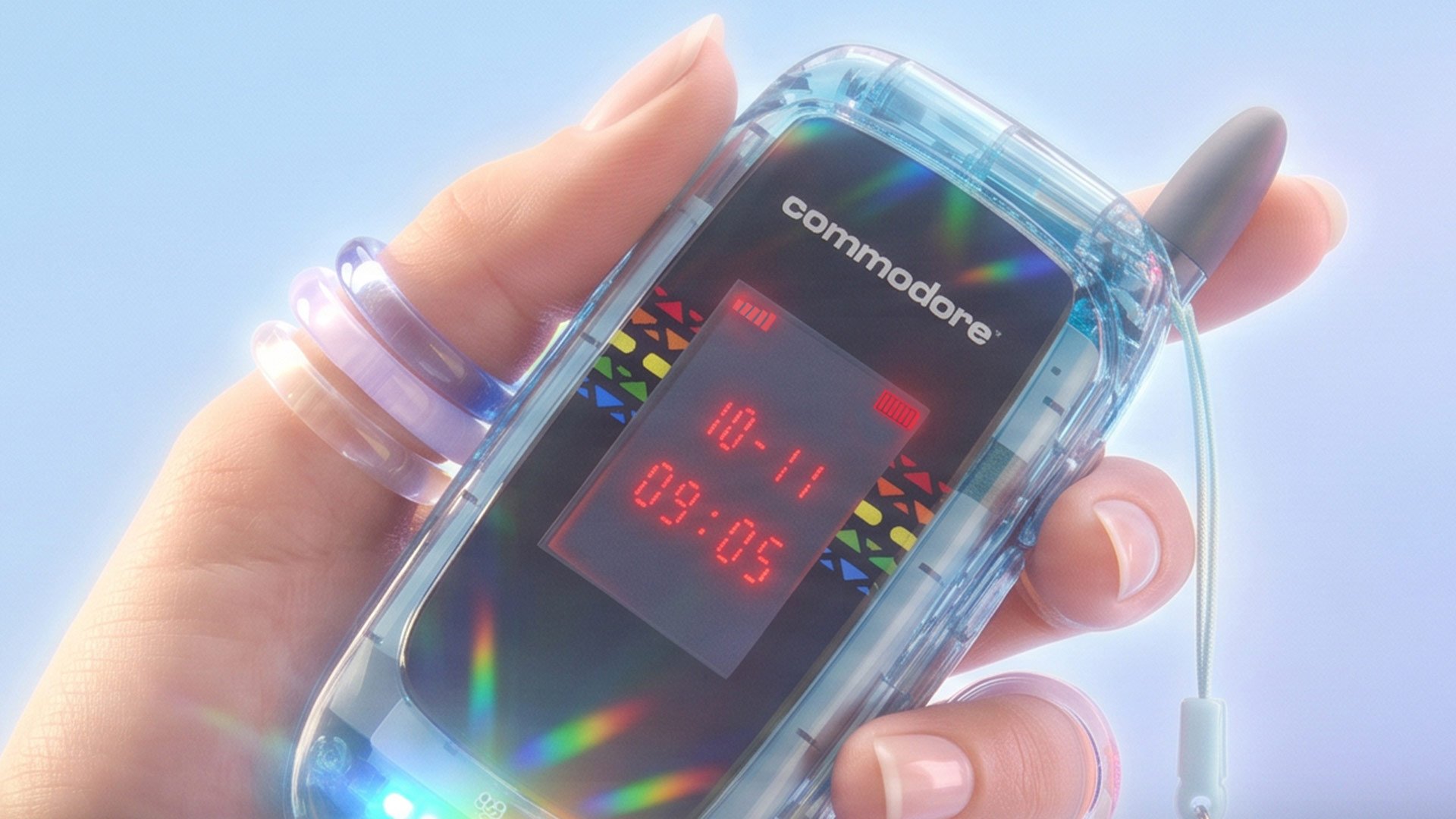
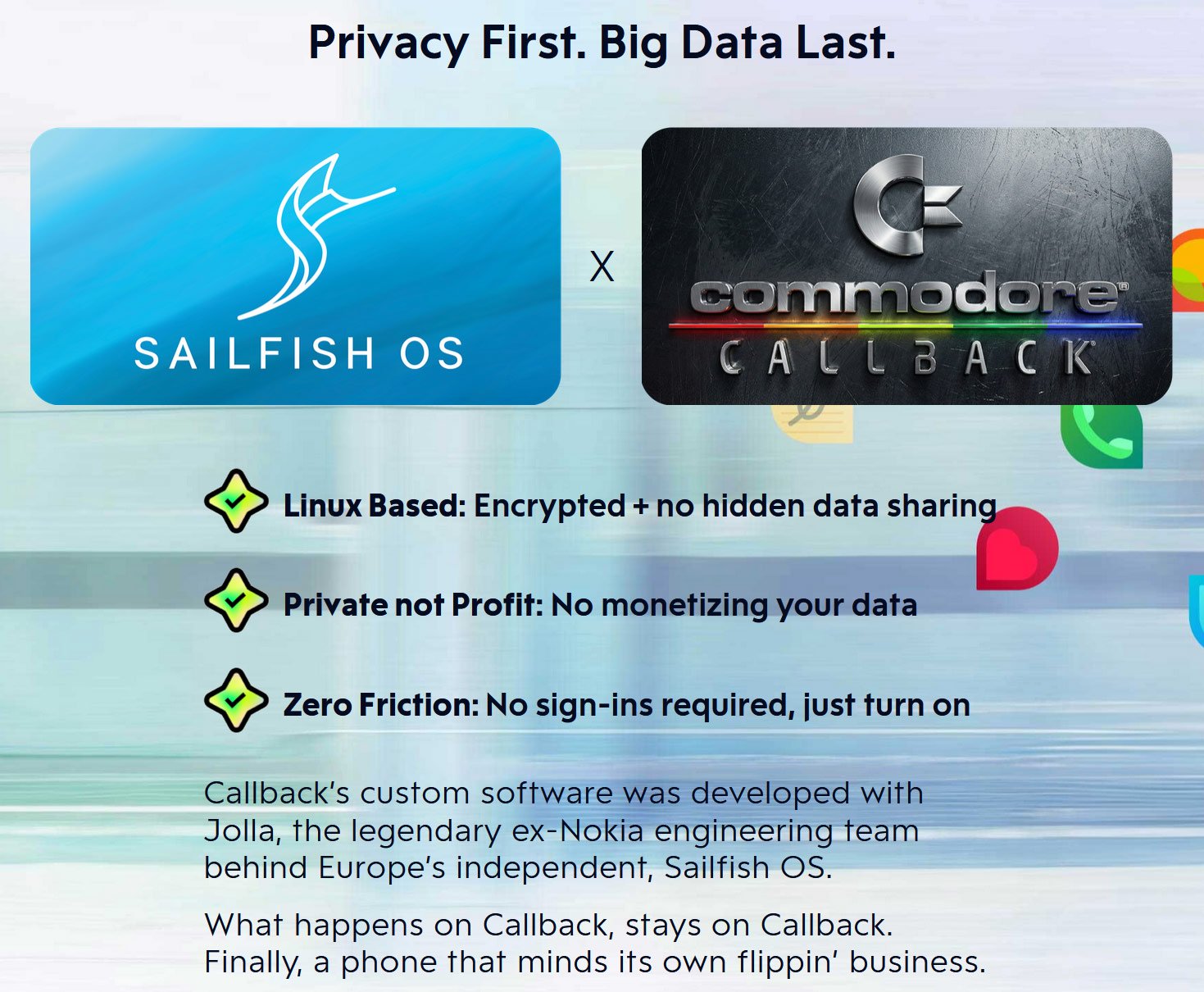
Commodore uses a custom version of Jolla's Sailfish OS, a Linux-based mobile operating system with Android app support. Commodore claims the Callback 8020 can run 99% of Android apps, while its software blocks app categories that create the behavior the company wants buyers to avoid. Users can sideload APK files outside the blocked categories, according to the company's FAQ cited by Tom's Hardware.
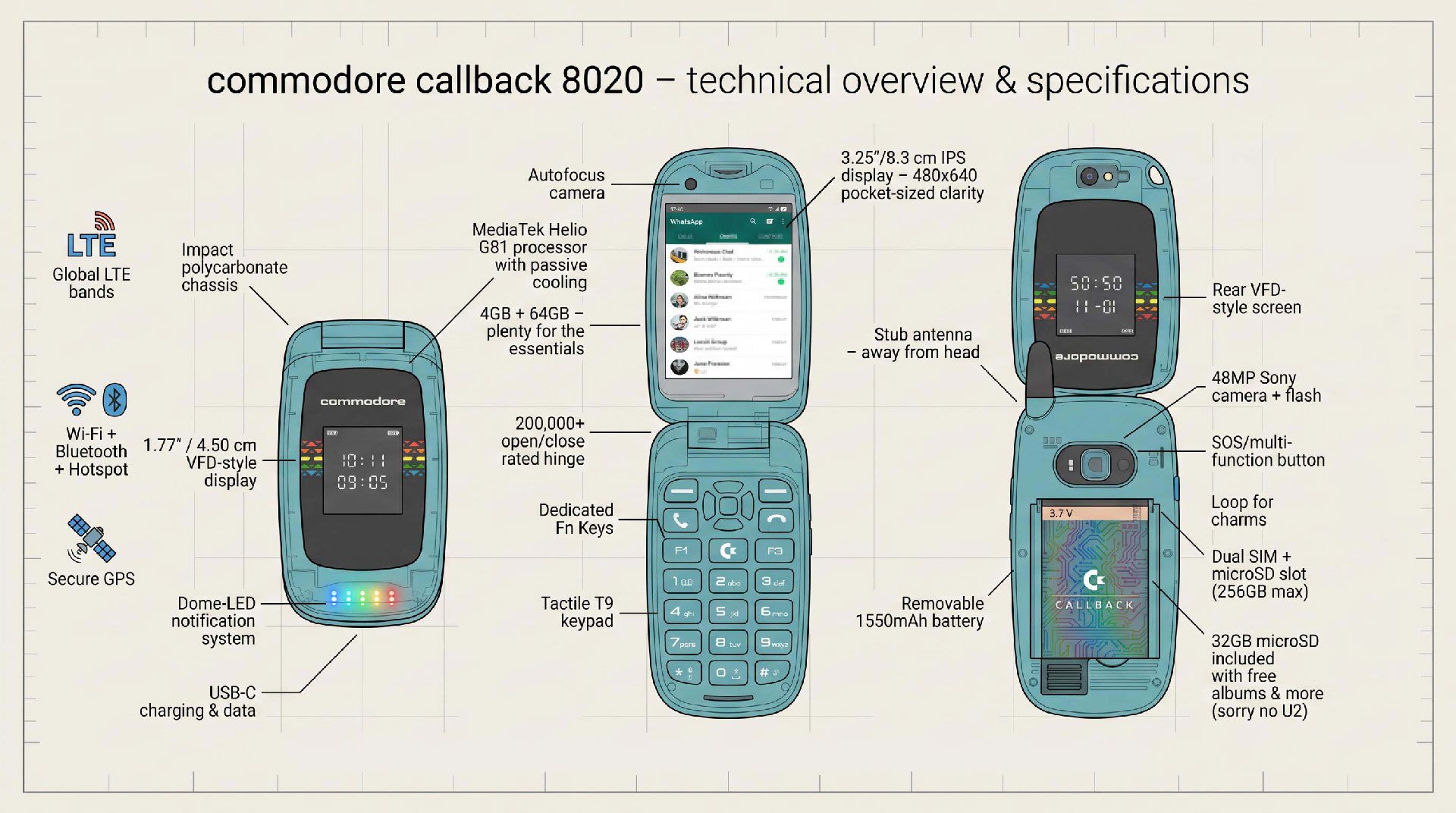
The hardware targets utility instead of benchmark leadership. Commodore chose MediaTek's Helio G81 system-on-chip, 4GB of memory and 64GB of storage. The company includes a 32GB microSD card, and the removable rear cover gives users access to the microSD slot, dual SIM slots and replaceable battery.
The phone supports global LTE, Wi-Fi, Bluetooth and GPS. Those radios matter more than the retro shell. A detox phone still needs network coverage, location services and accessory support if buyers want to carry it outside a novelty use case.
Commodore puts a 3.25-inch IPS display inside the clamshell with a 480-by-640 resolution, a selfie camera and a T9 keypad. A small outer display shows time and battery status, while a color LED system handles notifications. The company also adds a dedicated Commodore button, which gives the keypad a brand cue beyond the color palette.
The rear camera uses a 48MP Sony sensor with flash. That spec gives the Callback 8020 a stronger imaging baseline than many minimalist phones, though sensor size, lens quality and image processing will decide real camera performance. The clamshell form factor also gives users a natural camcorder posture, which fits the device's early-2000s design language.
Audio receives more attention than buyers may expect at this price. Commodore cites an audiophile-grade DAC, HD audio support and lossless file playback. ESS and Cirrus Logic audio chips handle playback, and Commodore includes wired in-ear monitors in the box. The phone also offers FM radio and Commodore SID ringtones, a direct callback to the Commodore 64's sound chip.
The company also loads a small set of classic and modern Commodore 64 games, plus Snake. That software bundle gives the phone a nostalgia hook without turning it into a full mobile gaming device. Commodore will sell Snapback packs, a Hardback case and a Backpack holster, which points to a small accessory strategy around replaceable shells and carry options.
Pricing starts at $499 before a $50 waitlist credit. Commodore has not placed that base price in the cheap phone category. Instead, the company prices the Callback 8020 near premium minimalist phones and below mainstream flagships. That choice tests whether buyers will pay for software restraint, removable hardware and brand nostalgia rather than raw performance.
The competitive set includes devices such as the Light Phone III and Android-based flip phones from smaller vendors. Commodore takes a different route by keeping broad Android compatibility while blocking the most distracting categories. That approach gives the company a wider app surface, but it also creates enforcement pressure. Buyers will want to know how the blocklist works, who controls exemptions and how updates handle new apps that mimic browser or social functions.
Supply chain execution will matter as much as software policy. A Helio G81 platform, IPS panel, Sony camera module and audio chips should help Commodore avoid the highest-risk parts of the smartphone component market. The removable battery and microSD slot reduce long-term support pressure for storage and battery wear, but the company still needs carrier compatibility, security patches and a clear repair path.
The Callback 8020 gives Commodore a product that matches the brand's nostalgia without copying an old computer. Simpson's team has to prove that buyers want a second phone for nights, weekends or school settings, and that they will accept limits set by the manufacturer. If Commodore ships on time and keeps the app policy clear, the Callback 8020 could turn retro design into a practical device category instead of a collectible shell.
Comments
Please log in or register to join the discussion