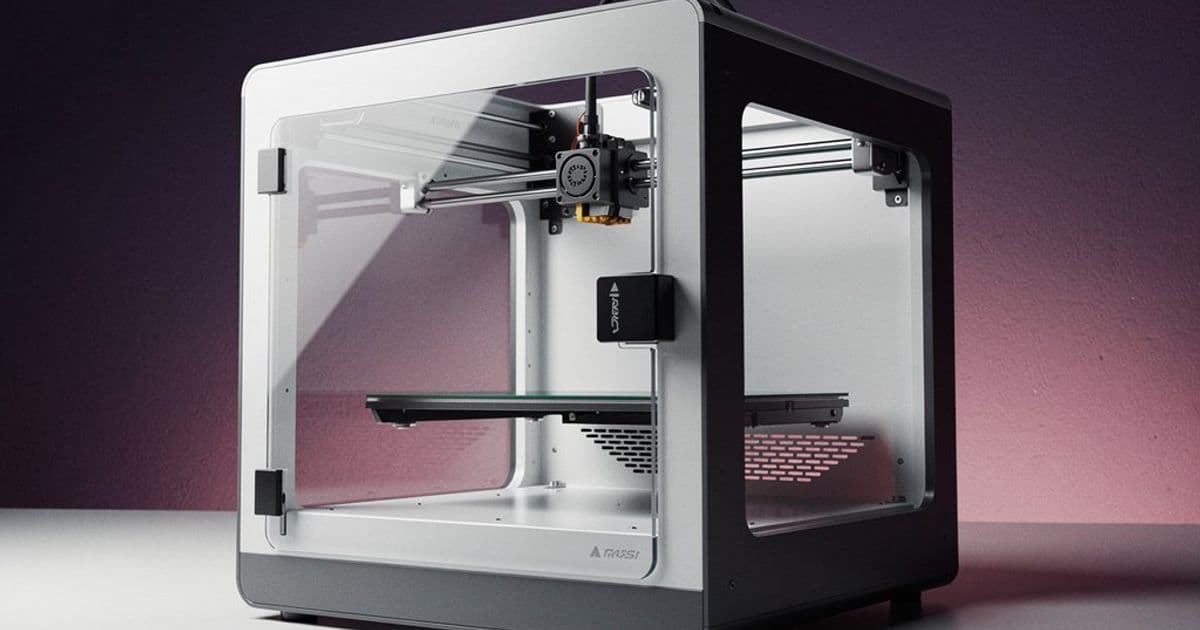
A significant price reduction brings Creality's fully enclosed Core XY printer into direct competition with Bambu Lab's P1S, offering a 20000 mm/s² acceleration and 600mm/s print speed for $160 less than its typical retail price.
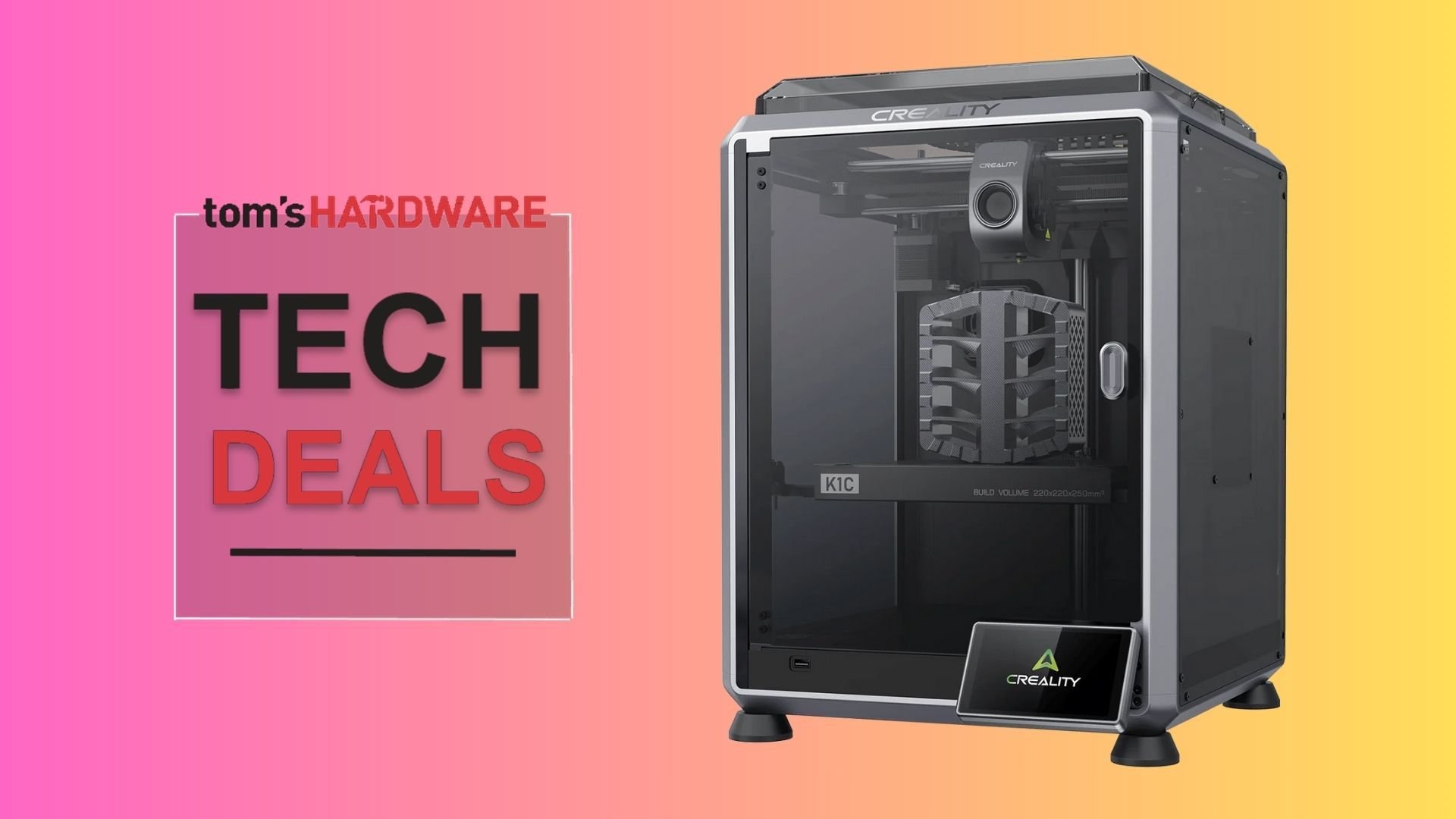
The Creality K1C 3D printer is currently available for $399, a 33% discount from its typical $559 price point. This price drop places the fully enclosed Core XY machine in direct competition with Bambu Lab's popular P1S model, which typically retails for significantly more. The deal represents a $160 saving and brings the printer to within $30 of its Black Friday 2024 pricing, though this appears to be the 2025 model year variant.
Technical Specifications and Core XY Architecture
The K1C employs a Core XY motion system, a configuration where the print head movement is achieved through coordinated belt-driven motors rather than the traditional Cartesian gantry. This architecture enables higher acceleration rates and print speeds while maintaining precision. The printer achieves a maximum acceleration of 20000 mm/s² and a top print speed of 600mm/s, figures that rival industrial-grade machines.
Build volume measures 220 x 220 x 250 mm, slightly smaller than the Bambu Lab P1S's 256 x 256 x 256 mm but substantially larger than entry-level printers like the Bambu Lab A1 Mini. The heated, coated steel flex plate provides adhesion for various materials and facilitates easy print removal.
Extrusion System and Nozzle Design
The K1C features a proprietary steel-tipped, tri-metal 0.4mm "unicorn" nozzle attached to a direct drive extruder. This design differs from the original K1's extruder and offers improved pressure control during printing. Direct drive systems eliminate the Bowden tube between the extruder and hotend, reducing filament path compliance and improving retraction accuracy—particularly important for flexible filaments and high-speed printing where stringing and oozing become problematic.
The tri-metal construction likely combines copper, steel, and another alloy to balance thermal conductivity, wear resistance, and structural integrity. The 0.4mm nozzle diameter represents the standard for general-purpose printing, balancing detail resolution with layer height capabilities and print speed.
Enclosure and Environmental Controls
The fully enclosed design serves multiple purposes. First, it maintains consistent ambient temperature around the print area, reducing warping in materials like ABS, ASA, and nylon that are sensitive to temperature fluctuations. Second, it contains potentially harmful volatile organic compounds emitted during high-temperature printing. The included carbon filter helps scrub these emissions, improving air quality in the printing environment—a consideration often overlooked in budget printers.
This enclosure places the K1C in the "prosumer" category, bridging the gap between open-frame hobbyist machines and fully sealed industrial units. The design also reduces noise, though Core XY systems inherently produce more acoustic output than Cartesian printers due to their rapid belt movements.
Software and Connectivity
The printer runs Klipper firmware, an open-source alternative to Marlin that has gained popularity for its advanced motion control capabilities and web interface. Klipper offloads computational tasks to a Raspberry Pi or similar single-board computer, allowing for more complex calculations and faster response times. The touchscreen interface provides local control, while network connectivity enables remote management via Wi-Fi or Ethernet.
Connectivity options include USB, Wi-Fi, wired network, and Creality's cloud printing service. The cloud system allows for print queue management and remote monitoring, though users should consider privacy implications when connecting printers to manufacturer cloud services.
AI-Assisted Features
The integrated camera serves dual purposes: error detection and timelapse video creation. The AI system monitors print progress and can identify common failure modes like spaghetti detection, layer shifting, or nozzle clogs. While not foolproof, such automation reduces the need for constant manual supervision, particularly for long prints.
Timelapse recording creates condensed videos of print progress, useful for documentation, social media sharing, or troubleshooting. The camera's placement and resolution determine the quality of these recordings, though specific technical details about the imaging system aren't provided in the product specifications.
Market Positioning and Competition
At $399, the K1C enters a competitive segment dominated by Bambu Lab's P1S (typically $699) and Prusa's Core One (€499). The price advantage is substantial—roughly 43% less than the P1S while offering similar Core XY architecture and enclosure. However, Bambu Lab's ecosystem integration and proprietary materials support remain differentiating factors.
The K1C's 2025 model reportedly supports multi-color printing through a redesigned filament system. While details are sparse, this likely refers to Creality's new multi-material unit or improved firmware support for filament switching. Multi-color capability has become a key battleground in the consumer 3D printing market, with Bambu Lab's AMS (Automatic Material System) and Prusa's MMU (Multi Material Unit) setting expectations.
Practical Considerations for Buyers
The printer arrives nearly fully assembled, reducing setup time for beginners. However, users should still perform calibration procedures including bed leveling, extruder calibration, and PID tuning for optimal results. The steel flex plate requires periodic cleaning with isopropyl alcohol to maintain adhesion, and the nozzle may need replacement after hundreds of hours of printing depending on material abrasiveness.
The carbon filter requires periodic replacement, typically every 3-6 months depending on usage frequency and materials printed. Creality's cloud service may involve subscription fees for advanced features, though basic printing functionality should remain accessible without ongoing costs.
Long-term Value and Ecosystem
Creality's ecosystem includes filament sales, replacement parts, and community support through forums and user groups. The open-source nature of Klipper firmware allows for extensive customization and third-party modifications, though this may void warranties. The printer's compatibility with standard 1.75mm filament means users aren't locked into proprietary material systems, unlike some competing platforms.
For users considering future upgrades, the Core XY architecture provides a solid foundation. Common modifications include nozzle upgrades, hotend replacements, and firmware tweaks. The community around Creality printers is substantial, with numerous modification guides and user-contributed improvements available.
Conclusion
The $399 price point makes the K1C an attractive entry into enclosed, high-speed 3D printing. While it may lack the seamless ecosystem integration of Bambu Lab or the open-source purity of Prusa, it offers compelling performance at a fraction of the cost. The deal's timing—post-holiday season—suggests inventory clearing, but the specifications indicate a capable machine rather than a compromised one.

Potential buyers should verify the exact model year and included accessories before purchase, as product specifications can vary between retail channels. The 2025 model's multi-color capability, if confirmed, would significantly enhance its value proposition against single-color competitors.
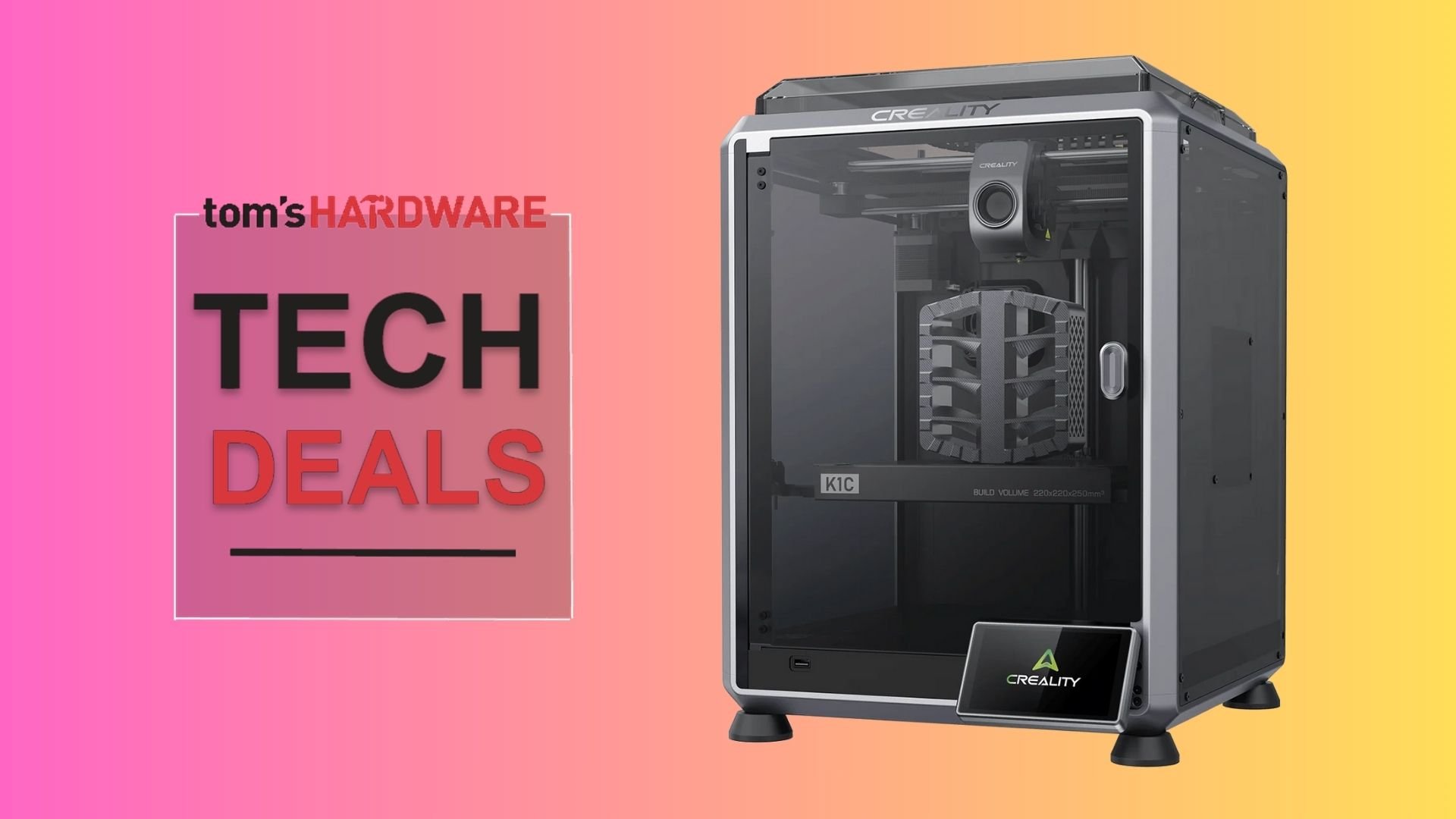
For those new to 3D printing, the K1C's enclosed design and automated features reduce common beginner frustrations like warping and failed prints. For experienced users, the Core XY speed and direct drive extruder offer performance improvements over older Cartesian designs. At this price, it represents one of the most capable enclosed printers available, though long-term reliability and support will determine its ultimate success in the market.
Comments
Please log in or register to join the discussion