
CreepyLink generates deliberately dubious-looking shortened URLs as a satirical commentary on digital trust, enabling users to transform ordinary links into seemingly hazardous ones.
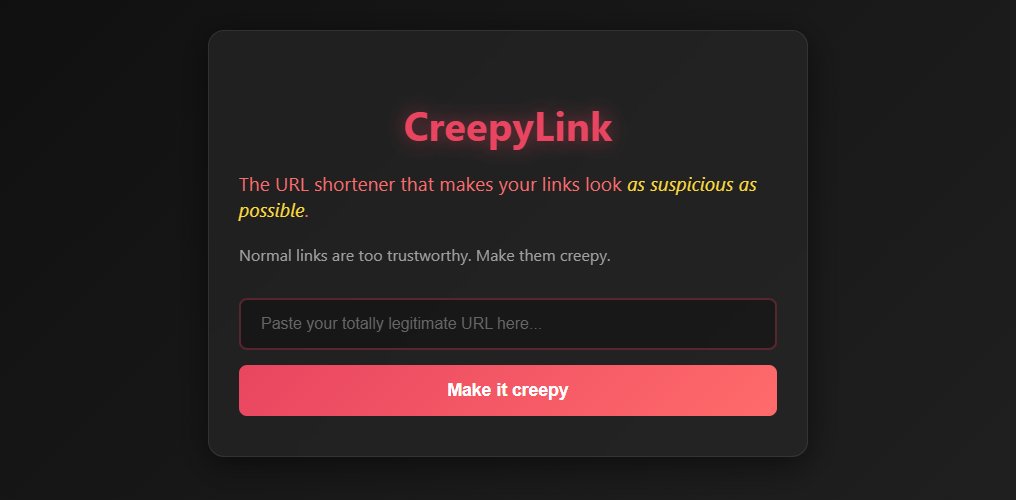
In an online landscape dominated by polished, trustworthy-looking URLs, CreepyLink emerges as a subversive tool intentionally designed to make shortened links appear maximally suspicious. Unlike conventional URL shorteners that prioritize cleanliness and brand safety, this platform injects deliberate unease into link aesthetics—transforming innocuous web addresses into strings resembling malware distribution vectors or phishing traps.
The service operates on a simple premise: users input any URL, and CreepyLink outputs a new version featuring randomized characters, non-standard top-level domains (TLDs), and deliberately awkward syntax. For example, a benign Wikipedia link might become https:\/\/creepy.li\/h4x0r-1337\/virus.exe?tracking=you. This design intentionally triggers browser security warnings and user hesitation, leveraging psychological cues commonly associated with malicious links.
While surface-level applications include pranks or meme culture, deeper utility exists in cybersecurity education. Penetration testers can simulate phishing examples without deploying actual malware, while developers gain tangible examples of how URL presentation influences trust decisions. The platform's documentation highlights these use cases, emphasizing how visual perception often overrides logical analysis in threat assessment.
Notably, CreepyLink avoids traditional monetization or venture funding, positioning itself as an open-source commentary tool. Its source code remains accessible for scrutiny on GitHub, reinforcing transparency despite generating intentionally opaque links. This paradox underscores the project's core thesis: digital trust mechanisms rely heavily on superficial signals rather than substantive verification.
As phishing attacks evolve to mimic legitimate domains more convincingly, CreepyLink's inversion of expectations provides unexpected value. By exaggerating suspicious traits, it exposes how easily users misinterpret security indicators—a vulnerability increasingly exploited by actual threat actors. The project serves as both a functional tool and conceptual art piece, challenging assumptions about what constitutes 'safe' in an algorithmically mediated web.
Comments
Please log in or register to join the discussion